
Last updated September 23, 2026
Free visual inspection and a written scope of work before any mitigation begins - photos, moisture readings, and drying logs go in your claim file
The scope we write is the scope we bill. Anything new gets shown to you, in writing, before we touch it.
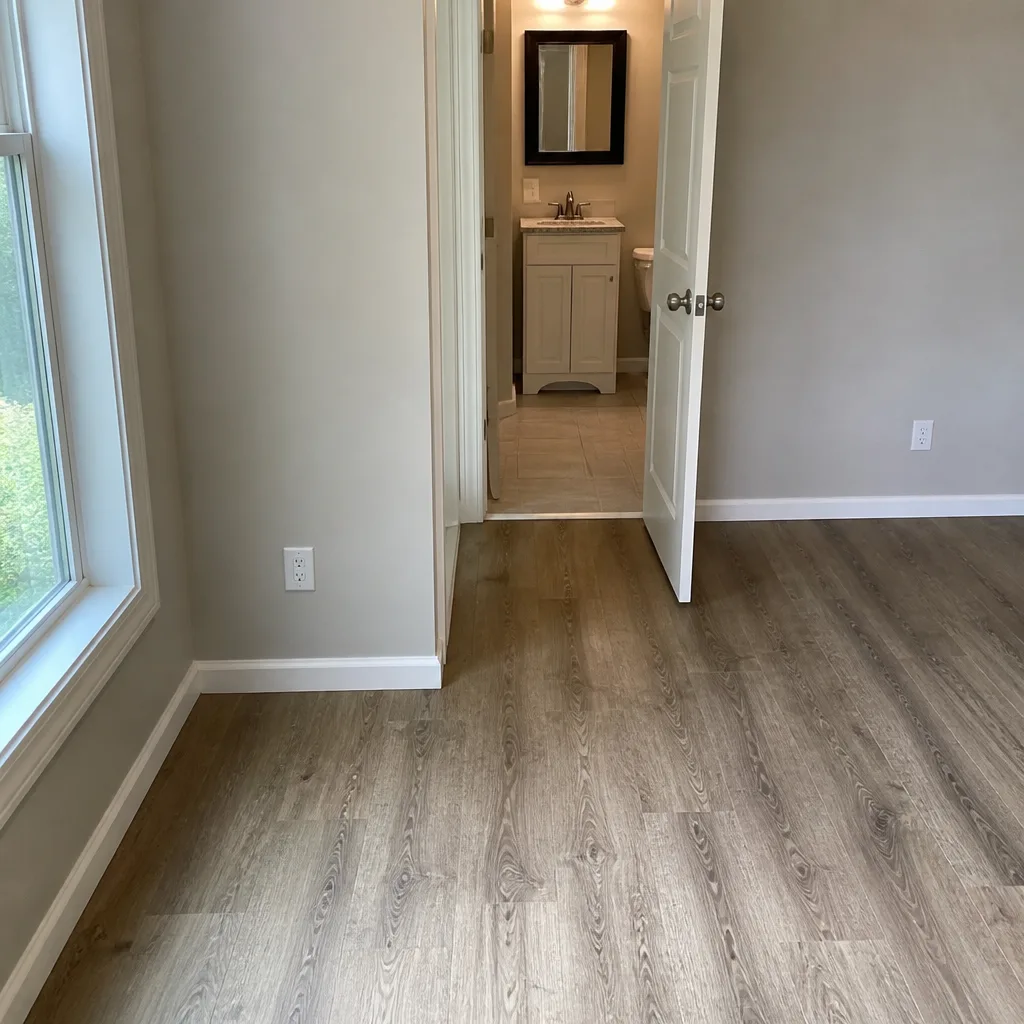
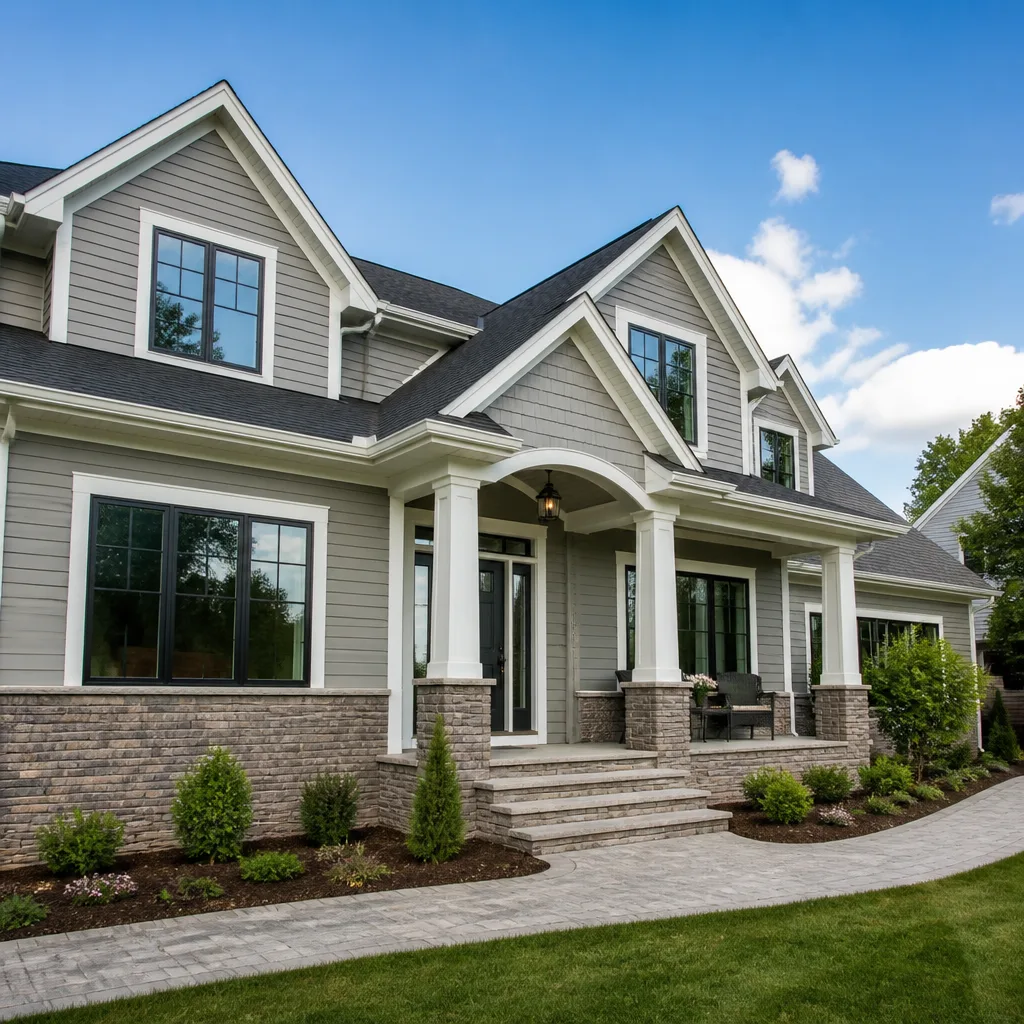
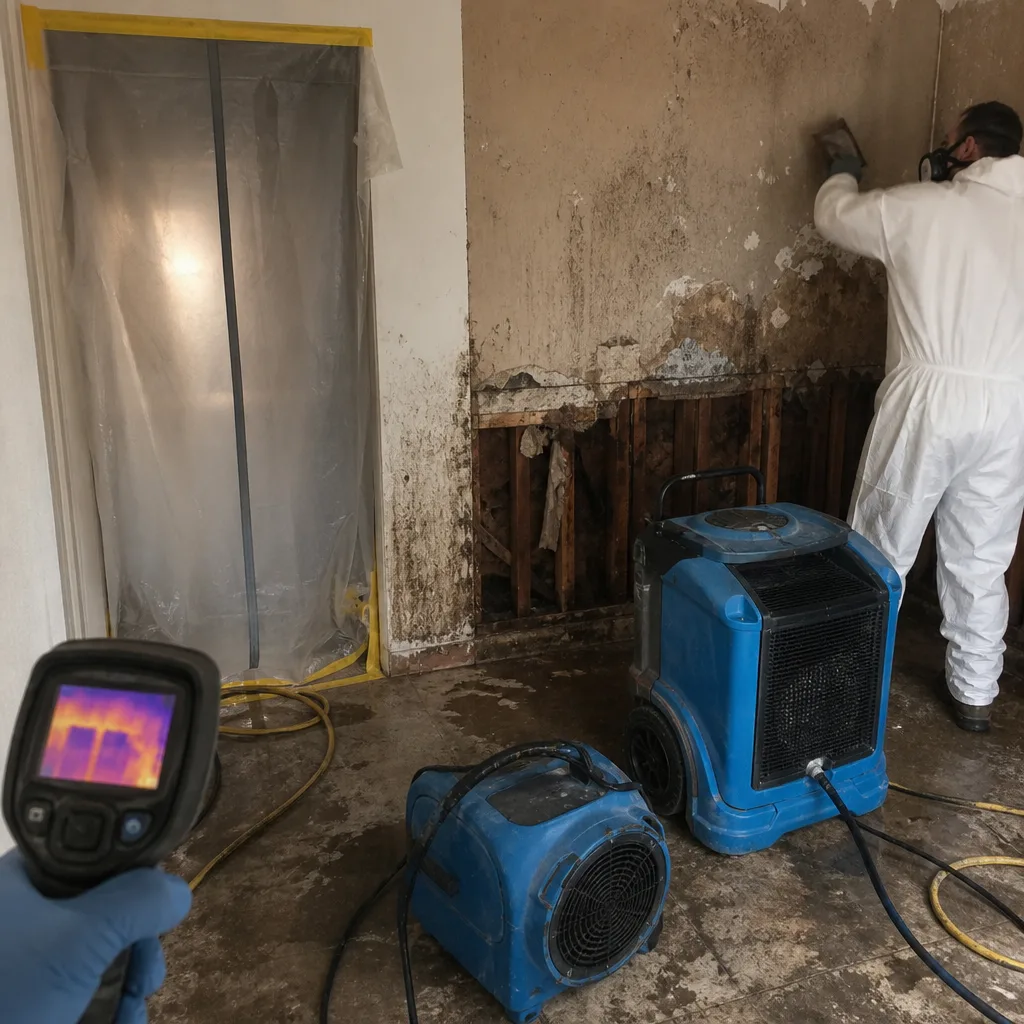 Before
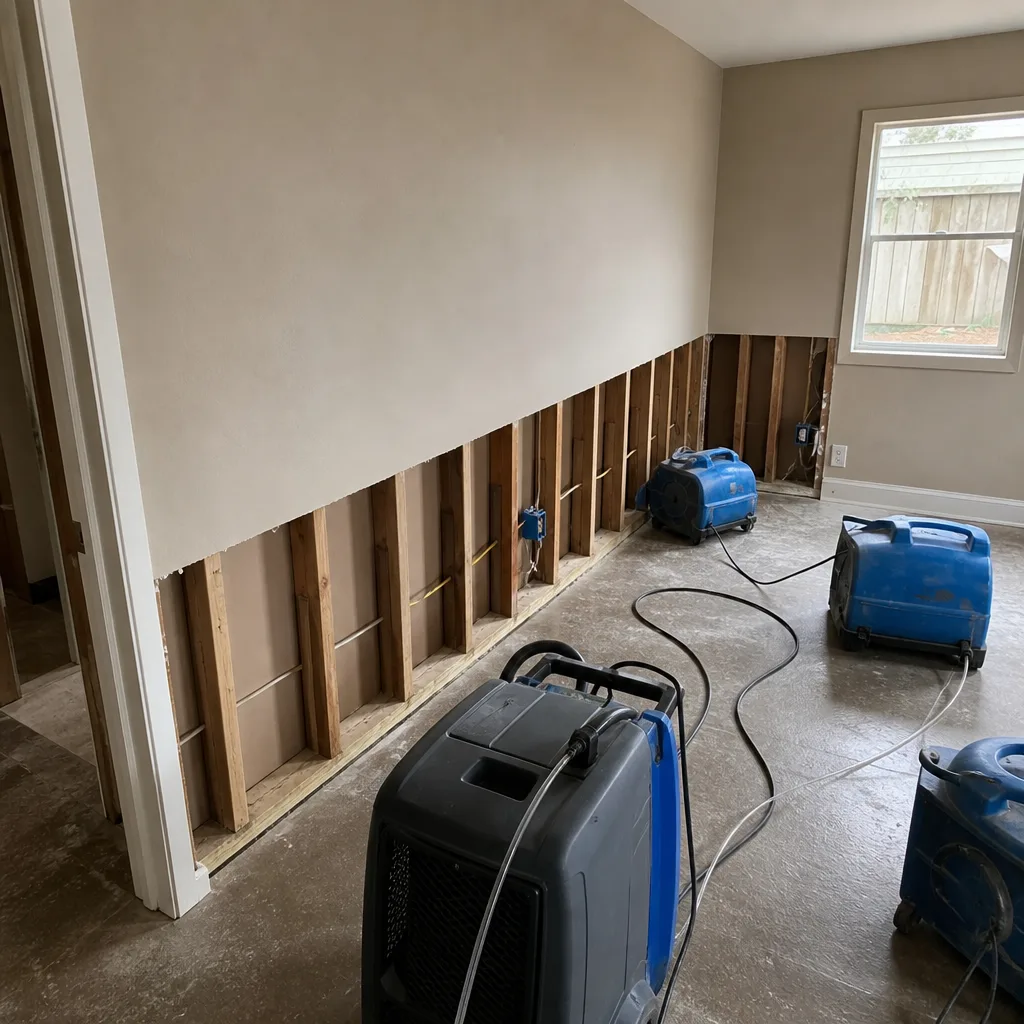 After
After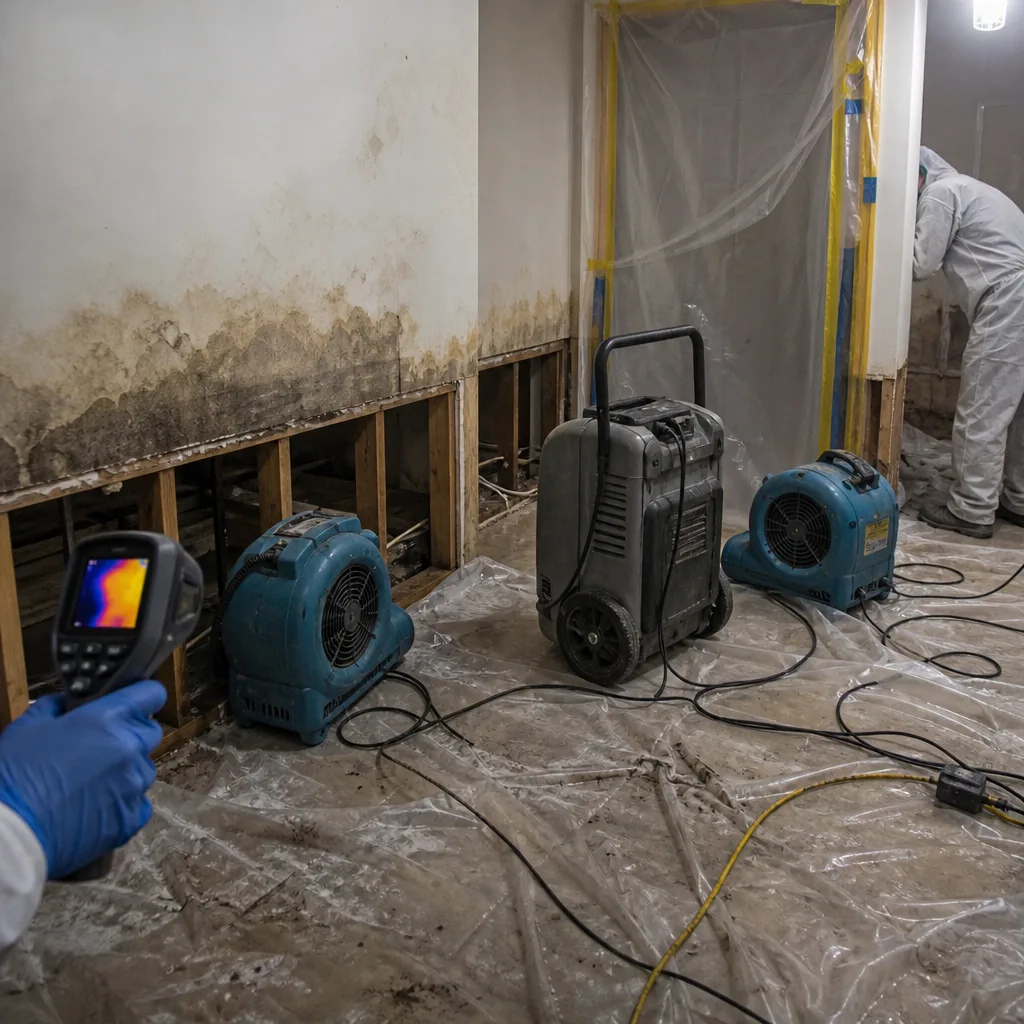 Before
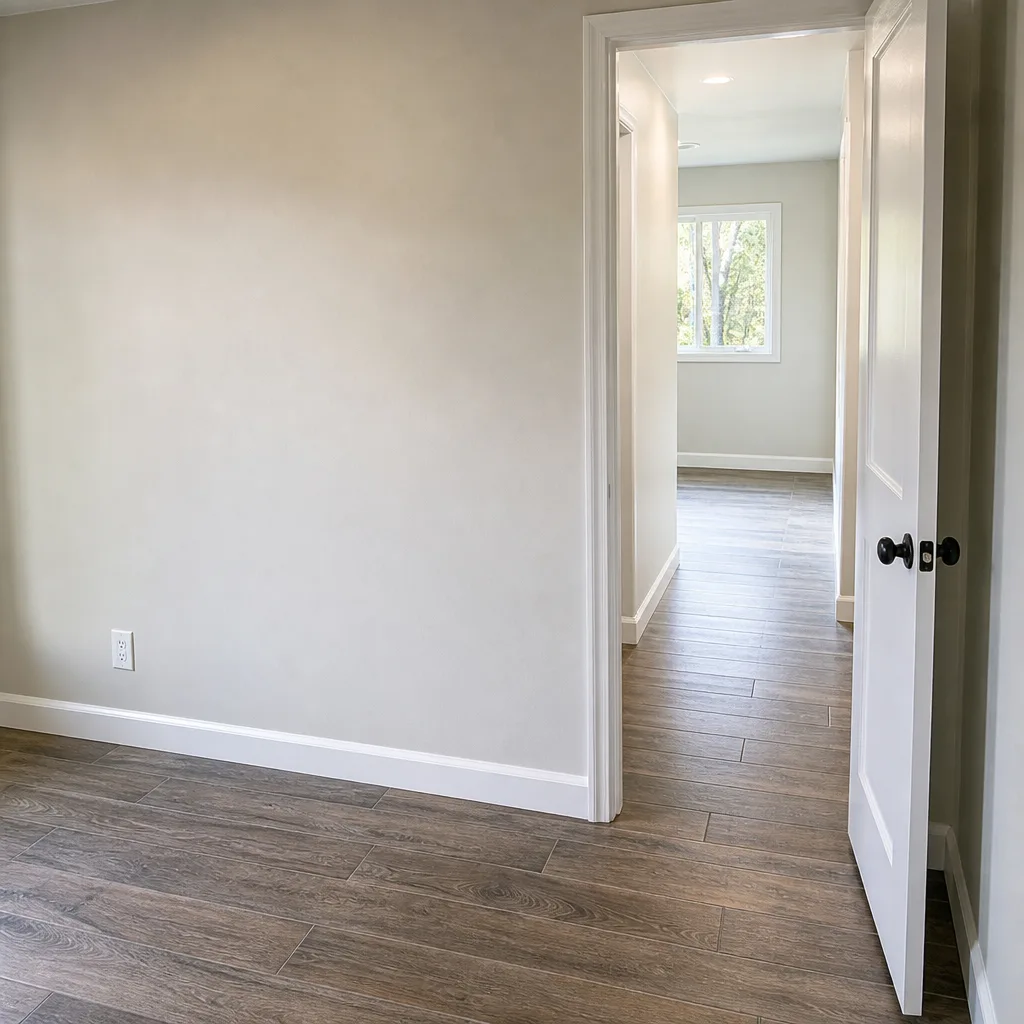 After
After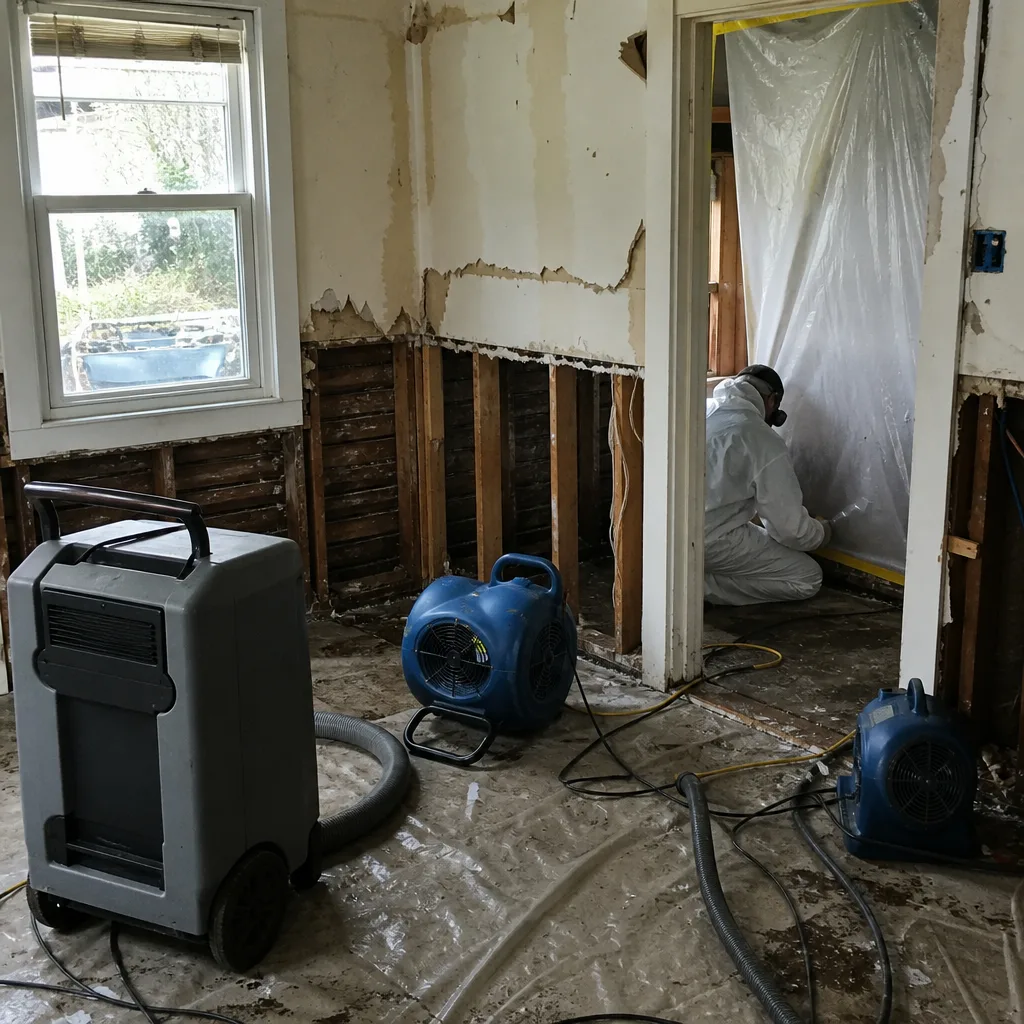 Before
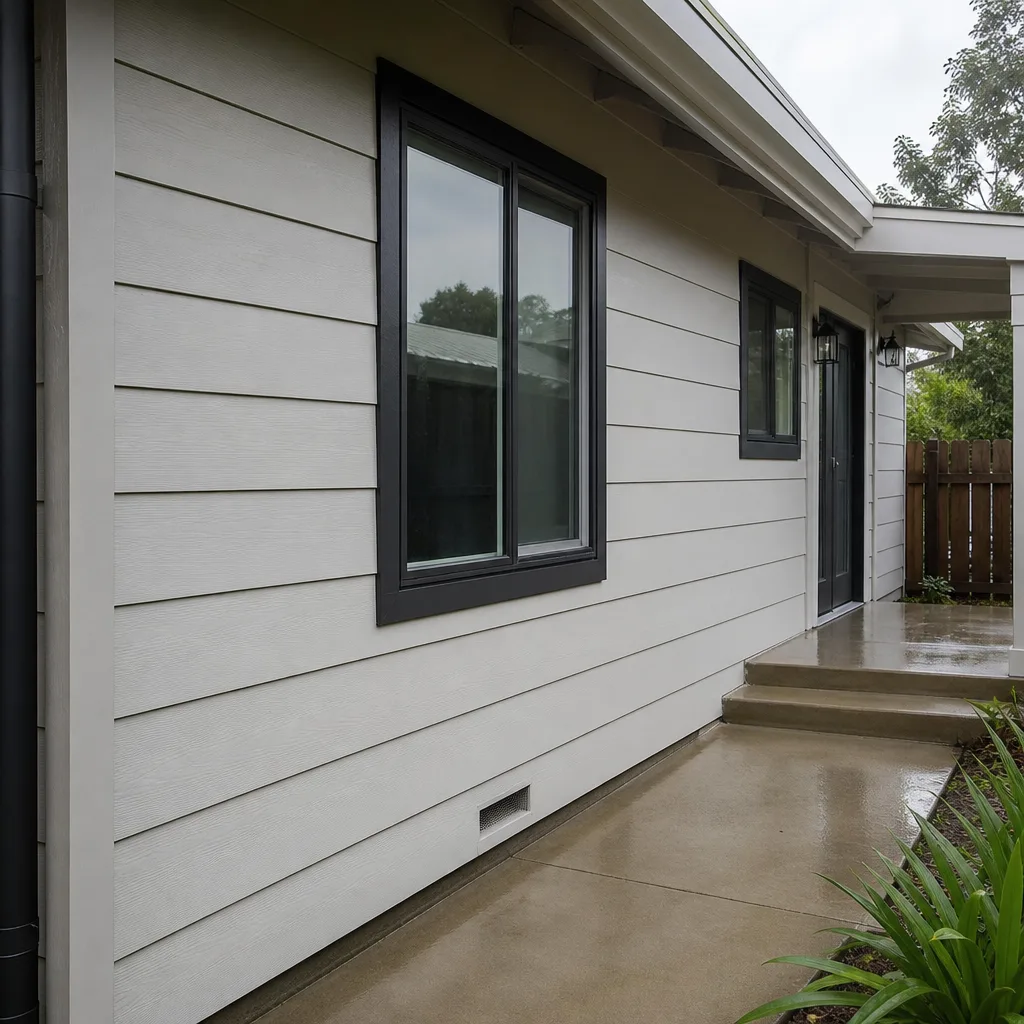 After
AfterThe Complete Guide to Damage Restoration in La Mesa
Here is a statistic that reshapes how you should think about your flooded kitchen or smoke-damaged bedroom: insurance adjusters deny or reduce restoration claims not because the damage wasn’t real, but because the contractor’s file couldn’t prove it. No daily moisture logs. No photo timestamps. No written scope before demolition began. In La Mesa, where hot, dry summers and periodic Santa Ana wind events create damage patterns distinct from coastal San Diego, this documentation gap costs homeowners thousands in uncovered repairs. This guide - along with our more guides & resources - explains what restoration actually is - a documentation process that happens to include drying and rebuilding - and how to protect your claim from day one.
Quick Answer
Damage restoration in La Mesa is the documented process of returning a property to its pre-loss condition after water, fire, mold, storm, or biohazard damage. A properly executed restoration in this climate produces a complete file - written scope, baseline moisture readings, daily drying logs, and photo record - that turns an insurance claim into a payable invoice rather than a disputed line item.
Table of Contents
- What Damage Restoration Actually Means in La Mesa
- The Documentation Chain That Determines Your Claim Outcome
- How La Mesa’s Climate Creates Distinct Damage Patterns
- Trades, Permits, and the Sequence That Protects Your Recovery
- What to Collect and Photograph Before Any Contractor Arrives
- How to Read a Restoration Invoice Line by Line
- Choosing a Restoration Company in La Mesa
- Costs, Timelines, and What Affects Both
 Before
 After
AfterWhat Damage Restoration Actually Means in La Mesa
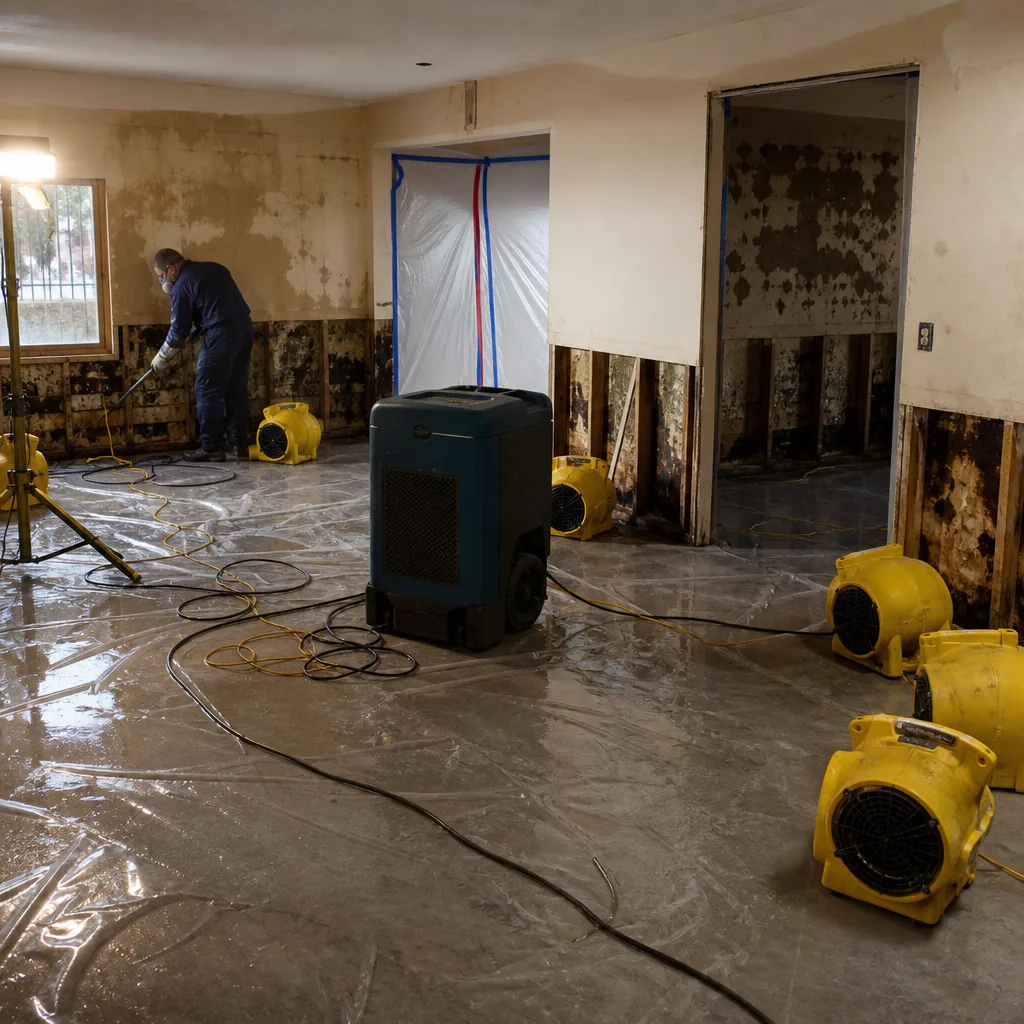
Restoration is not repair. Repair fixes what broke. Restoration proves what was damaged, documents how it was returned to condition, and produces a file that satisfies an insurance policy’s proof-of-loss requirement.
In La Mesa, this distinction matters more than in many markets. Homes here span nearly a century of construction - from 1920s bungalows in the Village to 1970s ranch homes in Lake Murray and newer builds in Rolando. Each era carries different materials, different code histories, and different vulnerabilities. A 1940s lath-and-plaster wall hit by a supply-line leak behaves nothing like a 2005 drywall assembly. Restoration means knowing the difference and documenting it.
The work breaks into categories:
- Water damage restoration: extraction, structural drying, dehumidification, and material replacement after clean water, gray water, or black water intrusion
- Mold remediation: containment, air filtration, removal of colonized materials, and clearance testing
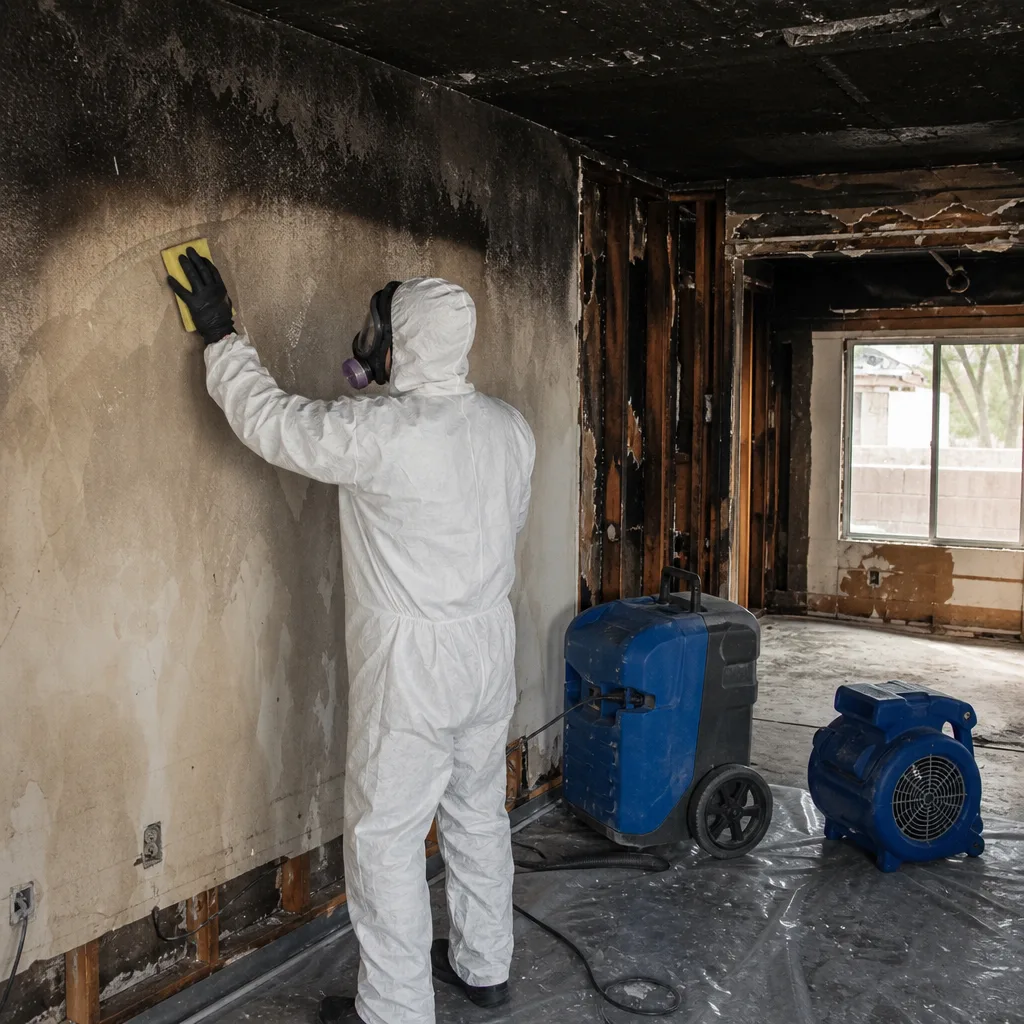
- Fire and smoke damage restoration: soot removal, odor neutralization, structural cleaning, and rebuild
- Storm and disaster restoration: emergency board-up, tarping, water mitigation, and phased reconstruction
- Sewage cleanup: Category 3 water mitigation with antimicrobial treatment and disposal protocols
- Biohazard and crime scene cleanup: pathogen deactivation, regulated waste disposal, and ATP-verified clearance
- Reconstruction: the controlled rebuild that follows mitigation, permitted and scoped in writing
Each category demands specific documentation. Water damage restoration in La Mesa requires psychrometric data - temperature, relative humidity, and vapor pressure differential readings - to prove that drying goals were met. Mold remediation in La Mesa requires containment negative-air verification and post-remediation sampling. Fire and smoke damage restoration in La Mesa requires itemized content inventories with pre-cleaning and post-cleaning photo pairs.
Without this documentation, an adjuster can reduce or deny any line item. With it, the same invoice pays cleanly.
The Documentation Chain That Determines Your Claim Outcome
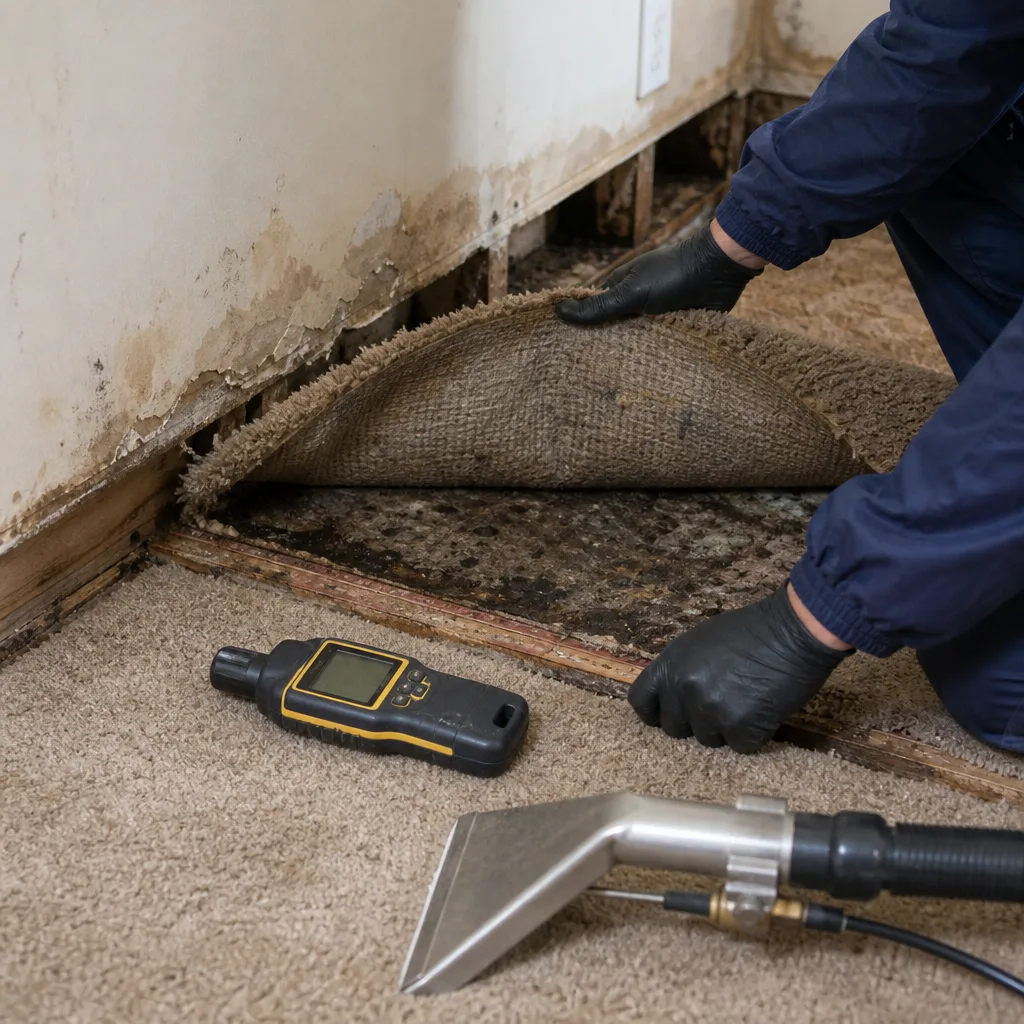
The first 72 hours after damage occurs determine whether your claim pays in full, pays partially, or enters the dispute cycle that averages 11 months to resolve. What happens in those 72 hours is not primarily drying or demolition. It is documentation.
Here is the chain, in sequence, with what each link protects:
- Written scope before work begins. This is Haven Standard, Clause 1: a written price delivered before any work starts, every time, with no scope-creep additions once the crew is inside. The scope defines the boundary of work, the materials to be used, and the standards to which the work will be performed. It prevents the “while we’re here” additions that inflate invoices and trigger adjuster scrutiny.
- Baseline moisture readings. Before any equipment runs or any material is removed, a technician records moisture content of affected and unaffected materials using calibrated penetrating and non-penetrating meters. Unaffected readings establish a dry standard for the structure. Affected readings establish the starting point. Without this baseline, an adjuster can claim the materials were already wet.
- Daily drying logs. Every 24 hours, the technician records psychrometric data - temperature, relative humidity, specific humidity, and vapor pressure differential - along with moisture meter readings at mapped locations. This log proves that the drying system was working, that progress was occurring, and that equipment was not left running longer than necessary. Dri-Eaz and Phoenix dehumidifiers produce this data automatically; our crews supplement with handheld verification.
- Photo record on every visit. Every visit to the property produces timestamped, geotagged photographs of the work area, the equipment in place, and the conditions observed. This is a standard deliverable, never an upsell. The photo record turns verbal claims into visual evidence.
- Material classification and disposal documentation. Every removed material is classified by type and weight, with disposal receipts. Asbestos-containing materials, lead-painted components, and pressure-treated lumber each carry specific handling requirements and documentation standards.
- Final moisture verification and sign-off. Before reconstruction begins, affected materials must read within the dry standard established at baseline. This reading is recorded, photographed, and signed by the technician and the homeowner.
- 365-Day Done Right Promise. Under The Haven Standard, if any completed work is found defective within one year, we return and correct it at no charge. This is a written warranty, not a verbal assurance, and it is stamped on every job file.
We have seen claims denied for a $14,000 water damage restoration because the contractor’s file contained no baseline moisture readings. The adjuster’s position: prove the walls were wet. Without the baseline, the contractor could not. The homeowner paid out of pocket.
We have also seen a $34,000 mold remediation in the Mt. Helix area pay in full within 14 days because the file contained daily containment pressure readings, photo-documented HEPA filtration, and a post-remediation ERMI report. The documentation did the work.
How La Mesa’s Climate Creates Distinct Damage Patterns
La Mesa sits at approximately 530 feet elevation, inland from San Diego’s marine layer influence. This geography produces a climate that is hotter, drier, and more variable than coastal restoration scenarios - and these conditions create damage patterns that require specific responses.
Summer drying paradox. From June through October, daytime temperatures regularly exceed 85°F with relative humidity dropping below 40%. In these conditions, surface materials can appear dry while subsurface moisture remains trapped. A homeowner in La Mesa who touches a wall and finds it warm and dry may conclude the water damage resolved itself. In fact, the heat has driven moisture deeper into the assembly, where it encounters the cooler interior and condenses. We regularly find elevated moisture in exterior walls of La Mesa homes three weeks after a supply-line leak, precisely because the surface dried too fast for the homeowner to notice the ongoing problem.
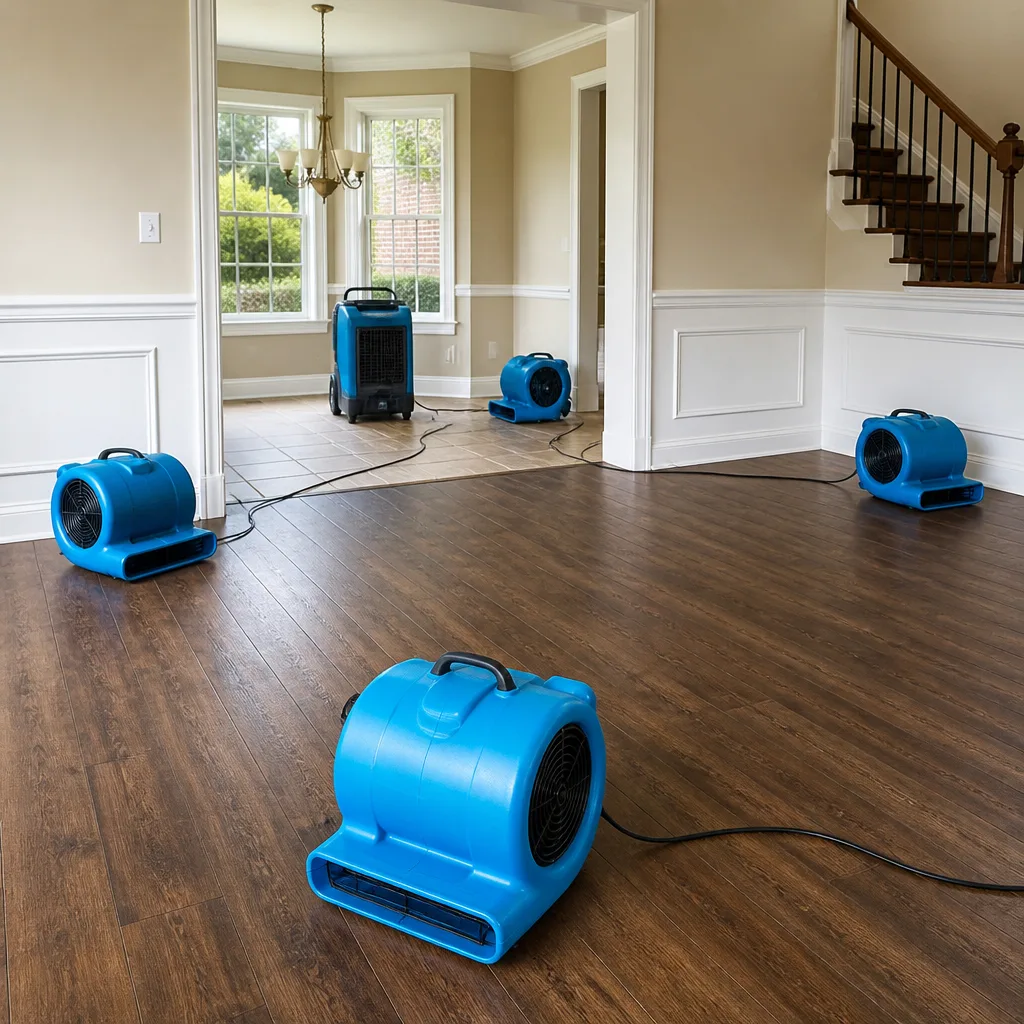
Santa Ana wind events. Northeast winds, typically October through January, drop humidity into the teens and raise temperatures into the 90s. These conditions accelerate the initial evaporation rate - what restoration professionals call the “vapor pressure differential” - but they also increase the risk of secondary damage. Rapid surface drying can cause hardwood flooring to cup, plaster to crack, and adhesives to fail. Proper restoration in these conditions requires controlled dehumidification, not just air movement. XPOWER and B-Air air movers must be paired with Phoenix dehumidifiers to maintain equilibrium moisture content.
Winter rain intrusion. La Mesa’s winter precipitation, concentrated December through March, arrives in concentrated events. Roof leaks and window failures are common in older homes near the Village and along the Alvarado corridor, where original clay tile roofs have exceeded their service life. The damage pattern here is often chronic rather than acute - months of slow intrusion before visible staining appears. By the time a homeowner calls, mold colonization is frequently established in the attic or wall cavity.
Soil and foundation considerations. La Mesa’s hillside construction, particularly in areas north of Interstate 8, creates drainage challenges. Expansive clay soils expand when wet and contract when dry, stressing foundation waterproofing. We have documented cases in the Collier Park area where seasonal soil movement cracked slab foundations, creating pathways for groundwater intrusion during winter saturation events.
These patterns differ materially from coastal San Diego restoration, where marine humidity slows surface drying and salt air corrodes metal components. A restoration company that applies coastal protocols to an inland La Mesa property will either over-dry (damaging materials) or under-document (exposing the claim to denial).
Trades, Permits, and the Sequence That Protects Your Recovery
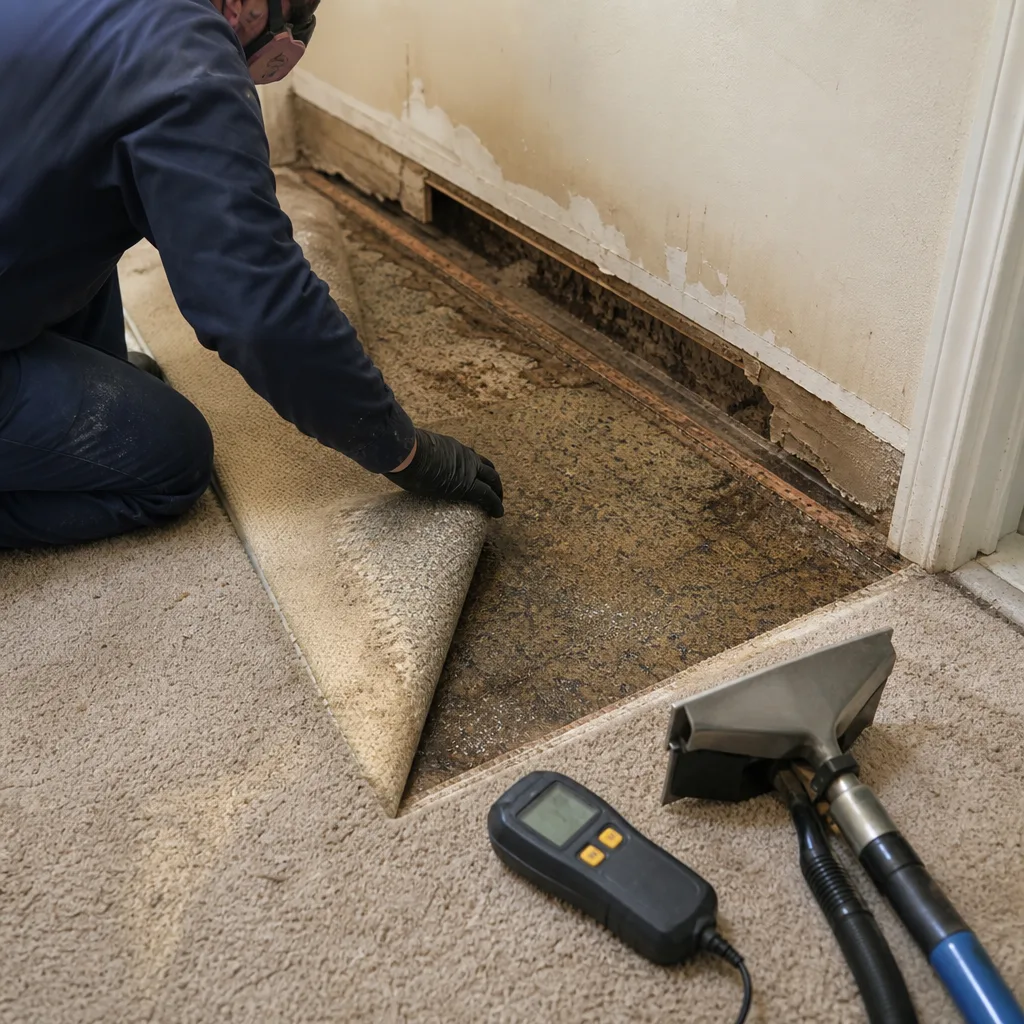
Restoration in La Mesa that involves structural repair, electrical, plumbing, or HVAC work triggers San Diego County permit requirements; for details, see our guide to Damage Restoration Permits, Codes & Inspections in CA: What You Need to Know. Skipping permits voids insurance recoveries and creates title problems at sale. The sequence matters.
Phase 1: Emergency mitigation. This requires no permit. Board-up, tarping, water extraction, and initial drying are emergency services. However, the documentation from this phase - the written scope, the moisture readings, the photo record - becomes the foundation for everything that follows.
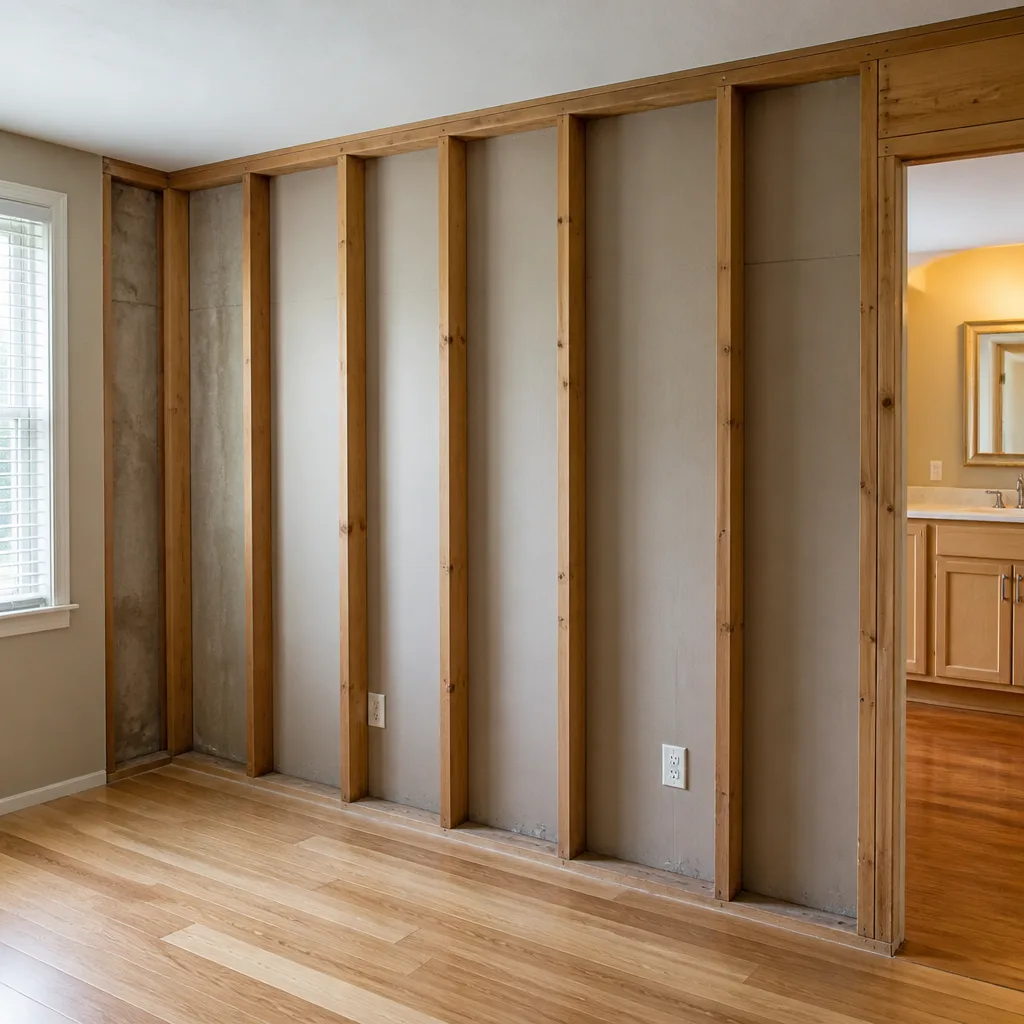
Phase 2: Controlled demolition. Demolition of damaged materials may require a permit if load-bearing elements are affected. In La Mesa, this typically means involving a structural engineer for review. The demolition scope must match the documented damage. We have seen adjusters deny reconstruction costs when demolition exceeded the moisture map without engineering justification.
Phase 3: Drying and remediation. Mold remediation and structural drying continue through demolition. This phase produces the daily drying logs and clearance documentation that close the mitigation portion of the claim.
Phase 4: Reconstruction permitting. In San Diego County, the following require permits:
- Electrical panel replacement or circuit additions
- Plumbing supply line relocation or fixture replacement
- HVAC ductwork modification or equipment replacement
- Structural wall removal or modification
- Roofing replacement exceeding 100 square feet
- Window and exterior door replacement
The permit application requires plans, which require a scope, which requires the documentation from Phase 1. A homeowner who begins reconstruction without this chain finds themselves paying for plans out of pocket while the insurance file remains open.
Phase 5: Final inspection and documentation. Passed inspections produce certificates of occupancy or completion. These certificates, combined with the restoration file, close the insurance claim. Missing certificates delay payment.
We coordinate directly with San Diego County Development Services and, where applicable, the City of La Mesa Building Division. Our project managers carry the permit status on every job file and update it at each inspection milestone.
What to Collect and Photograph Before Any Contractor Arrives
The hours between damage occurrence and contractor arrival are the most poorly documented in most claims - and the most consequential. What you collect in this window becomes evidence that no contractor can recreate later.
Immediate documentation (before touching anything):
- Photograph the source of damage: the burst pipe, the roof penetration, the appliance failure. Include surrounding context.
- Photograph the spread pattern: water trails, staining, sagging materials, pooled water. Work from the source outward in a systematic pattern.
- Photograph affected contents: furniture, electronics, textiles, documents. Capture brand names and model numbers where visible.
- Photograph the exterior: weather conditions, drainage patterns, roof condition. These establish contributing factors.
- Record a video walkthrough with narration describing what you observe and when you first noticed it.
Item collection:
- Insurance policy declarations page
- Recent utility bills (to establish normal usage patterns)
- Appliance manuals and warranty documents for affected equipment
- Receipts or photographs of high-value contents
- Contact information for any witnesses (neighbors, property managers, delivery personnel)
What not to do:
Do not discard damaged materials before they are documented. Do not begin demolition without photographing the undisturbed condition. Do not run fans or heating equipment without first photographing the wet state - an adjuster may claim the damage was caused by your drying attempt.
In La Mesa’s summer heat, we understand the impulse to open windows and air out a water-damaged room. This can accelerate surface mold growth and drive moisture deeper. Document first, then ventilate with purpose.
How to Read a Restoration Invoice Line by Line
Restoration invoices run long - 40 to 200 line items is typical for a substantial water loss. Each line item should carry supporting documentation. Here is how to read one, with what to challenge.
Equipment charges. Dehumidifiers, air movers, and air scrubbers are billed by the day. Verify that the equipment count matches the affected square footage. Industry standard: one air mover per 50-70 square feet of affected area, one dehumidifier per 1,000-1,500 square feet. A 2,000 square foot home with six air movers and one dehumidifier is under-equipped; with twenty air movers and four dehumidifiers, question the necessity.
Each equipment line should reference the make and model - Dri-Eaz LGR 7000XLi, Phoenix 200 HT, etc. - and the serial number. Serial numbers prove the equipment was actually on site.
Labor charges. Labor is billed by the hour with technician classifications. A water damage restoration technician, a mold remediation specialist, and a reconstruction carpenter carry different rates. Verify that the classification matches the work performed. We have reviewed competitor invoices where demolition labor was billed at technician rates.
Each labor line should reference the date, hours, and technician name or ID. Anonymous labor lines cannot be verified.
Material charges. Drywall, insulation, flooring, paint, and specialty materials should list manufacturer, product line, and quantity. “Drywall, 12 sheets, 1/2″ USG Sheetrock” is documentable. “Wall repair materials” is not.
Disposal charges. Weight and classification are required. Asbestos-containing materials carry higher disposal costs and require manifest documentation. If you see asbestos disposal charges, request the lab report and manifest.
Documentation charges. Photo records, moisture logs, and written scopes should be included as standard deliverables, never billed as add-ons. If you see a line for “documentation fee” or “photo report,” this contradicts the basic service standard.
What to challenge:
- Equipment charges extending beyond the documented drying period
- Labor hours exceeding the on-site time recorded in the drying log
- Material quantities exceeding the measured replacement area
- Any line item lacking a date, quantity, and unit of measure
Our Free Second Opinion on Any Written Estimate exists for this purpose. Bring a competitor’s quote and we will review it at no charge, line by line, against the documentation standard that The Haven Standard requires.
Choosing a Restoration Company in La Mesa
The selection criteria for a restoration company differ from those for a general contractor. You are not hiring for craftsmanship alone. You are hiring for documentation discipline, insurance fluency, and the ability to produce a file that pays.
Verify documentation practices before signing. Ask specifically: Will I receive a written scope before work begins? Will I receive daily moisture logs? Will I receive a photo record on every visit? Will I receive a signed warranty? If any answer is qualified or delayed, the company does not operate to the standard your claim requires.
Verify insurance coordination. Ask: Do you bill insurance directly? Do you provide itemized invoices with Xactimate or Symbility line items? Do you attend adjuster meetings? Do you photograph for the adjuster’s file as well as your own? A company that views the adjuster as an adversary will cost you more in claim disputes than they save in negotiation.
Verify equipment and standards. Professional-grade drying systems from Dri-Eaz, Phoenix, XPOWER, B-Air, and Injectidry, documented to IICRC, RIA, and IFA standards, produce the psychrometric data that proves drying occurred. Ask what equipment will be used and what standard governs its deployment.
Verify personnel. Background-checked, uniformed technicians - named, licensed, insured, and verified before they arrive - protect your property and your liability exposure. Ask for the license number. Ask who will be on site.
Verify availability. Live person answers every call, 24 hours a day, 7 days a week - no voicemail trees, no next-business-day callbacks while water is still moving. Test the number at 11 PM on a Saturday. The response tells you the operational reality.
In La Mesa, we have served homes from the Grossmont area to the eastern canyon edges. Each property carries its own documentation requirements based on construction era, material assembly, and damage source. A company that treats every job identically will miss the specifics that distinguish a paid claim from a disputed one.
Costs, Timelines, and What Affects Both
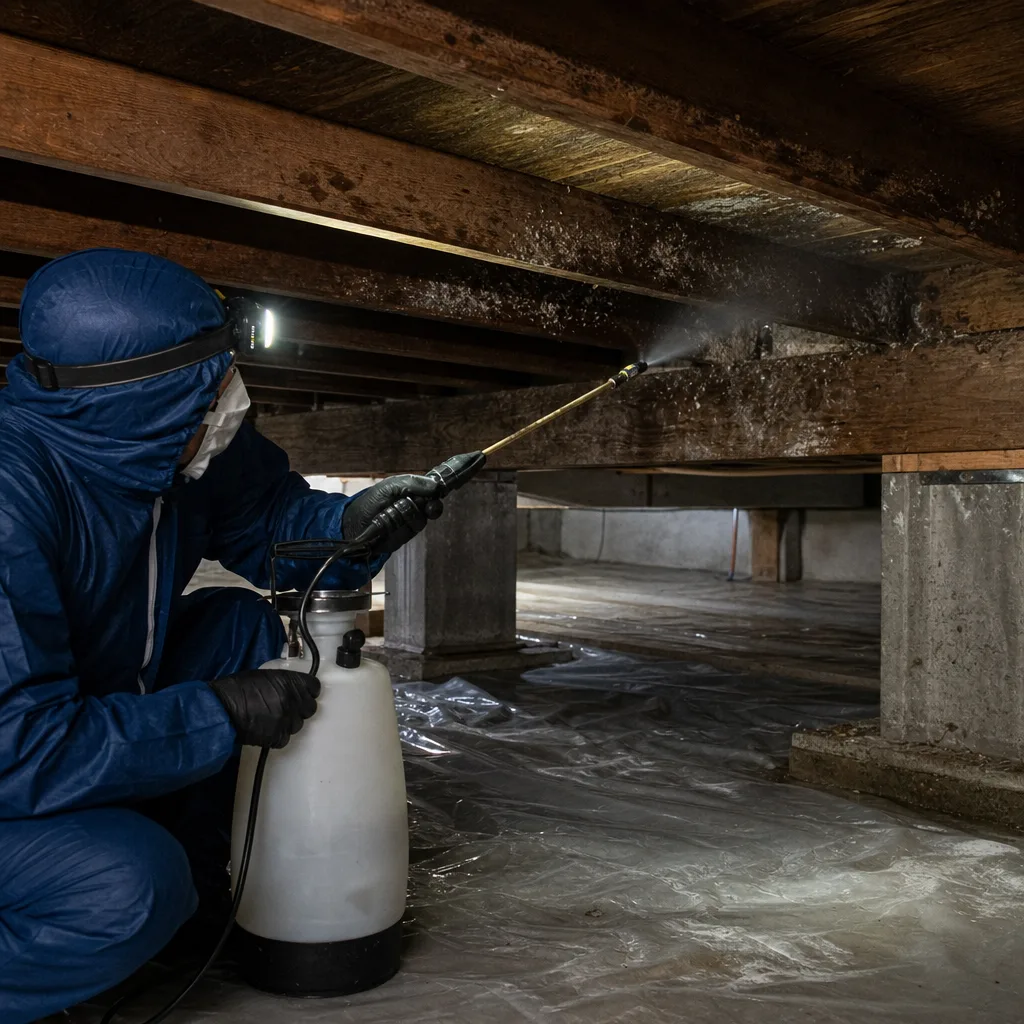
Restoration costs vary by damage category, affected square footage, material type, and the documentation standard applied. Below are typical ranges for La Mesa properties, based on our experience since 2011. These are ranges, not quotes. Haven Standard, Clause 1 applies: a written price before work begins, every time.
Water damage restoration:
- Category 1 (clean water), limited area: $1,800 – $4,500
- Category 2 (gray water), moderate area: $3,500 – $8,000
- Category 3 (black water), extensive area: $7,000 – $18,000+
Mold remediation:
- Contained area, less than 10 square feet: $1,200 – $2,800
- Moderate colonization, 10-100 square feet: $3,000 – $7,500
- Extensive colonization, HVAC involvement: $8,000 – $25,000+
Fire and smoke damage restoration:
- Light smoke, limited area: $2,500 – $6,000
- Moderate structural damage: $8,000 – $25,000
- Major structural damage with reconstruction: $25,000 – $75,000+
Sewage cleanup:
- Basement or single room: $3,000 – $7,000
- Multiple rooms, HVAC contamination: $7,000 – $15,000+
Reconstruction:
- Per square foot, basic finish: $85 – $140
- Per square foot, upgraded finish: $140 – $220
Timelines depend on the drying curve, permit processing, and material availability. Emergency mitigation begins same day. Structural drying typically requires 3-5 days for Category 1 water, 5-10 days for Category 2 or 3. Mold remediation adds containment and clearance testing time, typically 3-7 days. Reconstruction follows permit approval, which in San Diego County averages 2-4 weeks for residential projects.
La Mesa’s inland climate generally accelerates drying compared to coastal zones, but Santa Ana conditions can extend drying time if not properly controlled with dehumidification. The daily drying log reveals whether the timeline is justified.
Common Mistakes to Avoid
- Waiting to document. Homeowners who begin cleanup before photographing the damage often find adjusters disputing the extent of the original loss. Document first, then mitigate.
- Accepting a verbal estimate. Haven Standard, Clause 1 exists because verbal estimates become disputed estimates. A written price before work begins protects both parties.
- Using a general contractor for emergency mitigation. Mitigation requires specific equipment, specific training, and specific documentation. Reconstruction requires different skills. A company that does both under one roof with proper certification is preferable to a handoff between unrelated contractors.
- Ignoring permit requirements. Unpermitted electrical, plumbing, or structural work voids insurance recoveries and creates disclosure obligations at sale. The permit sequence is not optional.
- Discarding damaged contents before inventory. Contents restoration is often covered separately from structure restoration. Without pre-cleaning photographs and itemized inventories, these claims fail.
- Assuming surface dryness means complete dryness. In La Mesa’s summer heat, surfaces deceive. Moisture meters penetrate to the substrate. Trust the reading, not the touch.
- Signing releases without review. Insurance companies may offer quick settlements that exclude hidden damage. A complete moisture map and written scope reveal what is not yet visible.
When to Call a Professional
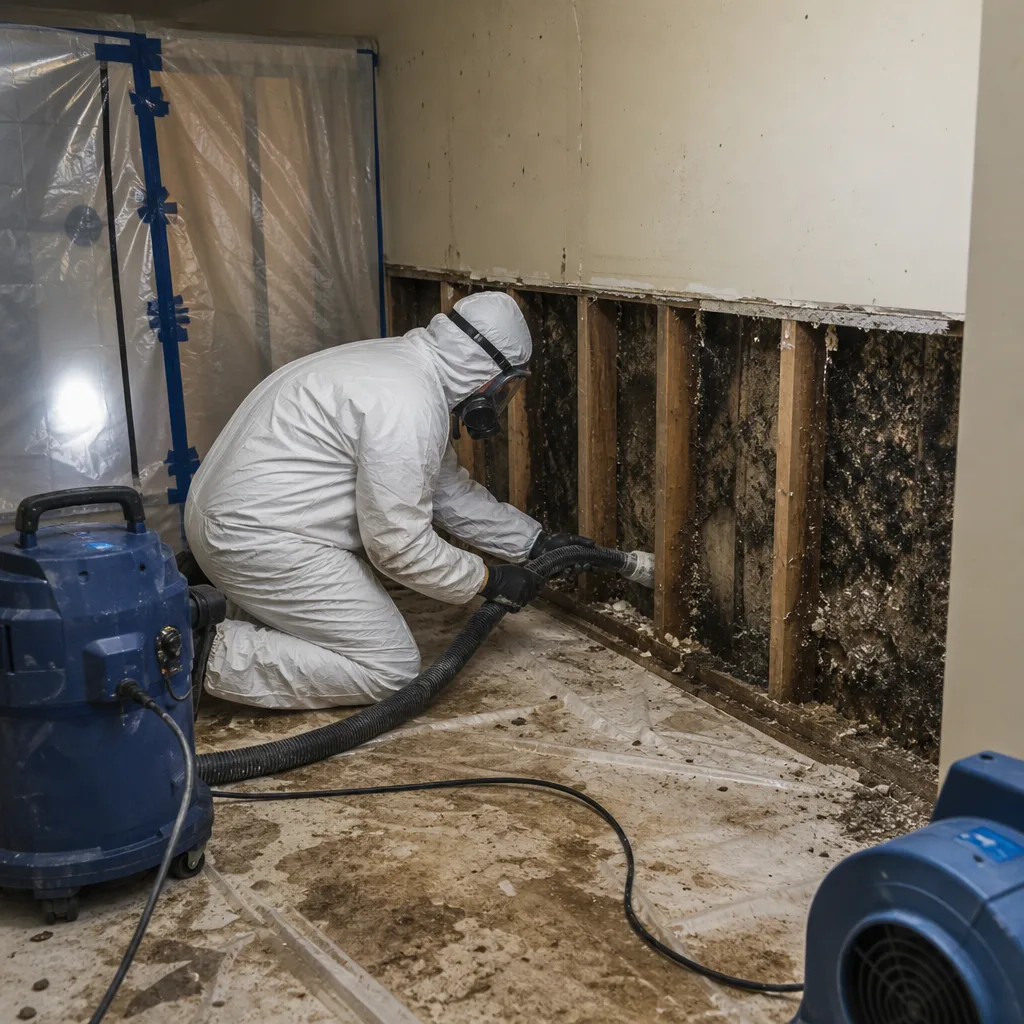
Call immediately when water is actively flowing, when sewage or Category 3 water is present, when electrical systems are wet, when mold is visible and exceeds 10 square feet, or when fire damage has compromised structural elements. These scenarios carry health risks and documentation requirements that exceed homeowner capacity.
Call within 24 hours when you discover water damage that has been present for more than a few hours, when you smell musty odors without visible mold, when staining appears on ceilings or walls, or when your utility usage has spiked without explanation. Early documentation preserves claim value.
Call for a second opinion when you have received a written estimate that seems incomplete, when equipment has been placed without baseline moisture readings, or when a contractor requests a signed authorization before providing a written scope. These are warning signs of documentation practices that will not survive adjuster review.
DryMark Restoration La Mesa offers free estimates in La Mesa - call (858) 264-2736. Our live dispatch answers 24 hours a day, 7 days a week, with no voicemail on emergency lines. Every job is quoted in writing before work begins, documented with a photo record on every visit, and covered by the 365-Day Done Right Promise.
Frequently Asked Questions
Water damage restoration in La Mesa typically ranges from $1,800 for limited clean-water damage to $18,000 or more for extensive black-water intrusion, while mold remediation runs $1,200 to $25,000+ depending on colonization extent. These are market ranges based on our work in La Mesa since 2011; your specific job receives a written price before work begins under Haven Standard, Clause 1. Call (858) 264-2736 for a free estimate.
Most homeowner policies cover sudden and accidental water damage, fire damage, and storm damage, but coverage depends on proof of loss - the documentation chain described in this guide. Gradual damage, maintenance neglect, and unpermitted work are typically excluded. We coordinate directly with adjusters, provide itemized Xactimate-format invoices, and photograph for the claim file as a standard service. Call (858) 264-2736 to discuss your specific policy and damage.
Emergency mitigation crews deploy same day for active water, fire, or biohazard situations; our live dispatch answers 24 hours a day, 7 days a week with no voicemail. Reconstruction work is scoped, permitted, and scheduled - never same-day, because it requires written pricing, material ordering, and trade coordination. For emergency dispatch in La Mesa, call (858) 264-2736.
Visible mold exceeding 10 square feet, mold in HVAC systems, or mold resulting from Category 2 or 3 water requires professional remediation with containment, negative air pressure, and clearance testing. DIY cleaning disturbs spores without capturing them, often spreading colonization. In La Mesa’s dry climate, disturbed mold can become airborne and re-colonize in hidden cavities. We provide free second opinions on any competitor’s remediation scope.
We do. Our project managers attend adjuster meetings, provide the documentation file - moisture logs, photo records, written scopes, drying logs - and answer technical questions in real time. This coordination is standard, not an add-on. The documentation we produce is formatted for adjuster review, with IICRC, RIA, and IFA standards cited where relevant.
Demand a written scope before work begins, baseline and daily moisture readings with psychrometric data, timestamped photo records on every visit, equipment serial numbers, technician identification, and a signed warranty. Any company that hesitates on any of these points is not operating to the standard your claim requires. Our Haven Standard specifies each element by clause; ask to see it.
The Bottom Line
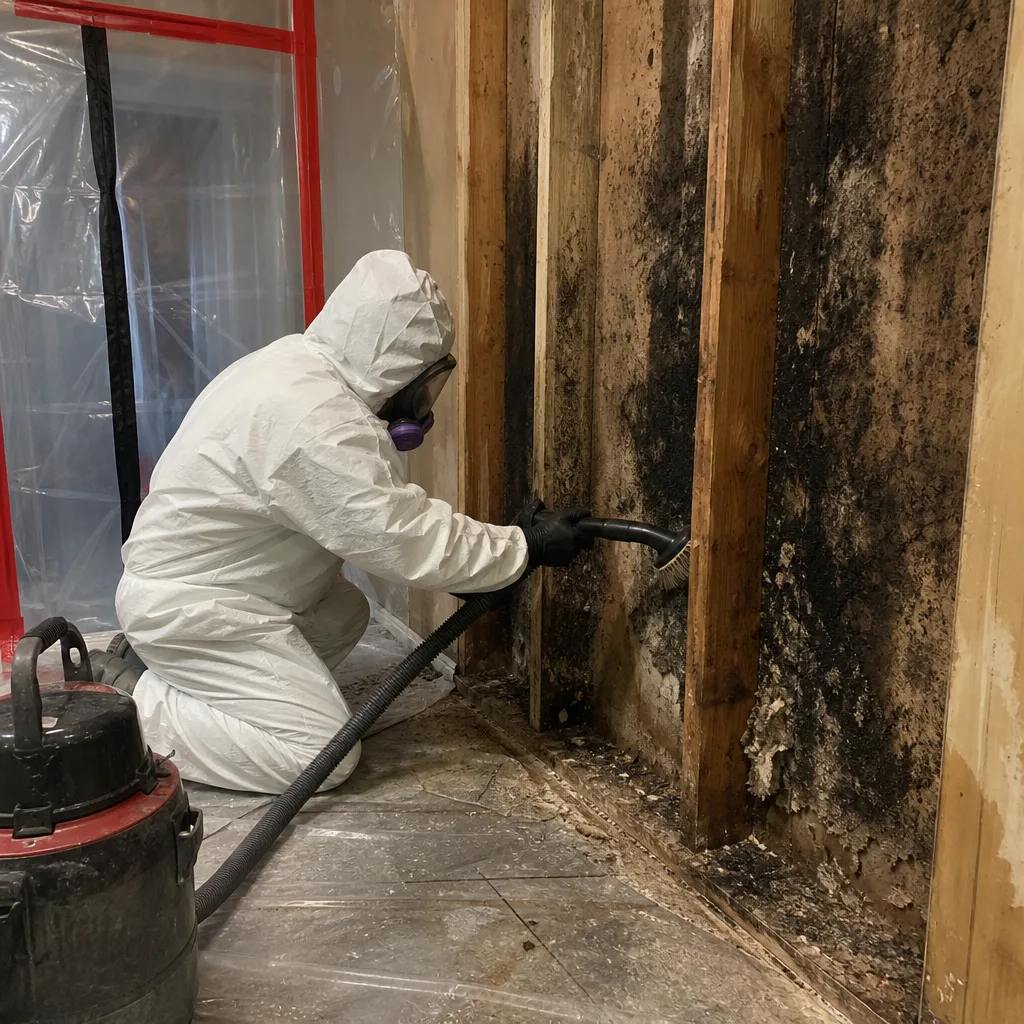
Damage restoration in La Mesa succeeds or fails in the documentation, not the demolition. The homeowner who understands this - who demands a written scope before work begins, who verifies daily moisture logs, who treats the photo record as evidence rather than courtesy - protects both their property and their claim. La Mesa’s inland climate, varied housing stock, and San Diego County permit requirements create specific demands that generic restoration approaches cannot meet. Choose a company that documents to the standard your adjuster will apply, and your restoration becomes a recoverable cost rather than a contested loss.
Written by Alicia Brennan, Owner at DryMark Restoration La Mesa, serving La Mesa since 2011.