
Last updated September 23, 2026
Free visual inspection and a written scope of work before any mitigation begins - photos, moisture readings, and drying logs go in your claim file
The scope we write is the scope we bill. Anything new gets shown to you, in writing, before we touch it.
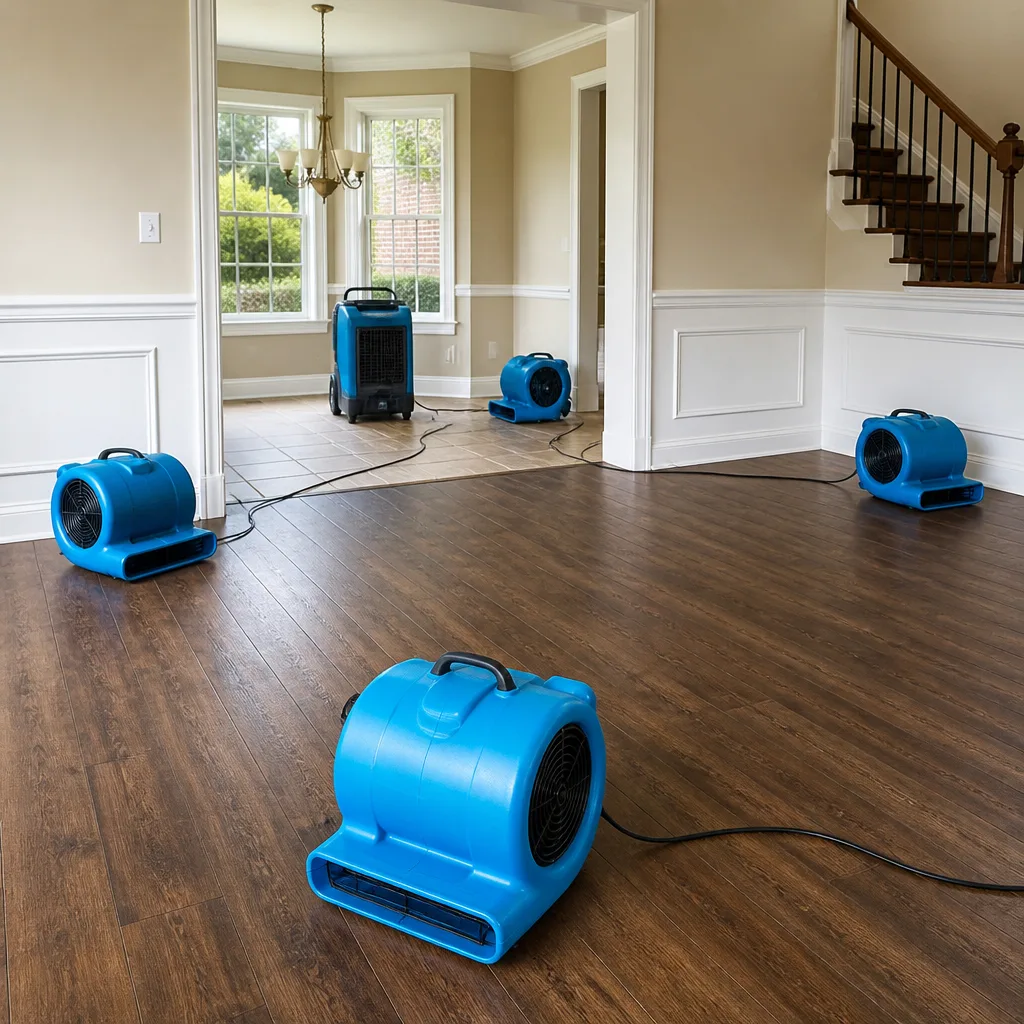

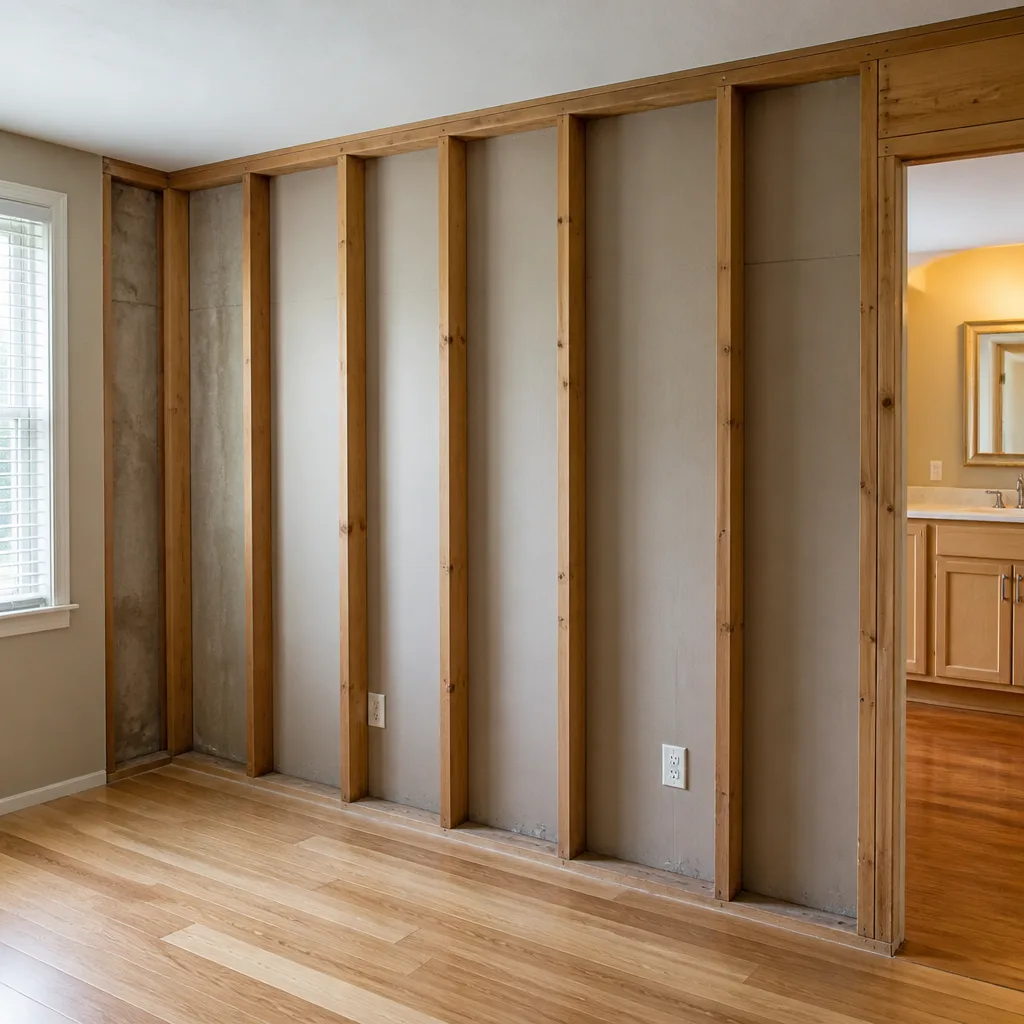

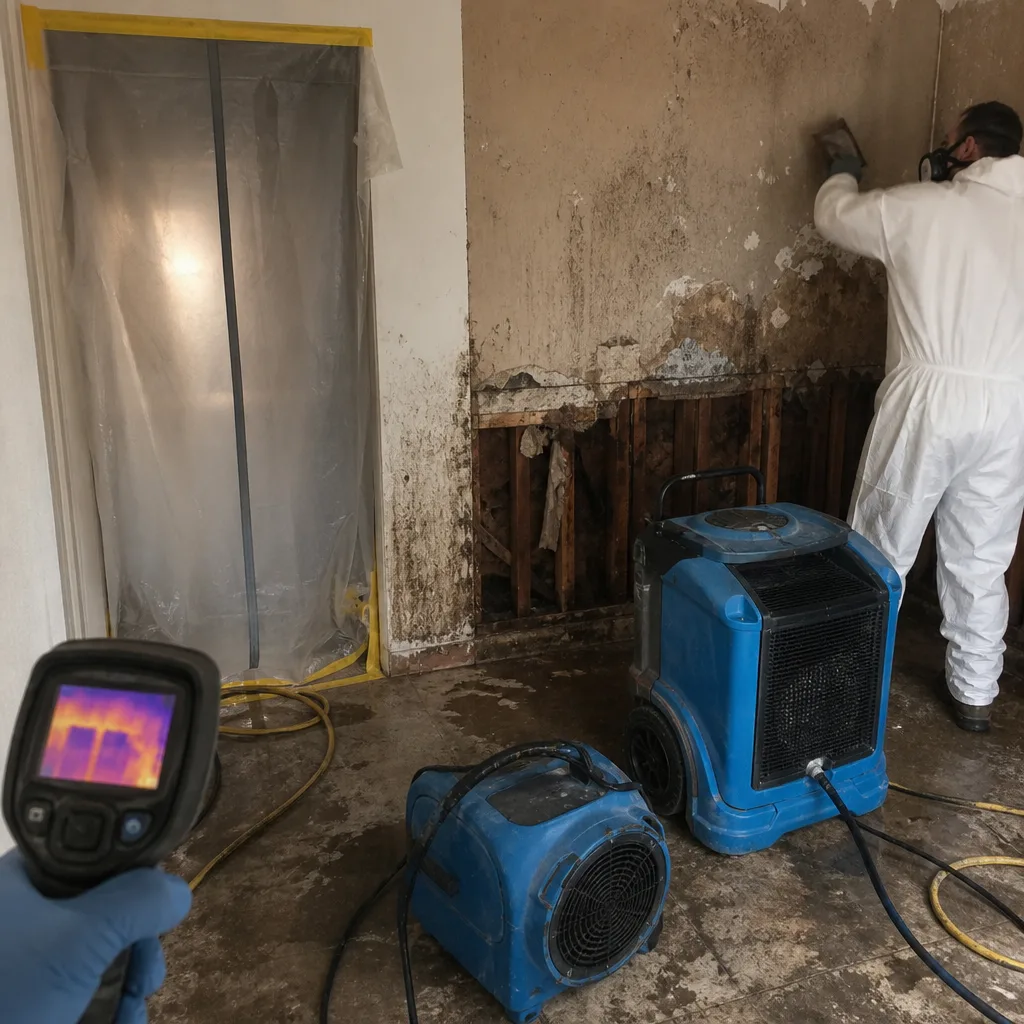 Before
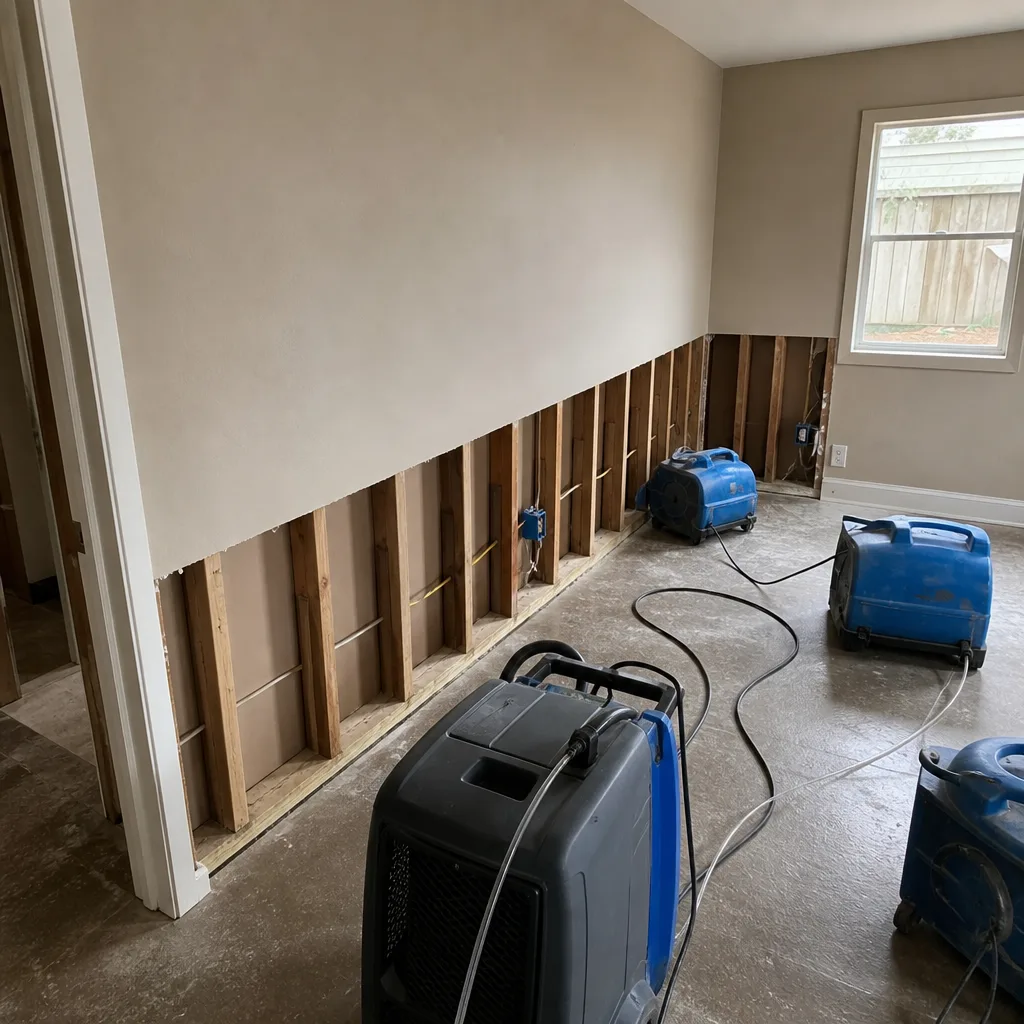 After
After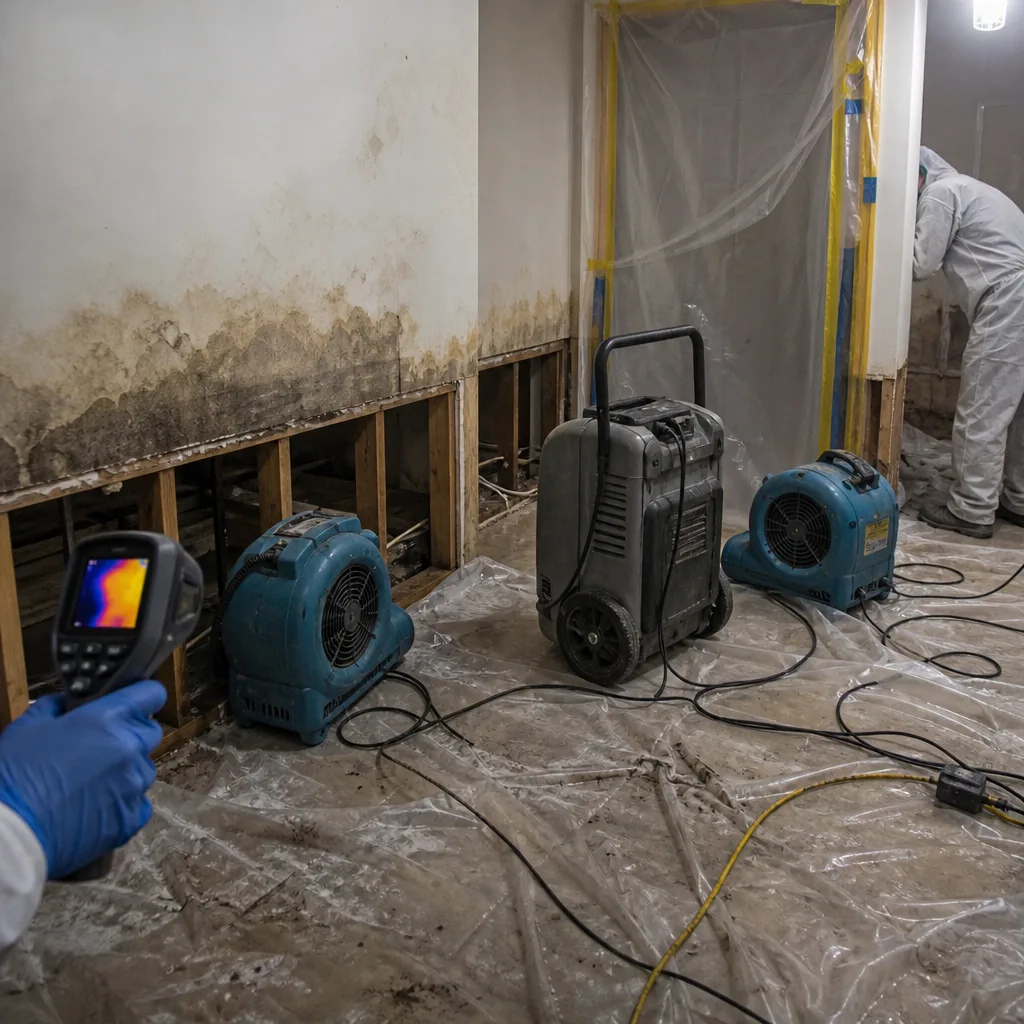 Before
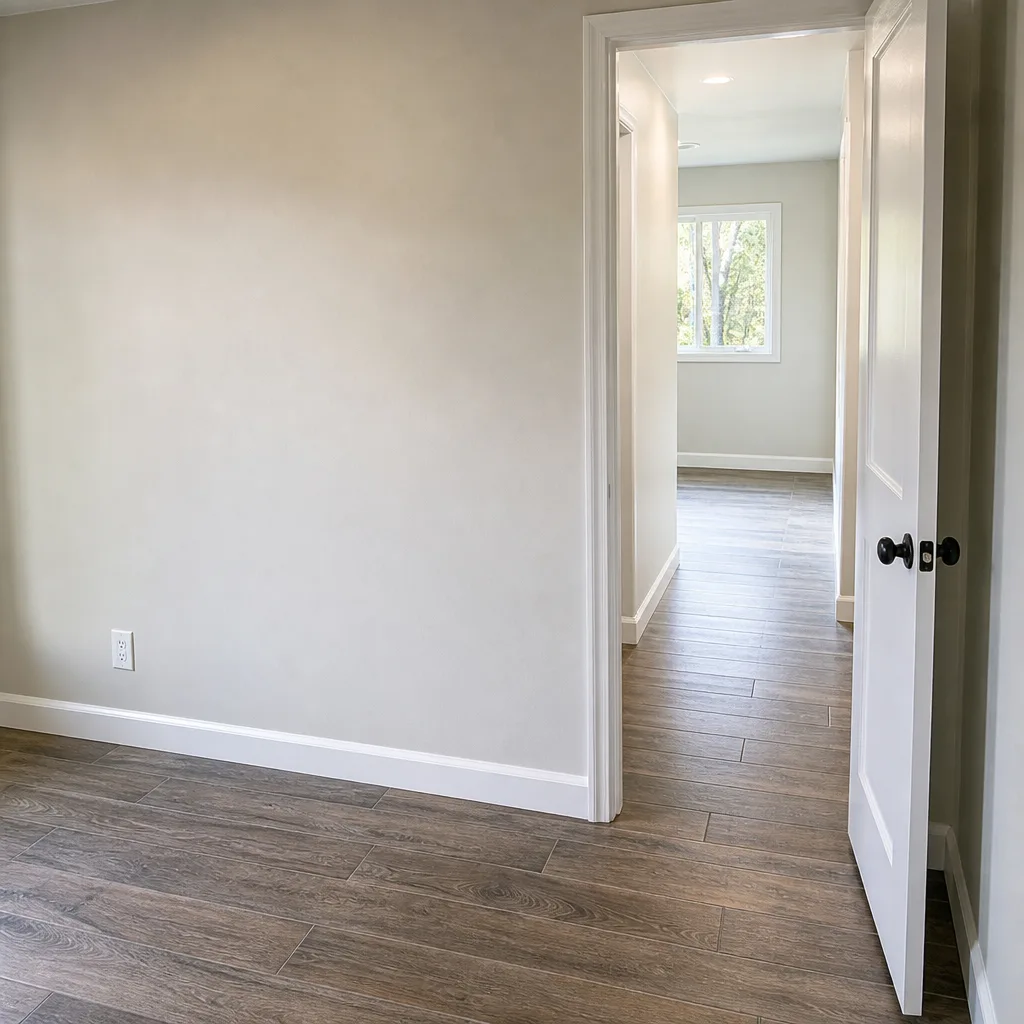 After
After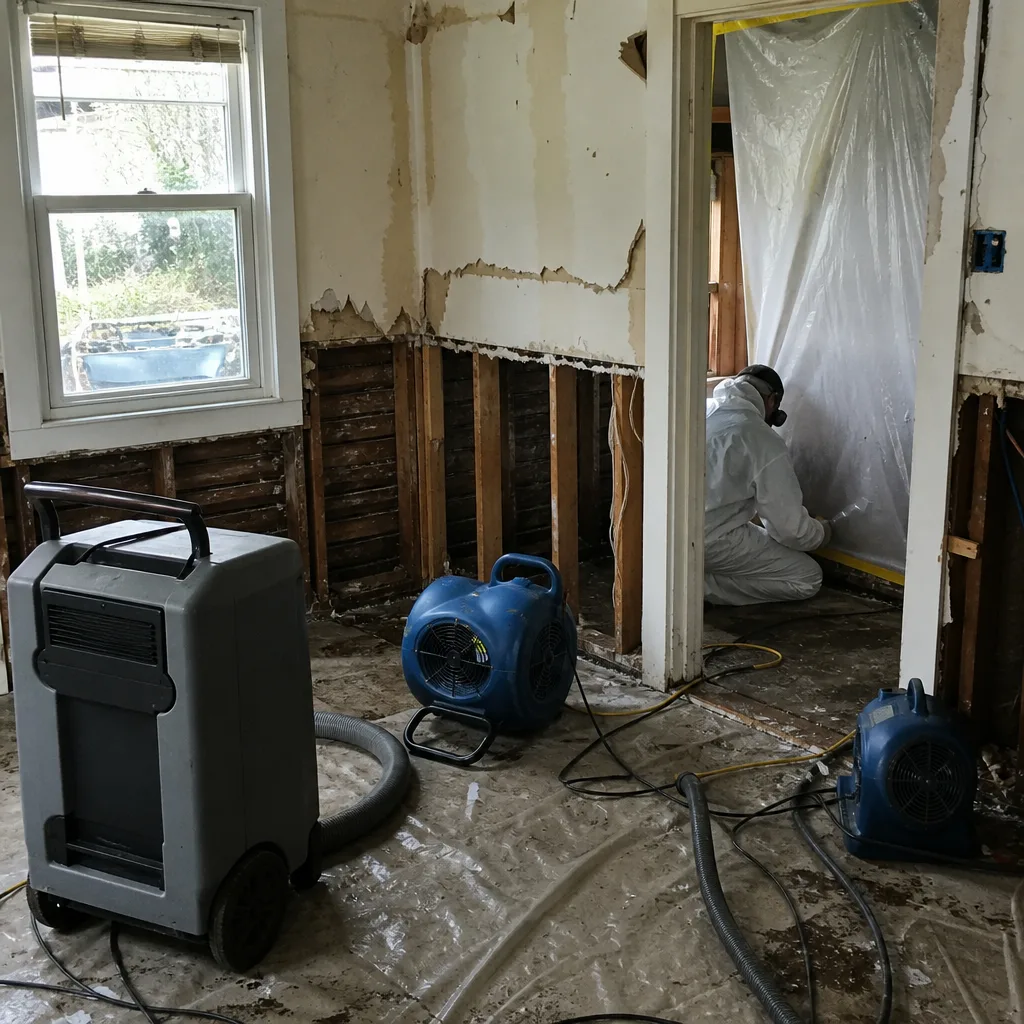 Before
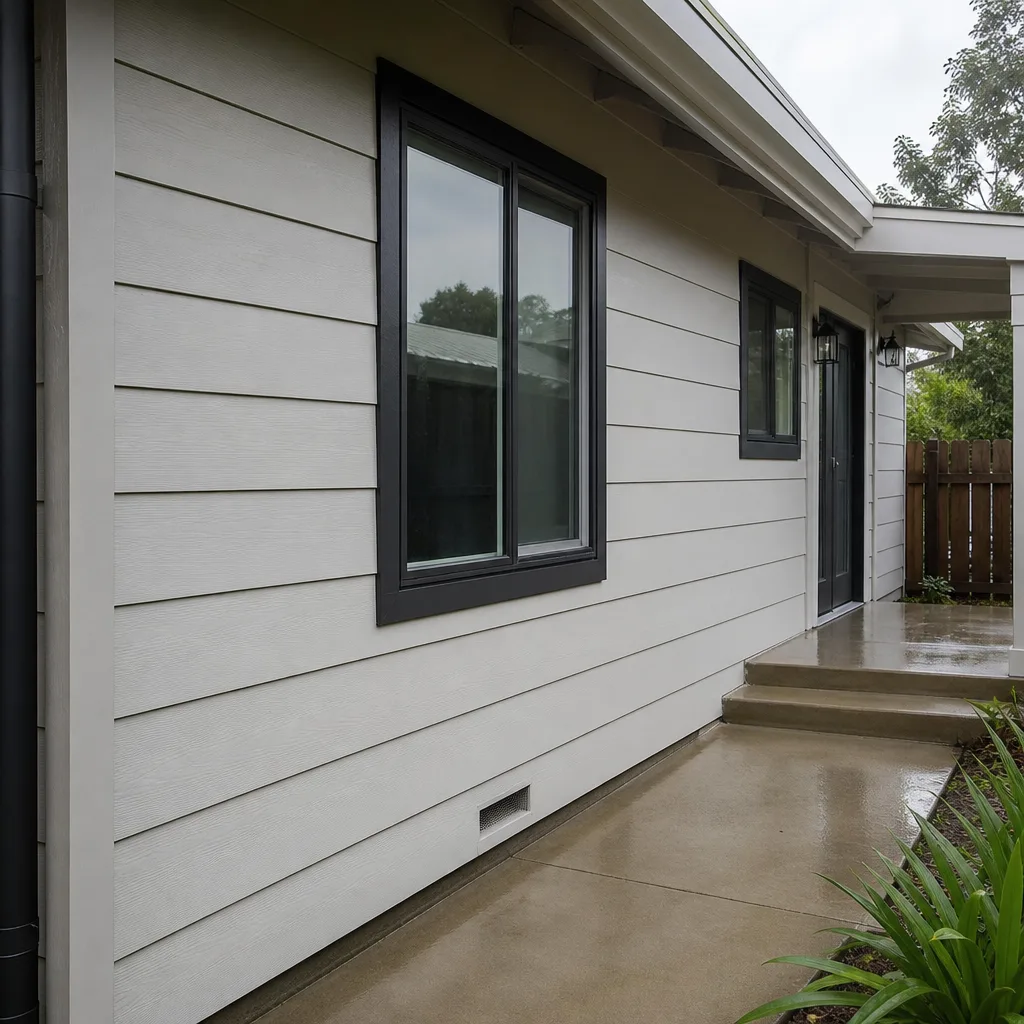 After
AfterDamage Restoration Warning Signs: A La Mesa Homeowner’s Reference Guide
A musty odor in a La Mesa home after a rain event is not a subjective nuisance. It is a measurable indicator of microbial activity that, left undocumented and unaddressed for more than 48-72 hours, crosses the threshold where most insurers begin invoking mold exclusion language. In our experience with more than 12,000 homes restored since 2011, the homeowners who fare best in claims are not the ones who noticed damage first. They are the ones who knew what to measure, when to document it, and which reading triggered a professional call. This guide pairs every warning sign with a specific action trigger and a measurable decision point, written for the construction patterns, climate, and insurance landscape specific to La Mesa. For year-round maintenance strategies, see our seasonal care guide.
Quick Answer
The most critical damage restoration warning signs in La Mesa homes are: moisture meter readings above 16% on wood framing or 1% above baseline on drywall, efflorescence lines wider than 3mm on foundation walls, musty odors persisting more than 48 hours after rain, and any water staining that expands between documented measurements. Each of these crosses a threshold where documentation becomes evidence and delayed response becomes a coverage issue.
Table of Contents
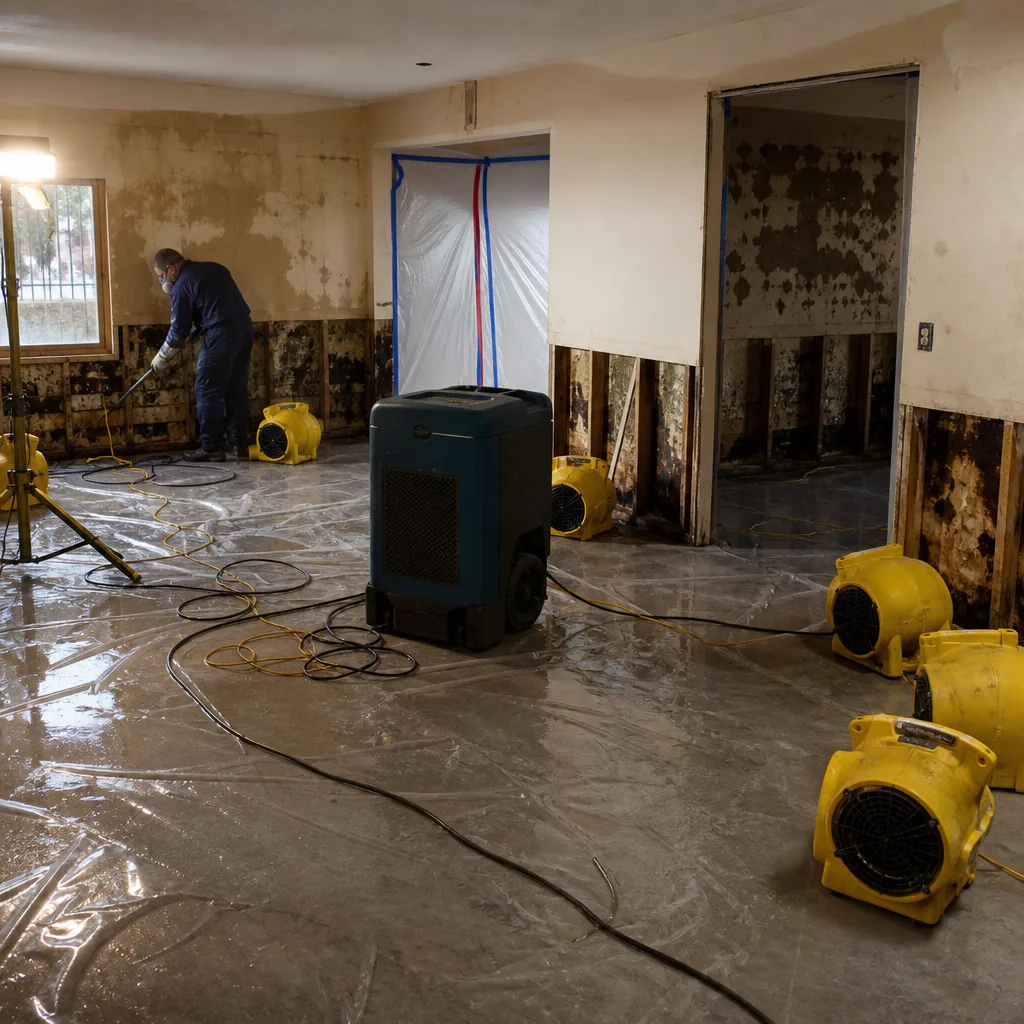
- Water Damage Warning Signs and Action Thresholds
- Mold Remediation Warning Signs and Documentation Standards
- Fire and Smoke Damage Warning Signs
- La Mesa-Specific Warning Signs by Construction Era
- Insurance Timeline Warning Signs: When Delay Becomes Denial
- How to Photograph and Log Warning Signs for Claims Documentation
- Using a Consumer Moisture Meter: Readings by Surface Material
- Room-by-Room Warning Sign Index
 Before
 After
AfterWater Damage Warning Signs and Action Thresholds
Water damage is the most frequently misread warning sign category because the visible evidence often lags the actual moisture event by days or weeks. In La Mesa, where the Mediterranean climate produces concentrated winter rain followed by extended dry periods, homeowners frequently dismiss early indicators as seasonal humidity.
The first threshold to understand is the difference between active and historic moisture. Active moisture intrusion is occurring now; historic moisture has dried but may have left secondary damage. A consumer-grade pinless moisture meter, available for $40-$80 at hardware stores in La Mesa, provides the distinction.
Wood framing and structural lumber: Baseline moisture content in La Mesa’s inland climate typically ranges from 8% to 12%. Readings above 16% indicate active moisture sufficient to support fungal growth. Readings above 20% require immediate professional assessment; at this level, wood rot organisms become active and structural integrity begins degrading. We document these readings with psychrometric data - temperature, relative humidity, and vapor pressure differential - to establish whether the moisture source is ongoing or residual.
Drywall and gypsum board: Baseline readings in conditioned La Mesa homes run 0.5% to 1.0% above ambient relative humidity. A reading 2% above baseline suggests active wetting. Drywall at 5% moisture content or higher is actively deteriorating; the paper facing delaminates and the gypsum core loses compressive strength. The critical action trigger: if a second reading taken 24 hours later shows any increase, the source is active and uncontrolled.
Concrete slab and foundation: Baseline readings vary widely by slab age and mix, but consistency matters more than absolute numbers. A reading taken at the same point, same time of day, that increases by 10% relative to prior measurement indicates active moisture migration. This is common in La Mesa hillside properties where seasonal groundwater shifts follow canyon drainage patterns.
Visible warning signs and their thresholds:
- Efflorescence on foundation walls: A 1mm powdery white line indicates historic moisture migration with crystallized mineral salts. No immediate action required, but photograph and measure monthly. A 3mm line with active flaking suggests ongoing moisture pressure. A 10mm line with damp substrate beneath requires professional assessment within 48 hours - this indicates hydrostatic pressure sufficient to compromise waterproofing membranes.
- Water staining on ceilings: Yellow-brown discoloration under 2 inches with defined edges typically indicates a single past event. Staining with feathered, expanding edges, or any staining that darkens between observations, indicates active leakage. The action trigger: place a moisture meter on the stained area. If reading exceeds 1% above baseline, call for assessment.
- Baseboard separation from wall: Gaps under 1/8 inch may be seasonal expansion. Gaps exceeding 1/4 inch, especially with visible nail pop or paint cracking at the gap edge, indicate moisture swelling in the substrate. Check with moisture meter; if drywall behind baseboard reads 2% above baseline, source is active.
- Tile grout discoloration: Darkening in shower surrounds is often dismissed as soap residue. The test: apply bleach solution (1:10) and scrub. If discoloration returns within 72 hours, it is likely microbial staining from persistent moisture behind the tile.
Our Water Damage Restoration in La Mesa team documents every initial assessment with moisture mapping, photo records, and a written scope before any equipment is deployed. The drying logs we produce, using equipment from Dri-Eaz and Phoenix, meet IICRC S500 standards and are structured specifically for adjuster review.
Mold Remediation Warning Signs and Documentation Standards
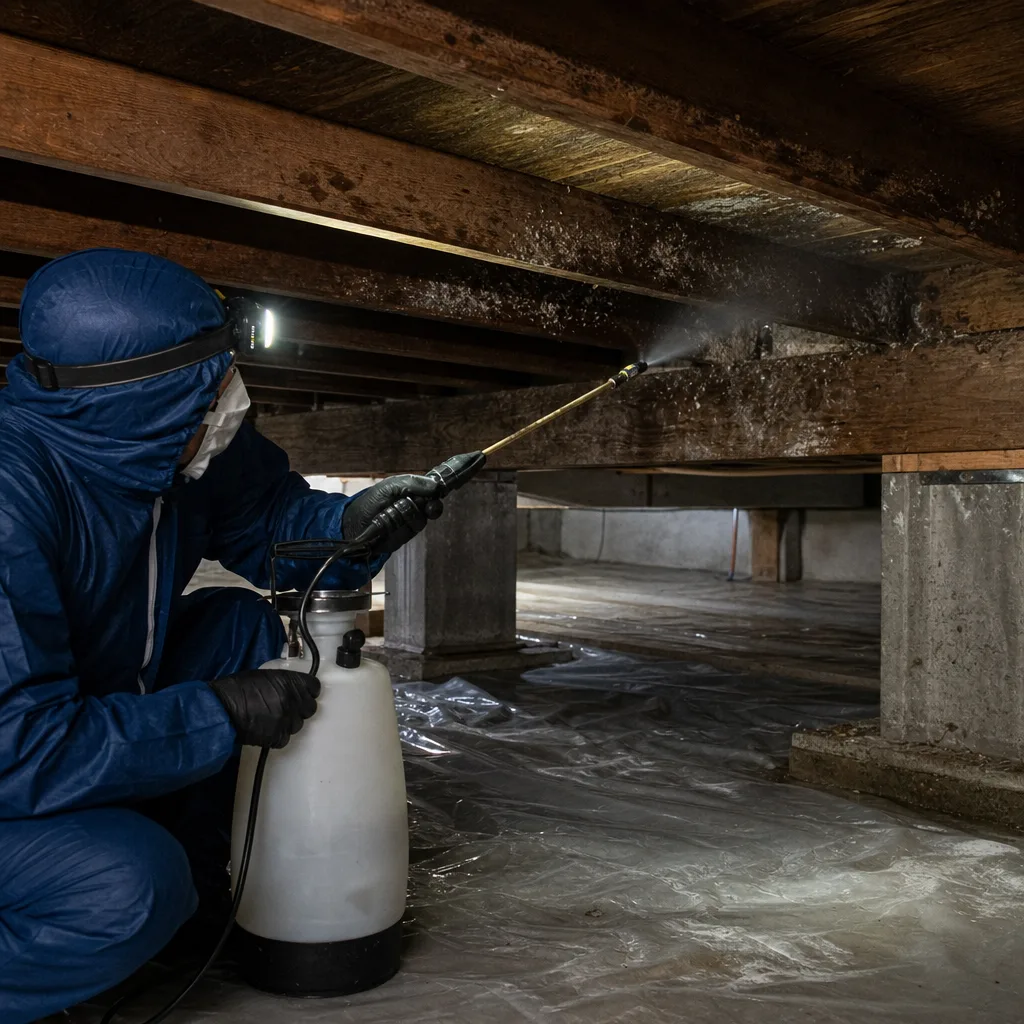
Mold warning signs operate on a different timeline than water damage. Where water damage demands immediate response, mold demands immediate documentation - because the 48-72 hour window after moisture introduction is where most insurance coverage disputes begin.
The threshold concept for mold is “sustained moisture sufficient for germination.” Mold spores are present in all La Mesa homes at background levels, typically 200-500 spores per cubic meter of outdoor air and comparable indoor levels. Germination requires moisture, temperature, and organic substrate. In La Mesa’s climate, temperature is rarely limiting; the control variable is moisture duration.
Musty odor: The most common and most dismissed warning sign. A musty odor that persists more than 48 hours after a rain event, or that returns predictably in specific weather conditions, indicates active microbial volatile organic compound (MVOC) production. This means mold is not just present but metabolically active. The action trigger: if odor is detectable upon entering a room after the space has been closed for 4+ hours, document with timestamp and photograph any visible staining, then call for assessment within 24 hours.
Visible discoloration: Not all discoloration is mold. In La Mesa’s older stucco homes, particularly those built 1960-1985, rust staining from nail heads or wire lath can mimic mold. The differentiation: mold typically shows irregular, feathery edges with color variation (green, black, gray, or white). Rust staining is uniform orange-brown with defined geometric edges following the fastener pattern. When uncertain, the safe action is documentation: photograph with scale reference (ruler or coin), note location, and submit for professional assessment.
Allergic symptoms with location specificity: Respiratory irritation, watery eyes, or sinus congestion that improves when leaving the home and worsens upon return, particularly in specific rooms, suggests elevated airborne spore counts. This is not diagnostic - consult a physician - but it is a valid warning sign that prompts environmental assessment.
The documentation standard that protects coverage: photograph every suspected area with a timestamp-enabled camera, include a measurement scale in frame, and maintain a written log of when the sign was first noticed, any associated events (leaks, repairs, weather), and all subsequent changes. Insurers increasingly require this documentation to establish that the policyholder did not permit conditions to persist unreasonably.
Our Mold Remediation in La Mesa service includes free second opinions on competitor estimates and produces documented photo records on every visit as standard deliverables, never upsells.
Fire and Smoke Damage Warning Signs
Fire damage warning signs are more immediately recognizable than water or mold, but smoke damage is frequently underestimated because its most harmful components are not visible. The action thresholds for smoke damage are chemical, not cosmetic.
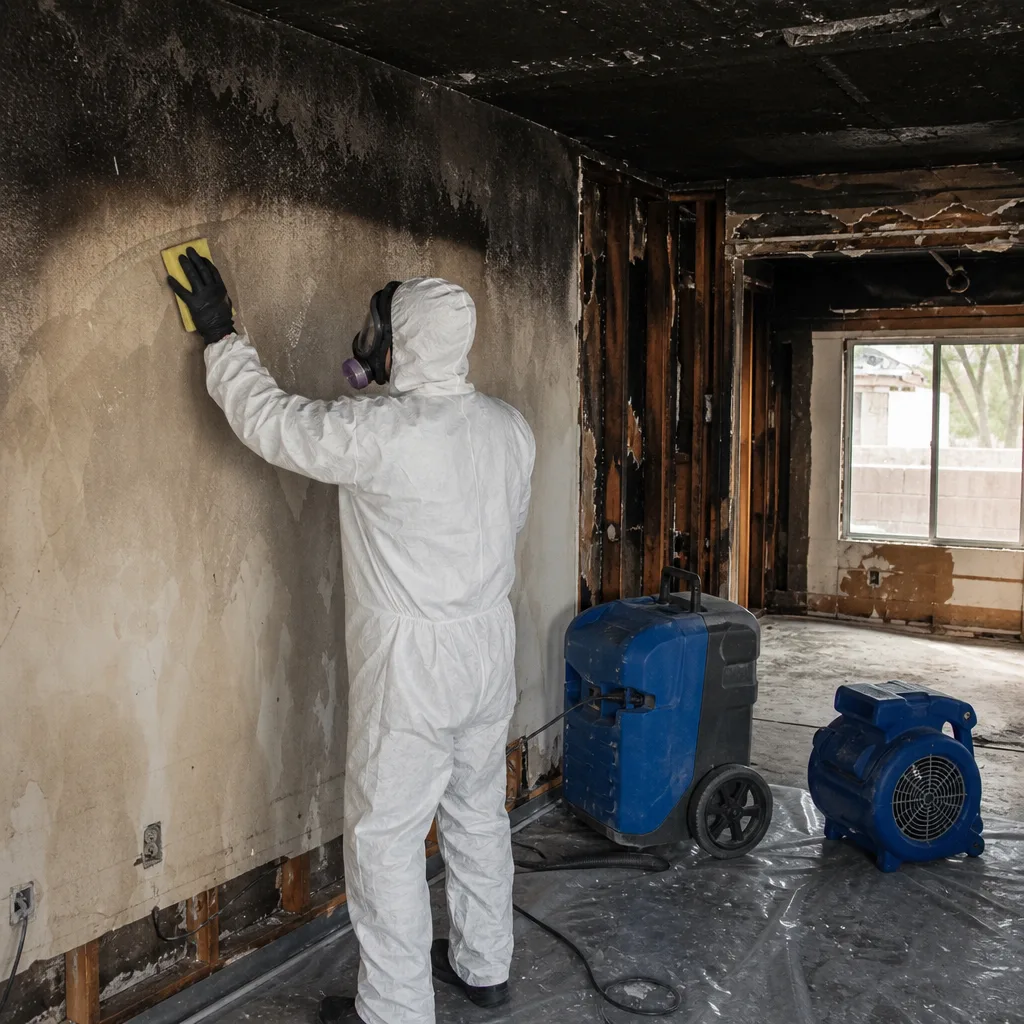
Visible soot and char: Any visible charring on structural members requires professional assessment regardless of size. Char depth of 1/8 inch or more on dimensional lumber indicates temperatures exceeding 500°F, which causes irreversible lignin degradation and structural weakening. Surface charring under 1/8 inch may be cleanable, but requires evaluation of heat penetration depth.
Smoke odor persistence: Smoke odor that persists after initial cleaning indicates adsorbed compounds in porous materials. The critical threshold: if odor is detectable in a closed room 72 hours after the fire event and basic ventilation, professional deodorization is required. Household cleaners cannot remove adsorbed smoke residues; they redistribute them.
Corrosion on metal surfaces: Acidic smoke residues begin corroding metal within 24-72 hours. Visible tarnishing on brass fixtures, rust formation on steel within 48 hours of fire, or pitting on aluminum indicates aggressive residue chemistry. These surfaces require immediate cleaning with appropriate pH-neutral agents, documented before and after.
HVAC system contamination: If the HVAC system was operating during a fire event, or if smoke odor is detectable at vents, the system requires inspection. The action trigger: remove a supply register and inspect the duct interior with a flashlight. Visible soot accumulation or odor at the register face indicates distribution of combustion products throughout the system. Do not operate the system until assessed; continued operation drives residues deeper into porous building materials.
Our Fire & Smoke Damage Restoration in La Mesa team uses thermal fogging and ozone treatment systems, with all work documented to IICRC S730 standards for fire and smoke damage restoration.
La Mesa-Specific Warning Signs by Construction Era
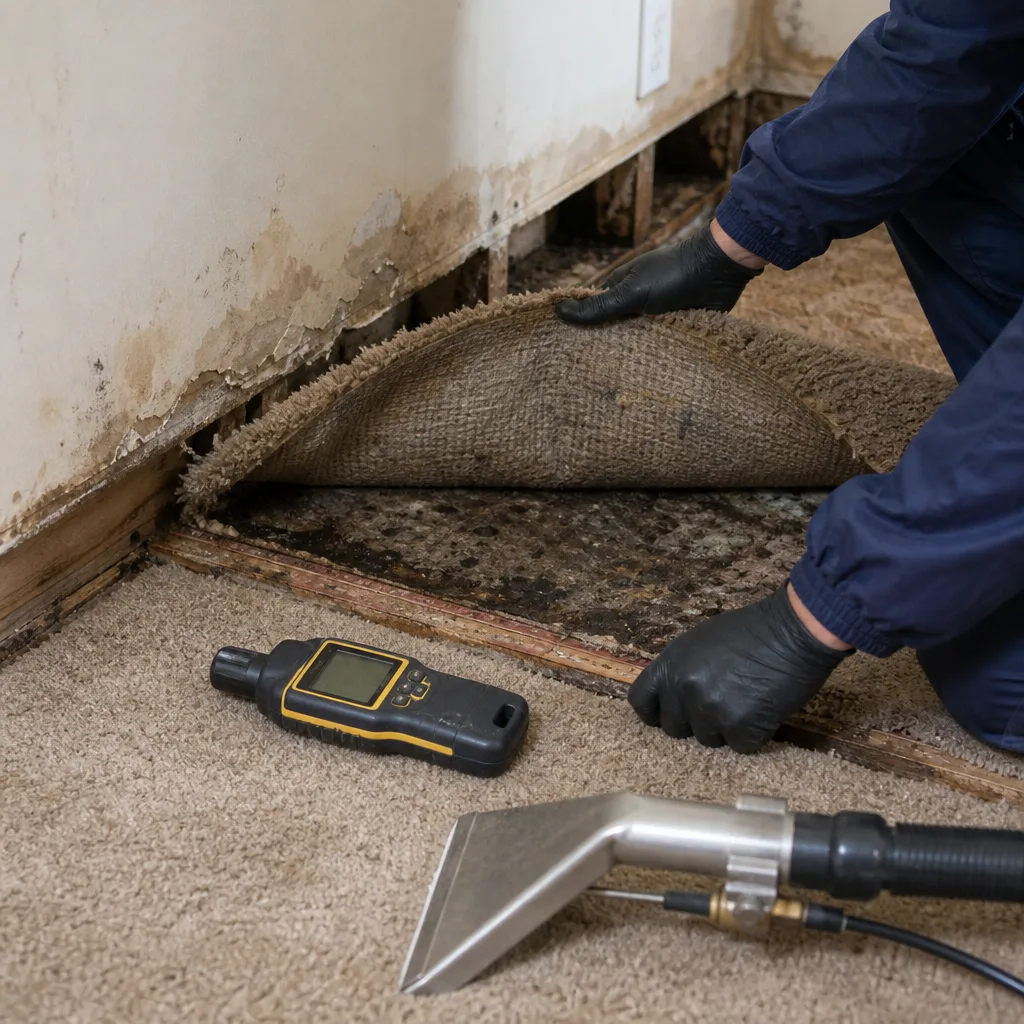
La Mesa’s housing stock spans from 1920s bungalows to 2020s infill, with distinct construction patterns in each era that produce predictable warning sign profiles. Understanding your home’s era helps distinguish normal aging from active damage.
Pre-1960: Foundation and Framing
Homes built before 1960 in La Mesa typically have raised perimeter foundations with crawl spaces, redwood or Douglas fir framing, and minimal vapor barriers. Warning signs specific to this era:
- Crawl space moisture: Standing water or damp soil in crawl spaces after rain is common but not acceptable. The threshold: moisture on vapor barrier (if present) or soil surface that persists more than 72 hours after rain cessation indicates inadequate drainage or perimeter waterproofing failure. In La Mesa’s clay-heavy soils, particularly in the College Avenue corridor and older neighborhoods near La Mesa Boulevard, seasonal expansion can crack perimeter drains.
- Foundation settling: Step cracks in stucco under 1/8 inch width that are stable year-to-year are typical aging. Cracks exceeding 1/4 inch, or any crack that shows fresh debris at the base (indicating recent movement), require structural assessment.
1960-1985: Stucco and Single-Wythe Construction
This era dominates La Mesa’s housing stock and produces the most frequently misread warning signs. Construction typically features single-wythe stucco (one layer over paper-backed wire lath), minimal insulation, and aluminum or galvanized steel windows.
- Stucco cracking patterns: Hairline cracks following the wire lath grid (typically 16 or 24 inch spacing) are shrinkage cracks, not structural. Diagonal cracks at window corners or door openings, especially if wider at top than bottom, indicate shear stress from foundation movement. The action trigger: diagonal crack width exceeding 1/8 inch, or any crack that allows water penetration (test with light spray from garden hose, observing interior for 30 minutes).
- Interior moisture at window heads: In La Mesa’s occasional driving rains, single-wythe stucco with compromised sealant at window perimeters allows water migration directly to interior drywall. Warning sign: paint bubbling or staining at window head corners, typically 6-12 inches down from ceiling. This is often misdiagnosed as roof leak; the differentiation is that stucco leaks worsen during wind-driven rain and may not appear during vertical rainfall.
- Wall cavity moisture: Homes of this era rarely have effective drainage planes. If interior baseboards show recurring moisture staining after rain, particularly on walls with exterior hose bibs or downspout terminations, suspect cavity moisture. The moisture meter test: readings on interior drywall that exceed 2% above baseline and correlate with rain events indicate active exterior water entry.
1985-2005: Transition to Modern Standards
Construction in this period shows mixed quality as building codes evolved. Key La Mesa-specific issues:
- Hillside grading and drainage: Many La Mesa homes on canyon-adjacent lots (particularly in Mount Helix-adjacent areas and the eastern slopes) were built with cut-and-fill grading that has settled over decades. Warning signs: patio or walkway settlement creating negative slope toward foundation; downspouts that terminate at grade without extensions; or visible erosion channels in landscaped slopes. Any of these indicate drainage patterns that may have been adequate when built but now direct water toward the structure.
- Stucco over OSB sheathing: This combination, common in 1990s construction, is vulnerable to moisture accumulation if the weather-resistive barrier is compromised. Warning sign: exterior paint failure in irregular patches, particularly on north and east elevations, with underlying OSB swelling visible as surface irregularity. This indicates moisture accumulation that has reached the sheathing and will progress to structural damage.
2005-Present: Modern Construction with New Vulnerabilities
Newer La Mesa homes, including infill developments near Grossmont Center and along Fletcher Parkway, incorporate modern materials but are not immune to warning signs:
- EIFS and synthetic stucco systems: Properly installed, these perform well. Improperly installed, they trap moisture. Warning sign: soft spots or surface irregularity that yield to firm pressure, indicating substrate degradation. The moisture meter is less reliable on EIFS; thermal imaging is more definitive for detecting trapped moisture.
- Compact lot drainage: Infill lots often have limited surface area for water dispersion. Warning sign: water pooling that persists more than 30 minutes after irrigation or rain, or neighbor runoff that crosses property lines. La Mesa’s municipal code requires drainage to remain on property; persistent cross-boundary flow indicates a code violation and potential liability issue.
Insurance Timeline Warning Signs: When Delay Becomes Denial
Every homeowners policy contains language requiring “prompt notice” of damage, with definitions that vary by carrier and policy form. The warning signs in this section are not physical; they are temporal and documentary. Missing them converts a covered loss into a disputed claim.
The 48-hour documentation window: From the moment you discover damage, the clock runs on your ability to prove when it started and that you did not permit it to worsen. The warning sign: any damage discovery where you do not photograph, measure, and timestamp within 48 hours. This is not insurance paranoia; it is the standard that adjusters apply when evaluating whether damage is “sudden and accidental” or “long-term and neglected.”
The 14-day professional assessment trigger: Most policies do not specify a hard deadline for professional assessment, but case law and arbitration outcomes consistently favor policyholders who obtain documented professional evaluation within 14 days of discovery. The warning sign: damage that remains unassessed by a restoration professional after 14 days. At this point, carriers increasingly invoke “failure to mitigate” provisions.
The mold exclusion threshold: Standard ISO HO-3 policies, the most common form in La Mesa, typically exclude mold damage unless it results from a covered water loss that was “sudden and accidental.” The warning sign: any moisture condition that persists beyond 48-72 hours without documentation of discovery and response effort. After this window, carriers routinely classify resulting mold as excluded regardless of original cause.
The repair commencement documentation: If you begin any repair before documenting pre-existing conditions, you risk destroying evidence that the carrier requires. The warning sign: any contractor who begins demolition, drying, or repair without first producing a written scope, photograph record, and moisture readings. This is why DryMark Restoration La Mesa home services operate under Haven Standard, Clause 1: written price before work begins, with documentation package included as standard.
Specific scenarios we have encountered in La Mesa claims:
- A homeowner discovers water staining after returning from vacation. The staining is documented as “recent” by the carrier because the homeowner cannot prove when it started. The lesson: photograph immediately, note absence of staining in prior observations, and obtain neighbor confirmation if possible.
- A homeowner waits for a contractor’s schedule opening, allowing mold to develop over three weeks. The carrier denies mold remediation as excluded. The lesson: professional assessment within 14 days, even if repair must be scheduled later.
- A homeowner cleans visible mold with bleach before documenting. The carrier disputes the extent of original contamination. The lesson: photograph before any cleaning; document what was done and why.
How to Photograph and Log Warning Signs for Claims Documentation
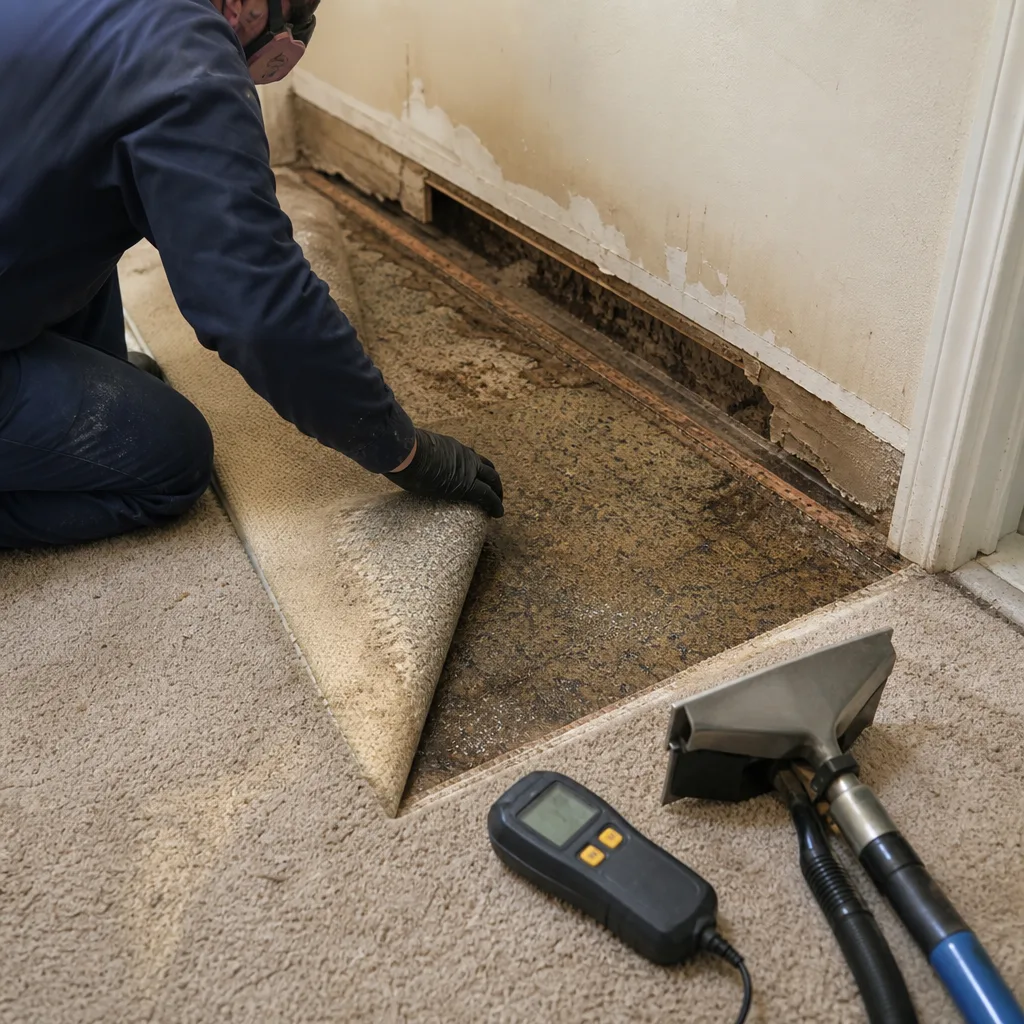
Documentation that survives adjuster scrutiny follows specific conventions. Amateur photographs are frequently rejected for lacking scale, timestamp verification, or measurement inclusion. The following protocol produces documentation that has supported thousands of claims in our experience.
Step 1: Establish Context
Photograph the room or area from sufficient distance to show location within the home. Include a recognizable reference point: window, door frame, or fixture. This prevents disputes about which room or wall is depicted.
Step 2: Include Scale Reference
Place a ruler, tape measure, or standard-size object (credit card, quarter) in frame for every close-up. Adjusters and arbitrators cannot assess severity from images lacking scale. A water stain photographed without scale could be 2 inches or 2 feet; the difference determines whether remediation is minor or extensive.
Step 3: Capture Measurement Data
For moisture readings, photograph the meter display in contact with the measured surface, with the reading clearly visible. Record: date, time, location, material type, and reading. The moisture meter reading without context is meaningless; “18.3% on 2×4 stud, northeast bedroom, exterior wall, 36 inches above floor, 2024-03-15, 09:15” is evidence.
Step 4: Timestamp Verification
Use a camera with automatic timestamp or a smartphone with location services enabled. For additional verification, include that day’s newspaper or a phone displaying a current news website in one contextual photograph. This counters challenges that photographs were taken at a different time.
Step 5: File Naming Convention
Rename files systematically: YYYYMMDD_Location_Description_Sequence. Example: 20240315_MasterBR_NorthWall_Stain_01.jpg. This permits rapid retrieval and demonstrates organized documentation practices that adjusters associate with credible claims.
Step 6: Maintain Written Log
Complement photographs with a contemporaneous written log. For each entry: date, time, observation, action taken, and next planned action. Email this log to yourself or store in cloud service with automatic timestamp. A notebook is better than nothing; a verifiable digital record is better still.
Our documented photo record on every visit, included as standard deliverable under The Haven Standard, follows this protocol precisely. We produce the documentation that turns restoration invoices into payable claims.
Using a Consumer Moisture Meter: Readings by Surface Material
A pinless moisture meter is a $40-$80 investment that transforms subjective observation into objective data. The following table provides baseline and action-threshold readings for common materials in La Mesa homes. All percentages are moisture content by weight for wood, or relative readings for non-wood materials (pinless meters measure conductivity, which varies by material).
| Material | Typical Baseline (La Mesa) | Caution Threshold | Action Required |
|---|---|---|---|
| Douglas fir framing (interior) | 8-12% | 16% | Professional assessment; active moisture source likely |
| Redwood framing (pre-1960) | 10-14% | 18% | Assessment; redwood tolerates higher moisture but rot organisms activate similarly |
| Drywall (interior, conditioned space) | 0.5-1.0% above ambient RH | 2% above baseline | Identify source; professional assessment if increasing on remeasure |
| Concrete slab (above grade) | Varies widely; establish baseline | 10% relative increase from baseline | Professional assessment; indicates moisture migration |
| Ceramic tile (grout joints) | Baseline varies; use comparative reading | Significantly above adjacent dry tile | Indicates moisture behind tile; professional assessment |
| OSB sheathing (exterior walls) | 12-15% | 20% | Critical; OSB degrades rapidly at elevated moisture |
| Engineered wood flooring | 6-10% | 14% | Assessment; engineered products delaminate when over-moist |
Measurement protocol: Take readings at consistent locations, same time of day, with the meter calibrated per manufacturer instructions. Record temperature and relative humidity; psychrometric conditions affect readings. A reading of 16% on wood at 85°F and 70% RH indicates less severe conditions than the same reading at 65°F and 40% RH, because evaporation potential differs.
Vapor pressure differential, defined simply: the difference in moisture pressure between two spaces that drives moisture movement. When the vapor pressure inside a wall cavity exceeds that of the exterior, moisture moves outward. Reversal of this differential, common in La Mesa when air conditioning creates cool interior surfaces in humid conditions, drives moisture inward and can produce condensation on interior surfaces that appears as a leak but is actually a thermal bridge issue.
Room-by-Room Warning Sign Index
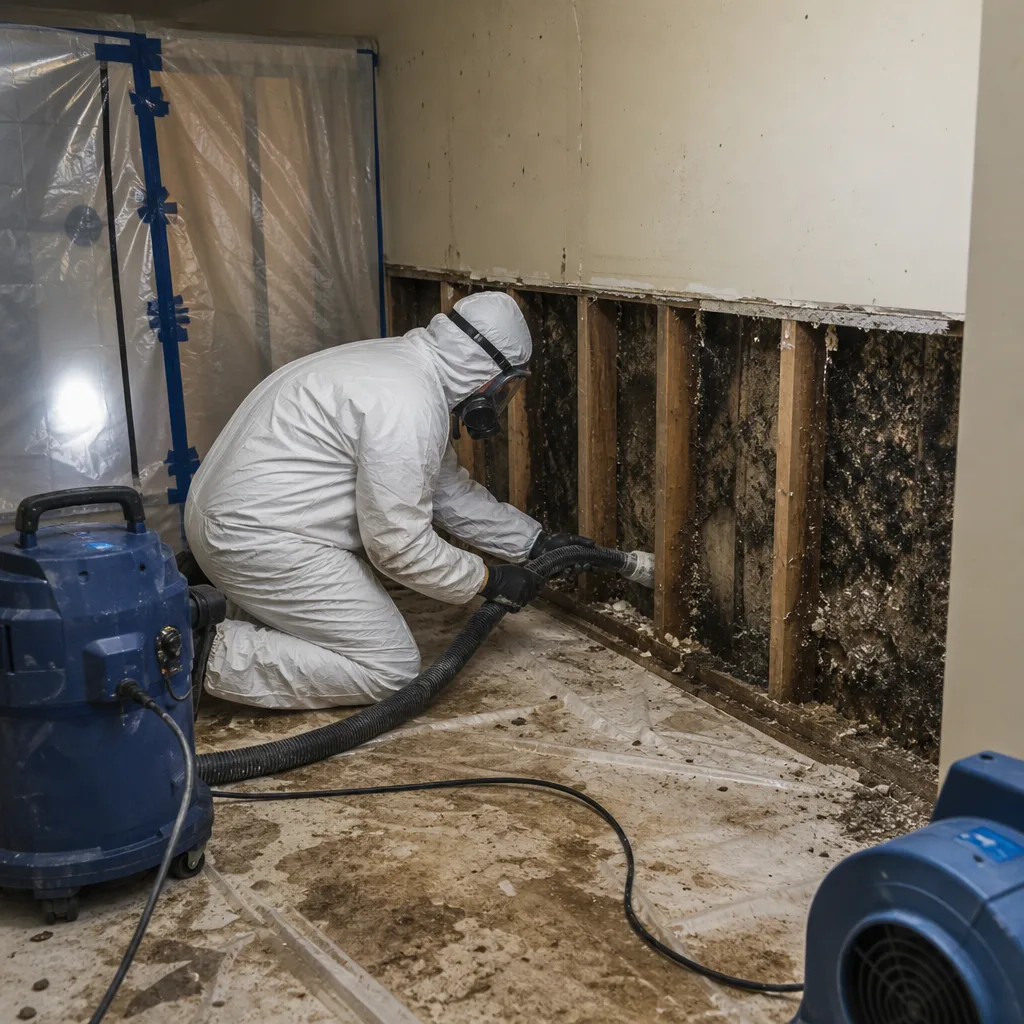
This index provides rapid reference for the most common warning sign locations, with specific action triggers for each.
Kitchen
- Dishwasher and refrigerator supply lines: Braided stainless steel lines should show no corrosion, no bulging, and no moisture at connection points. The action trigger: any moisture at compression fitting, or line age exceeding 10 years (replace preventively). In La Mesa’s water chemistry, mineral buildup at fittings accelerates degradation.
- Sink cabinet base: Particle board cabinet bottoms swell and delaminate with minimal moisture exposure. Warning sign: surface irregularity or softening. Threshold: any moisture meter reading above baseline on cabinet base, or visible staining on cabinet bottom.
- Range hood duct: Grease accumulation combined with moisture from cooking produces acidic condensate that corrodes ductwork. Warning sign: dripping from hood during use, or corrosion visible at exterior termination.
Bathrooms
- Shower/tile surrounds: Grout cracking or missing grout wider than 1/16 inch allows moisture penetration. Caulk failure at plane changes (wall to tub, wall to wall) is immediate repair item. The action trigger: moisture meter reading on adjacent drywall or framing that exceeds 2% above baseline.
- Toilet flange and wax ring: Staining at base of toilet, or toilet movement when seated, indicates wax ring compromise. Threshold: any water visible at toilet base after flushing, or odor from base area.
- Ventilation adequacy: Bathrooms without exhaust fans, or with fans vented to attic rather than exterior, accumulate moisture. Warning sign: condensation on mirror persisting more than 10 minutes after shower; paint failure on ceiling; or mold staining at ceiling corners.
Laundry Room
- Washing machine hoses: Rubber hoses should be replaced every 5 years; braided steel every 10. Warning sign: any bulging, cracking, or moisture at connection. The most common source of significant residential water damage in La Mesa homes.
- Drain line and standpipe: Overflow during drain cycle indicates partial blockage. Threshold: any backup that reaches floor level, or slow draining that causes machine to pause cycle.
Attic
- Roof leak indicators: Water staining on rafters or sheathing, typically following rafter lines to lowest point. Active leaks show wet sheathing or drip marks on insulation. Historic leaks show stained but dry wood with possible mold growth. Threshold: any wet sheathing during or within 24 hours of rain.
- Ventilation balance: Soffit and ridge vents should show clear airflow paths. Blocked soffit vents (common with added insulation) create moisture accumulation. Warning sign: frost on nail points in cold weather, or sheathing moisture exceeding 18% in winter.
Garage
- Water heater: TPR valve discharge, tank base moisture, or rust on burner assembly. Threshold: any moisture at tank base; water heater failures produce 40-80 gallons instantaneously.
- Foundation walls: Efflorescence patterns as described in Water Damage section. Garage slabs are typically at grade with less waterproofing than living spaces; more susceptible to surface moisture.
Exterior
- Irrigation system: Overspray onto stucco, pooling near foundation, or pressure loss indicating line break. Threshold: any water pooling that persists 30 minutes after irrigation ends, or overspray that regularly wets exterior walls.
- Roof and gutters: Missing or damaged shingles, lifted flashing, or gutters overflowing during rain. In La Mesa’s occasional intense downpours, gutter capacity is frequently inadequate; overflow at corners indicates blockage or insufficient downspout capacity.
Common Mistakes to Avoid
- Assuming dryness by touch: Surface dryness does not indicate substrate dryness. We have measured 22% moisture content in wall cavities where the interior drywall felt dry to touch. Always verify with measurement.
- Cleaning mold with bleach: Bleach does not penetrate porous materials to kill mold roots; it bleaches color while leaving viable organism. Worse, the water in bleach solution adds moisture. Proper remediation requires source elimination, controlled demolition, and HEPA-contained treatment.
- Ignoring seasonal patterns: La Mesa homeowners frequently dismiss winter moisture as “just humidity” and summer odors as “just heat.” Document seasonal patterns; they often reveal progressive damage that single-season observation misses.
- Accepting verbal estimates: Haven Standard, Clause 1 exists because verbal estimates lead to scope creep and documentation gaps. A written price before work begins protects both homeowner and contractor, and produces the documentation that insurers require.
- Delaying assessment for “minor” signs: The 1mm efflorescence line and the 10mm active seep differ by time and pressure, not by different causes. Early assessment identifies the cause before threshold escalation.
- Failing to verify contractor documentation practices: Ask specifically: Will I receive a written scope before work begins? A photo record on every visit? Daily moisture logs? If the answer is not affirmative and specific, the documentation gap that costs claims is likely to occur.
When to Call a Professional
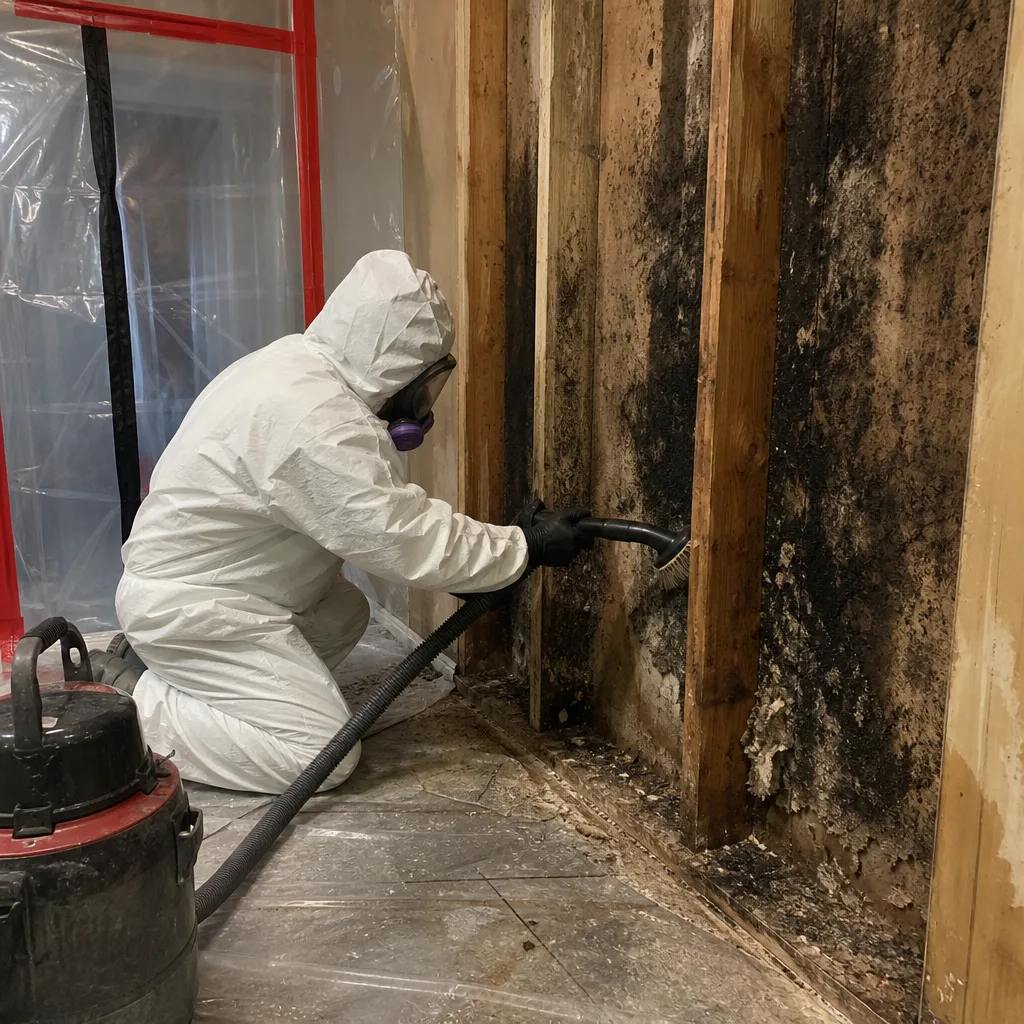
Call for professional assessment when: moisture meter readings exceed action thresholds defined in this guide; any water staining expands between measurements; musty odors persist beyond 48 hours after rain; visible mold exceeds 10 contiguous square feet; or any damage scenario involves insurance coverage where documentation timing affects claim validity. For more guides & resources on protecting your La Mesa home, explore our blog.
DryMark Restoration La Mesa offers free estimates in La Mesa. Our assessments include moisture mapping, photo documentation, and a written scope before any work begins, every time, with no exceptions - Haven Standard, Clause 1. For emergency response, our live dispatch answers 24 hours a day, 7 days a week with no voicemail trees. Call (858) 264-2736.
Frequently Asked Questions
Mold germination typically begins 48-72 hours after moisture introduction in La Mesa’s climate, where temperatures rarely drop below the 60°F threshold that slows microbial growth. This window is shorter in summer months and in homes with active HVAC circulation. The 48-72 hour figure is not arbitrary; it is the basis for most insurance mold exclusions, making documentation of discovery and response timing critical to coverage.
Coverage depends on demonstrating that the damage was “sudden and accidental” and that you responded promptly upon discovery. The warning sign that affects coverage is not the damage itself but the documentation gap: when did you discover it, what did you do, and when did you obtain professional assessment? Policies typically require “prompt notice,” which courts have interpreted as days, not weeks. Photograph immediately, log your observations, and obtain professional assessment within 14 days to preserve coverage position.
Measure with a moisture meter at the stain center and at unstained reference points on the same wall. Readings within 1% of each other suggest historic staining. Readings 2% or more above baseline indicate active moisture. For visual assessment without meter: active stains often have softer, feathered edges and may show surface texture change (paint bubbling, drywall softening). Historic stains typically have sharp, defined edges and uniform surface texture. When uncertain, treat as active until proven otherwise.
On wood framing common in La Mesa homes, readings above 16% indicate active moisture sufficient for fungal growth and approaching structural concern. On drywall, readings 2% above your established baseline suggest active wetting. The critical factor is not a single reading but trend: a reading that increases between measurements, even if below absolute thresholds, indicates an uncontrolled source. Establish baseline readings in known-dry areas of your home for comparison.
Professional assessment is warranted when: the source is not fully identified and eliminated; moisture has penetrated beyond surface materials; the affected area exceeds 10 square feet; or any mold growth is visible. For minor, contained spills with immediate cleanup and verified drying, professional service may not be required. The decision point: can you verify with measurement that all affected materials have returned to baseline moisture within 24-48 hours? If not, professional drying with documented moisture logs provides the verification that protects against secondary damage and coverage disputes.
La Mesa’s Mediterranean climate produces concentrated winter rainfall followed by extended dry periods. This pattern creates two risk profiles: winter water intrusion events that may go unnoticed during rainy periods, and summer conditions where moisture introduced in winter persists in enclosed cavities with minimal evaporation opportunity. The clay soils common in La Mesa’s older neighborhoods expand when wet and contract when dry, stressing foundations and drainage systems seasonally. Canyon-adjacent properties face additional groundwater movement following topography. These patterns mean La Mesa homeowners should be particularly attentive to moisture signs in spring, when winter accumulation meets warming temperatures that accelerate microbial activity.
The Bottom Line
Warning signs are only useful with thresholds that trigger action. This guide provides measurable decision points for every common damage indicator in La Mesa homes: moisture percentages by material, efflorescence widths by severity, documentation timelines by insurance requirement, and construction-era-specific vulnerabilities by neighborhood building pattern. The homeowner who measures, documents, and acts at threshold protects both property and coverage position. The homeowner who waits for visible severity often discovers that the damage window has closed on both repair options and insurance protection.
Written by Alicia Brennan, Owner at DryMark Restoration La Mesa, serving La Mesa since 2011.