
Last updated September 23, 2026
Free visual inspection and a written scope of work before any mitigation begins - photos, moisture readings, and drying logs go in your claim file
The scope we write is the scope we bill. Anything new gets shown to you, in writing, before we touch it.
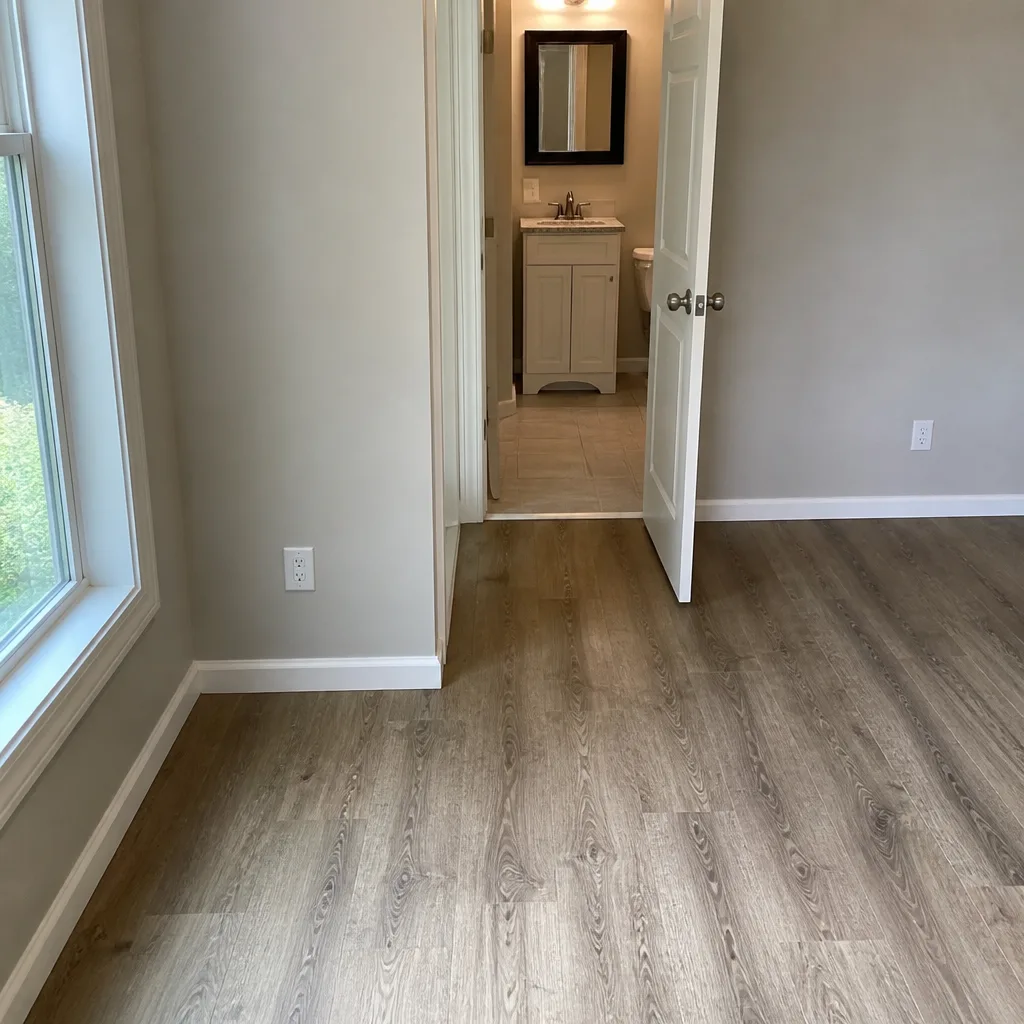

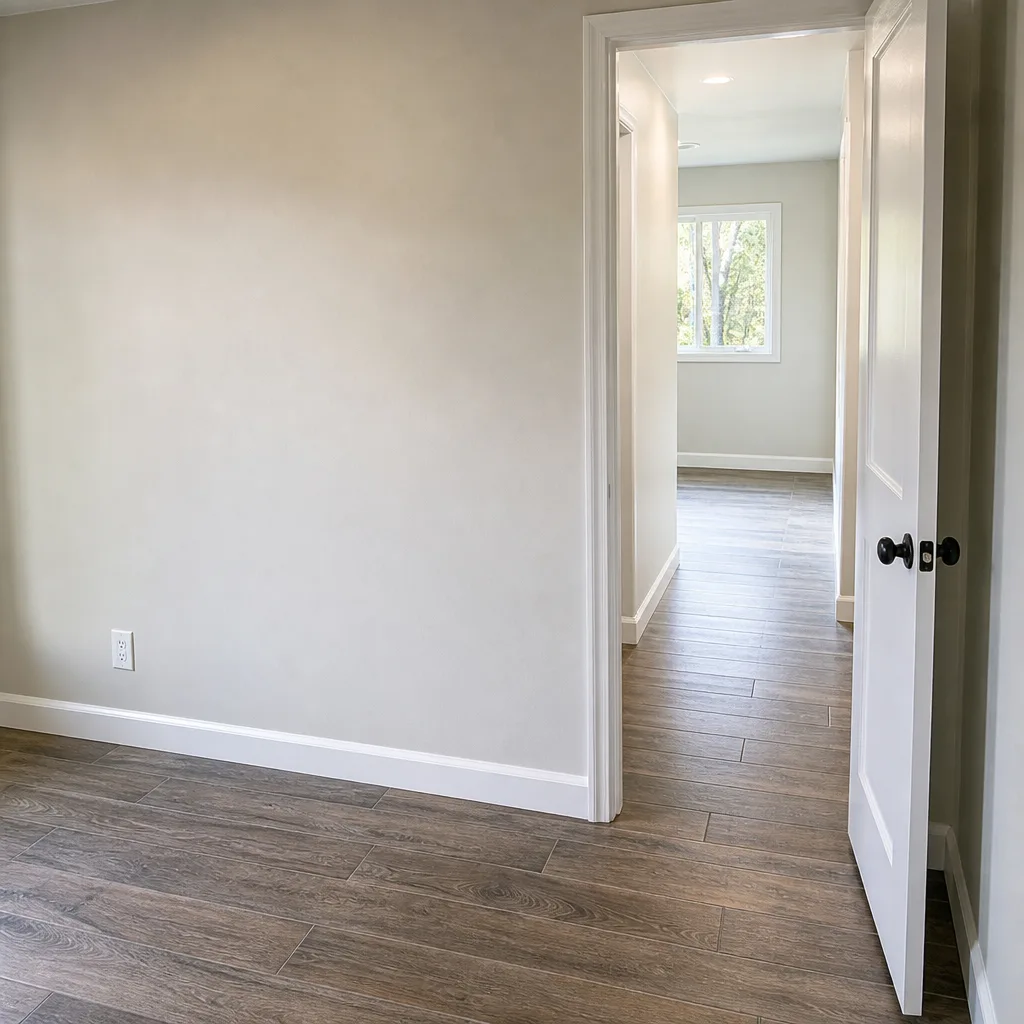
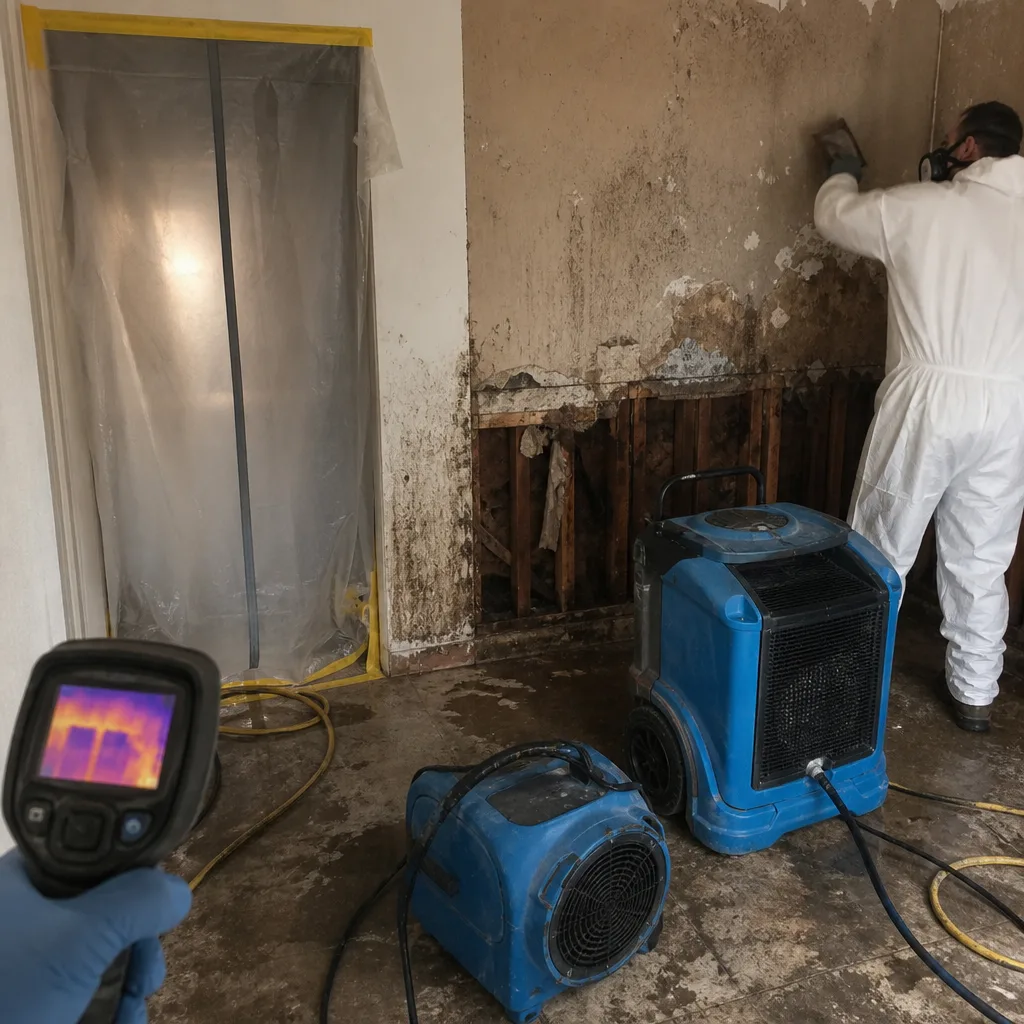 Before
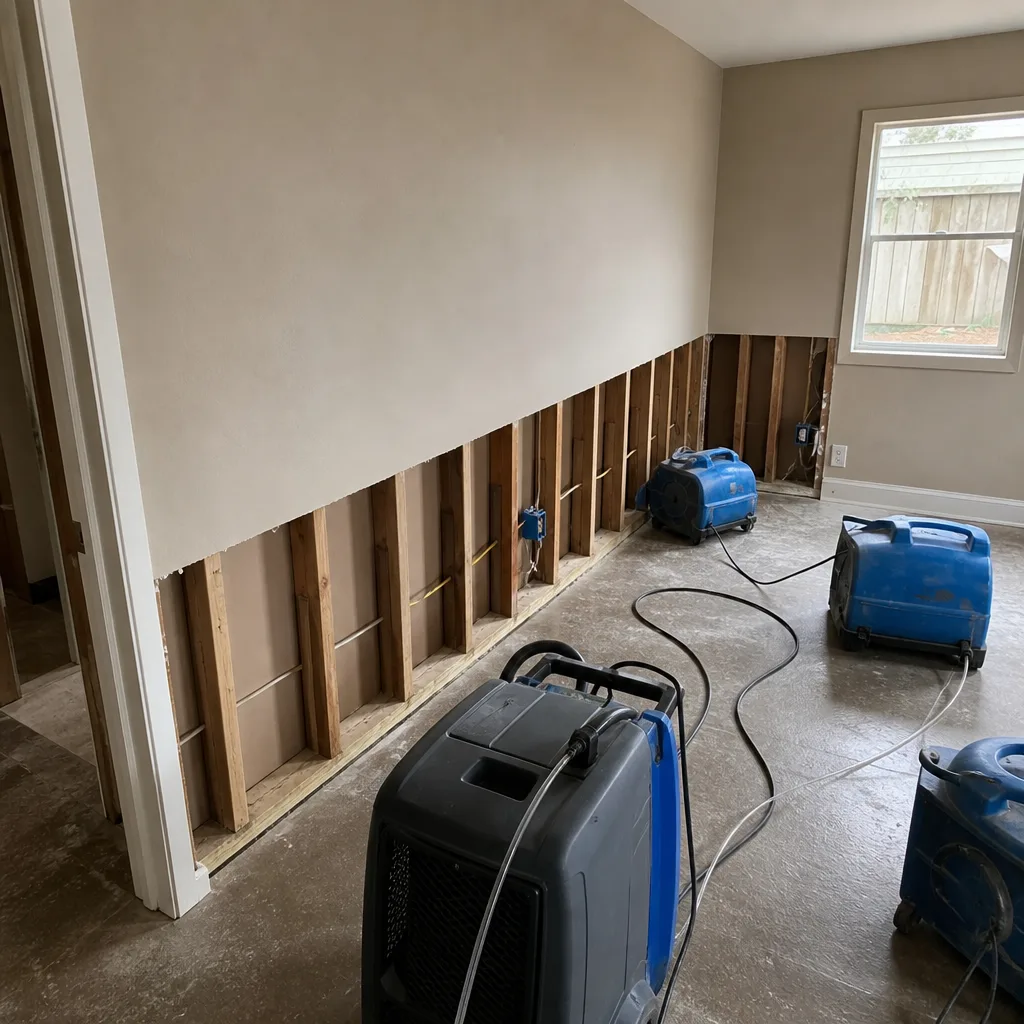 After
After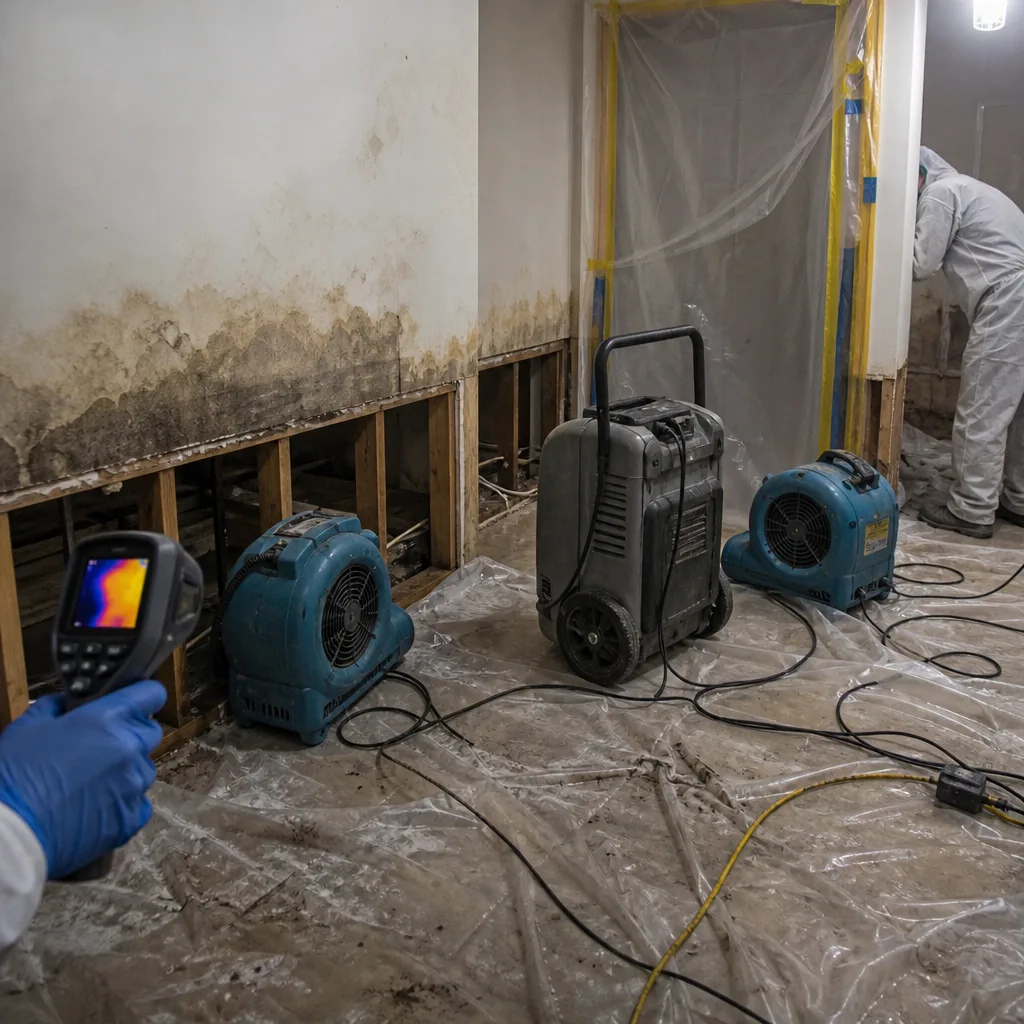 Before
 After
After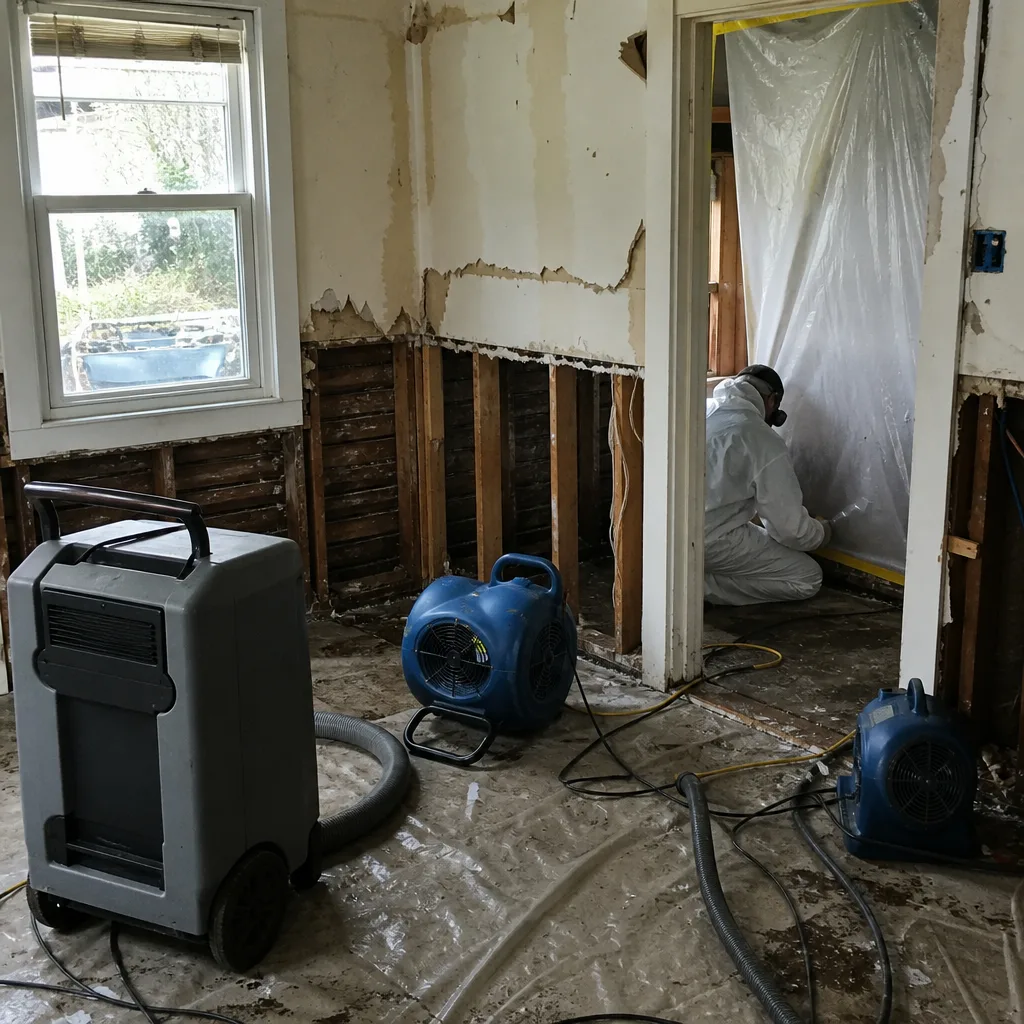 Before
 After
AfterDIY vs Professional Damage Restoration: The La Mesa Homeowner’s Decision Guide
A homeowner in La Mesa who extracts standing water themselves and sets out box fans has not restored their home. They’ve created conditions where moisture trapped in wall cavities will read as a pre-existing mold condition if they file a claim six months later for an unrelated event. In our experience reviewing thousands of claims files since 2011, the most expensive mistake is not the water damage itself. It’s the documentation gap between what a homeowner did and what an insurer can verify. This guide gives La Mesa homeowners a clear framework for deciding when DIY makes sense, when it creates legal and financial liability, and what professional documentation actually costs versus what it saves. For how to hire a damage restoration contractor in La Mesa, see our step-by-step guide.
Quick Answer
DIY damage restoration is appropriate for four specific scenarios in La Mesa: minor surface condensation, isolated appliance drips under one square foot with no drywall contact, surface mold on non-porous materials under ten square feet, and no insurance involvement. For everything else - water that touches drywall, fire or smoke damage, sewage backup, mold in wall cavities, or any insurance claim - professional restoration is necessary because only documented work produces the moisture logs, third-party clearance readings, and Xactimate-compatible invoices that insurers accept without dispute. Browse more guides & resources on protecting your La Mesa home.
Table of Contents
- The Four Scenarios Where DIY Is Actually Appropriate
- California’s Regulatory Lines: Where DIY Becomes Illegal
- The Hidden Cost of Incomplete DIY Drying
- What Professionals Produce That DIY Cannot Replicate
- The Hybrid Approach: Preserving Your Claim While Waiting for Help
- Real Cost Comparison: DIY vs Professional in La Mesa
- The Insurance Reality Most La Mesa Homeowners Miss
- Common Mistakes to Avoid
- When to Call a Professional
- Frequently Asked Questions
 Before
 After
AfterThe Four Scenarios Where DIY Is Actually Appropriate
Most restoration companies will not tell you this: some water damage genuinely does not require professional intervention. The problem is that homeowners consistently misidentify which category their damage falls into. Here are the four scenarios where we’ve reviewed files and confirmed no professional documentation was necessary.
Scenario 1: Minor surface condensation. A bathroom mirror that drips after a shower, or a single-window sill that collects moisture during La Mesa’s occasional Santa Ana humidity events. Wipe dry, address ventilation, monitor for 72 hours. No materials are saturated. No porous surfaces involved.
Scenario 2: Isolated appliance drips under one square foot with no drywall contact. The water line behind your refrigerator seeps onto vinyl flooring. You shut off the valve, extract the visible water, and the subfloor is accessible and dry to touch within four hours. The key constraint: zero contact with drywall, baseboards, or wall cavities. One square foot is a hard ceiling because capillary action in drywall extends damage horizontally at approximately one inch per hour.
Scenario 3: Surface mold on non-porous materials under ten square feet. A window track, a shower tile grout line, or a painted metal surface. Clean with an EPA-registered product, dry completely, and the material does not require removal. Ten square feet is the EPA’s threshold for homeowner-managed mold; above this, professional containment and negative air pressure are required by IICRC S520 standards.
Scenario 4: No insurance involvement, no future sale contemplated within 24 months. This is the scenario most homeowners overlook. If you perform DIY restoration and later sell your La Mesa home, California Civil Code Section 1102 requires disclosure of water damage and mold history. Without professional documentation of proper drying, a buyer’s inspector will flag elevated moisture readings as active damage, not historical. The cost of re-remediation at sale typically exceeds original professional service by 40%.
Every other scenario - water touching drywall, wicking into baseboards, entering wall cavities, or involving any insurance policy - requires professional documentation. The question is not whether you are capable of operating a wet-dry vacuum. It is whether your work product will survive scrutiny from an adjuster, a home inspector, or a plaintiff’s attorney.
California’s Regulatory Lines: Where DIY Becomes Illegal
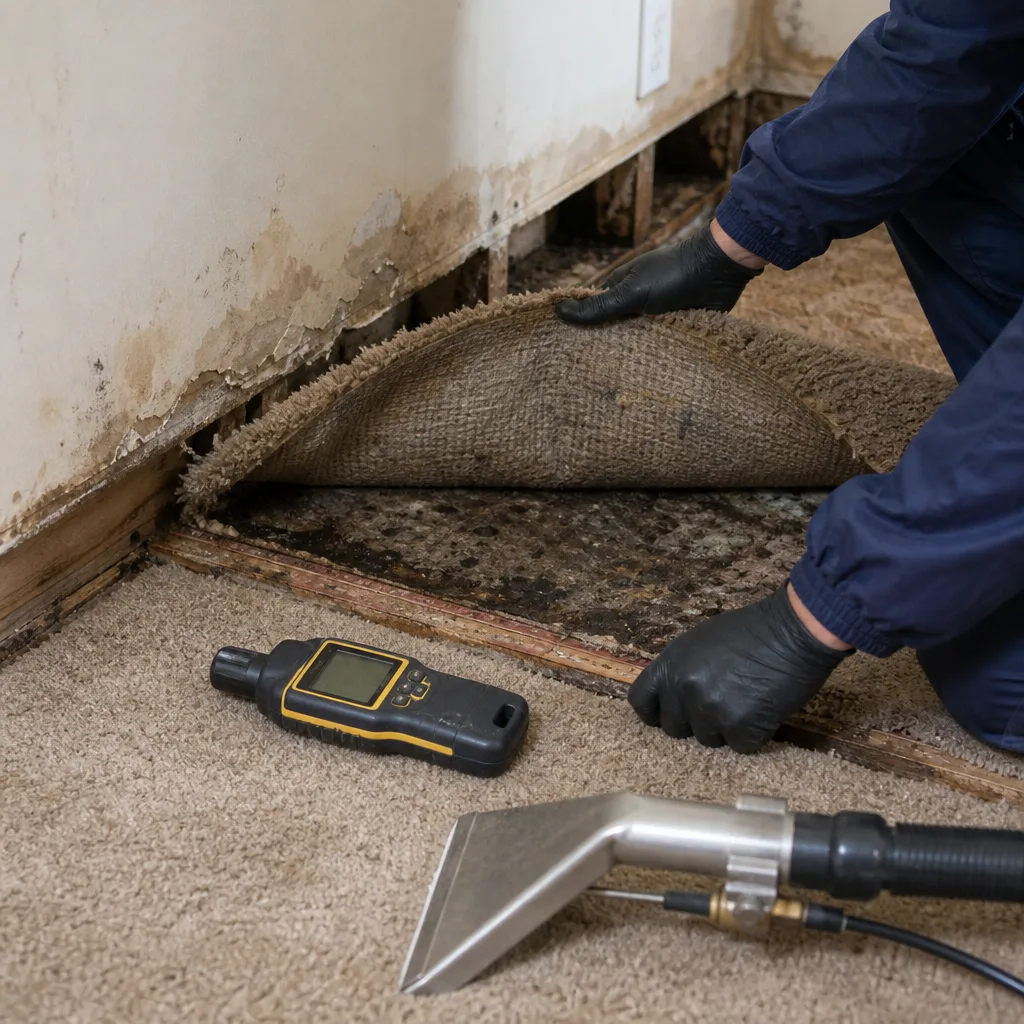
California draws sharp lines around restoration work, and crossing them converts a well-intentioned homeowner into an unlicensed contractor with personal liability exposure.
The Contractors State License Board (CSLB) requires a B-General Building contractor license for any structural, plumbing, or electrical repair exceeding $500 in combined labor and materials. This threshold has not been adjusted for inflation since 1993, meaning virtually any meaningful restoration work triggers licensing requirements. Water damage that requires drywall removal, subfloor repair, or electrical outlet replacement exceeds $500 in La Mesa’s market within the first two hours of labor.
Specific regulatory triggers include:
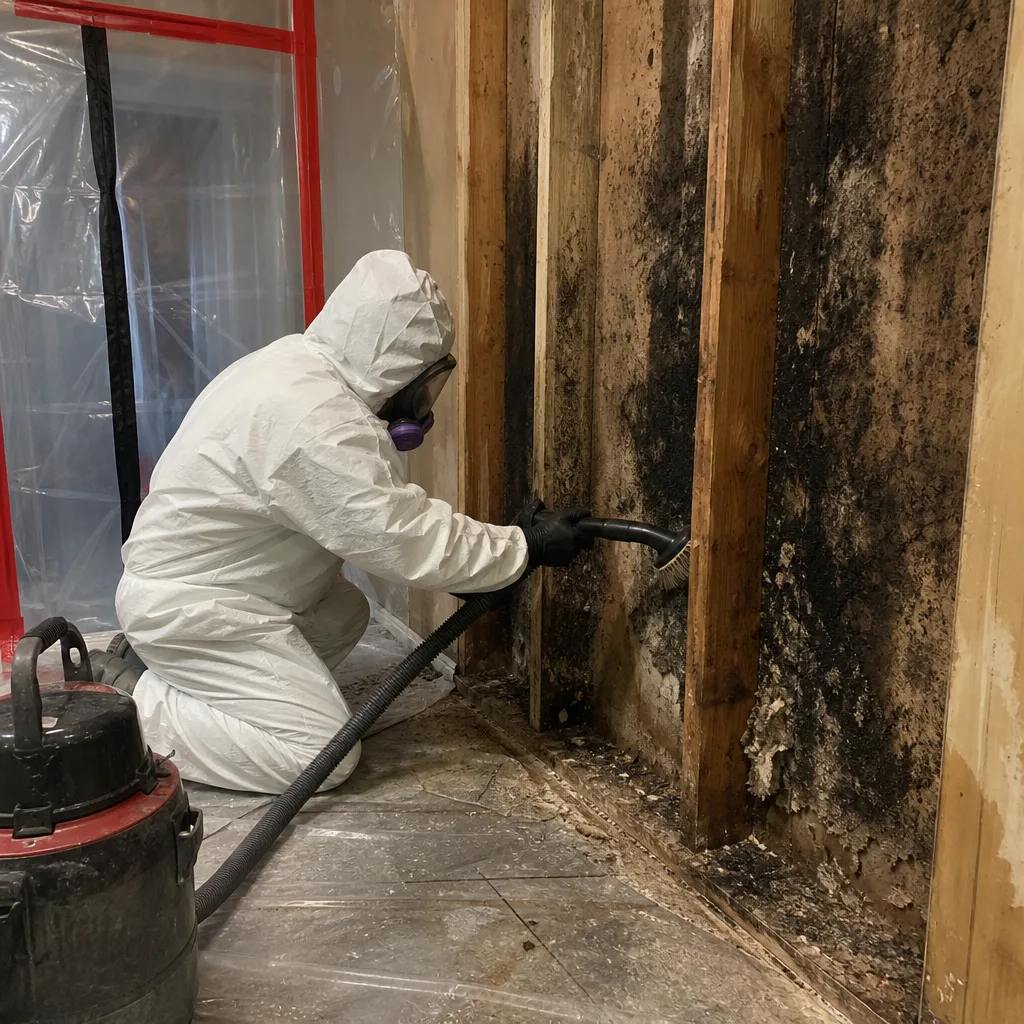
- Mold remediation in wall cavities: CSLB C-61/D-49 specialty classification required for any containment, negative air pressure, or antimicrobial application beyond surface cleaning. Homeowners may clean their own visible mold, but disturbing wall assemblies without proper containment violates California Labor Code Section 6501.5 and creates liability for cross-contamination.
- Sewage backup (Category 3 water): California Health and Safety Code Section 17920.3 classifies sewage-impacted materials as hazardous waste. Homeowners may remove their own property, but disposal of structural materials requires manifest documentation that only licensed contractors can generate. Improper disposal is a misdemeanor with fines starting at $1,000 per violation.
- Fire and smoke damage: Any structural repair, electrical replacement, or HVAC duct cleaning requires appropriate CSLB classification. Soot and smoke residue contain combustion byproducts classified as hazardous materials under OSHA 29 CFR 1910.1200.
- Asbestos-containing materials: La Mesa homes built before 1980 frequently contain asbestos in drywall compound, floor tiles, and pipe insulation. Disturbing these materials without CAL-OSHA certification (8 CCR 1529) carries penalties of $25,000 per day and personal criminal liability.
The practical implication: a La Mesa homeowner who removes water-damaged drywall from a 1975 home without asbestos testing has committed a regulatory violation that voids their homeowner’s insurance coverage for the resulting claim. We’ve reviewed claim denials where the adjuster documented exactly this sequence.
Permit requirements add another layer. The City of La Mesa requires permits for electrical panel work, plumbing line replacement, and structural repairs exceeding 200 square feet. Unpermitted work must be disclosed at sale and can trigger mandatory removal and re-permitting at the seller’s expense. Professional restoration companies pull permits as standard practice; DIY restoration rarely does, creating a latent defect that surfaces at the worst possible time.
The Hidden Cost of Incomplete DIY Drying
This is the scenario we see most often in claim reviews. A homeowner in Rolando or Lake Murray extracts standing water, runs fans for 48 hours, and believes the job is complete. Six months later, a new water event occurs - a pipe burst, a roof leak - and the adjuster’s moisture meter reads 18% in the previously “dried” wall cavity. The insurer denies the new claim as pre-existing damage. The homeowner is now paying for two restorations out of pocket.
The mechanism is straightforward. IICRC S500, the water damage restoration standard, defines “dry” as a moisture content within 4 percentage points of a dry standard reference for that specific material. For oak framing in La Mesa’s climate, that means 10-12% moisture content. For drywall, 5-7%. A box fan and household dehumidifier cannot achieve these readings in wall cavities because they lack the air exchange volume and vapor pressure differential to overcome the boundary layer at the cavity surface.
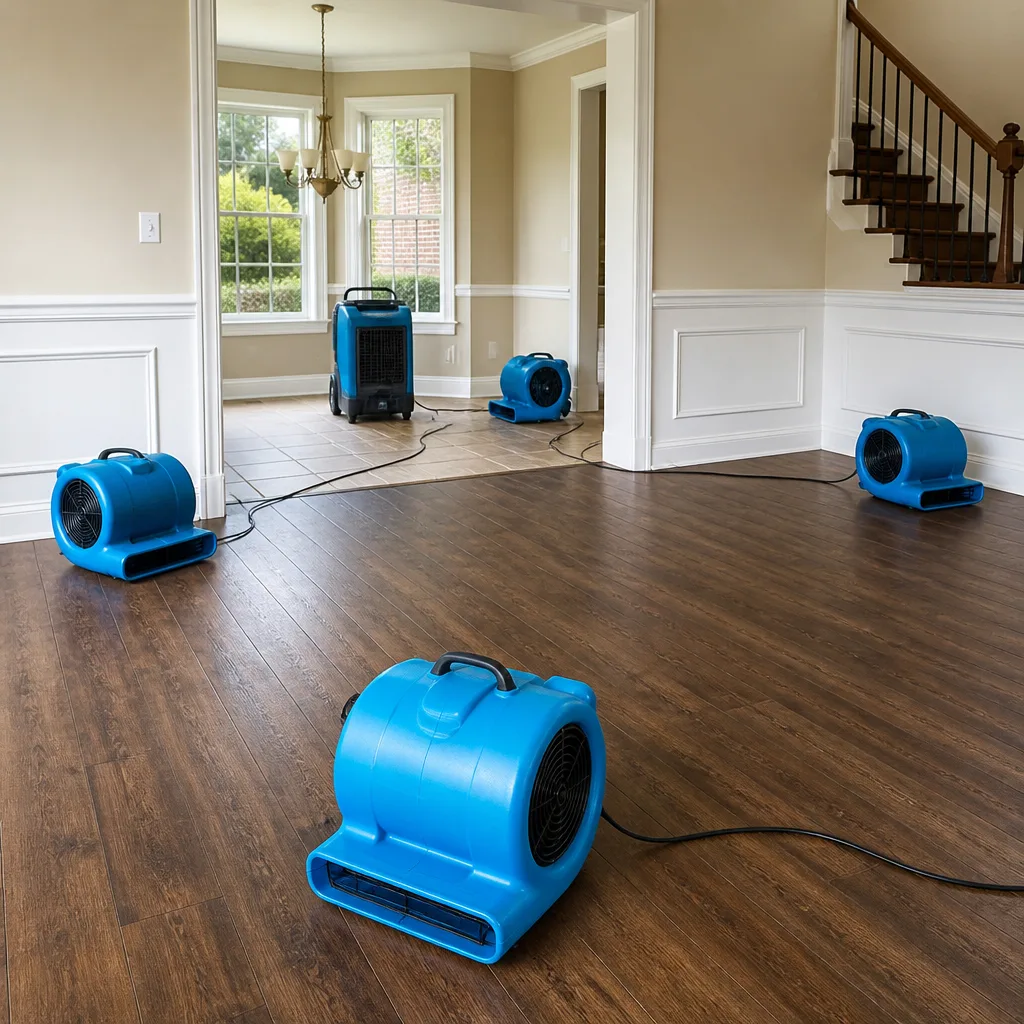
Professional-grade drying equipment operates on different physical principles. An XPOWER or B-Air axial air mover delivers 3,000+ CFM at the surface, creating turbulent flow that disrupts the boundary layer. A low-grain refrigerant dehumidifier, like those from Phoenix or Dri-Eaz, achieves specific humidity below 40 grains per pound - the threshold where vapor pressure differential drives moisture from materials to air. Injectidry systems create negative pressure within wall cavities, forcing air exchange at the stud bay level where surface drying cannot reach.
The critical number is 16%. At 16% moisture content in wood framing, fungal amplification begins. Not visible mold - that requires 20%+ and 72 hours - but the beginning of conditions that an insurer’s moisture reading will flag as “elevated” or “active.” Once flagged, the burden of proof shifts to the homeowner to demonstrate that the condition was properly remediated. Without dated, calibrated moisture logs from a certified technician, that proof does not exist.
We’ve reviewed files where a $2,400 professional drying job would have prevented a $34,000 mold remediation and a denied insurance claim. The homeowner’s “savings” from DIY extraction cost them eleven times the professional fee.
What Professionals Produce That DIY Cannot Replicate
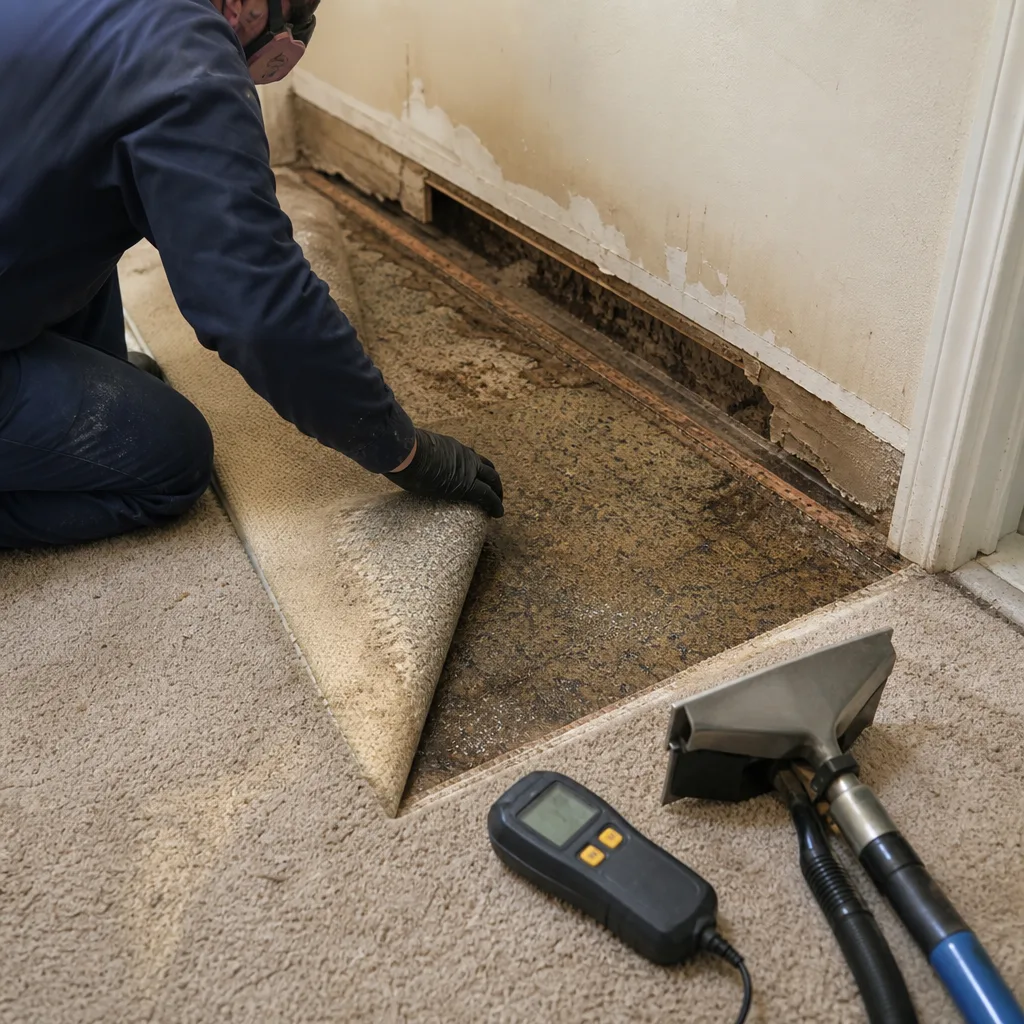
The documentation gap is not a marketing distinction. It is a structural difference in what the work product can do in a claims process, a real estate transaction, or a legal dispute. Here is what professional restoration produces and why each element matters.
Calibrated daily moisture logs. Every professional drying job under IICRC S500 requires moisture readings at prescribed intervals: at commencement, at 24 hours, and every 24 hours thereafter until dry standards are achieved. These readings use calibrated penetrating meters with species correction for the material being tested. The log includes meter model, calibration date, ambient temperature, relative humidity, and specific humidity. A DIYer with a hardware store moisture meter produces none of this metadata, and the reading is inadmissible in a claims dispute.
Psychrometric data and drying curve documentation. Professional drying is governed by psychrometrics - the measurement of air and moisture relationships. Technicians document grain depression, vapor pressure differential, and equilibrium moisture content. These terms describe whether the air in a drying chamber is actually capable of receiving additional moisture from wet materials. Without this data, you are guessing whether drying is occurring.
Third-party clearance readings. For mold remediation, IICRC S520 requires post-remediation verification by an independent party - not the remediation contractor - using air sampling and surface sampling. This independence is what makes clearance defensible in court and acceptable to insurers. A DIY mold cleanup has no independent verification and no defensible conclusion.
Xactimate-compatible invoice formatting. Xactimate is the pricing software used by 80% of U.S. property insurers. Professional restoration companies format invoices with Xactimate line-item codes, unit pricing, and measurement documentation. Adjusters can process these without negotiation. DIY expenses - fans rented from Home Depot, cleaning supplies, personal labor - have no Xactimate equivalent and are routinely denied or depreciated to nominal values.
Photo-documented condition records. Every professional visit produces dated, geotagged photographs of affected areas, equipment placement, and moisture readings. These create an immutable timeline. We’ve used photo records to prove that damage occurred after policy inception, to document pre-existing conditions that limited coverage, and to establish that drying standards were achieved before reconstruction began. A smartphone photo lacks the metadata and chain of custody to serve these functions.
The Haven Standard deliverables. At DryMark Restoration La Mesa, every job includes: a written price before work begins (Haven Standard, Clause 1); a photo record on every visit; daily moisture logs with equipment readings; and a signed 365-Day Done Right Promise. These are not service enhancements. They are the minimum documentation required for a restoration invoice to become a payable insurance claim.
The Hybrid Approach: Preserving Your Claim While Waiting for Help
There is a legitimate middle ground between passive waiting and full DIY restoration. When water is actively moving in your La Mesa home, the first 2-4 hours determine whether damage is contained or catastrophic. A homeowner who takes correct initial steps preserves claim validity and reduces professional remediation scope. A homeowner who takes incorrect steps compromises the claim and may increase total cost.
Here is the correct sequence:
- Document before touching anything. Photograph or video the water source, the spread pattern, and all affected materials from multiple angles. Include timestamps. This establishes the loss date and initial condition for the adjuster.
- Stop the source if safely possible. Shut off the water main, the appliance valve, or the irrigation line. Do not attempt electrical shutoff if water is near the panel - this is where electrocution occurs. Call SDG&E at(858) 264-2736 if electrical hazard is present.
- Extract standing water with available equipment. A wet-dry vacuum, towels, or mopping is appropriate. Remove as much bulk water as possible. Do not discard materials yet - the adjuster needs to see them.
- Move unaffected valuables to dry areas. Furniture, electronics, documents. Create separation between wet and dry zones. Photograph the moved items and their original locations.
- Increase air circulation without creating additional problems. Open windows if outdoor humidity is below indoor humidity - check your weather app. Run the HVAC fan if the system was not affected. Do not direct fans directly at drywall surfaces; this drives moisture deeper into wall cavities. Position fans to create general air movement across the room.
- Do not apply heat. Hair dryers, space heaters, and heated air movers accelerate evaporation but increase vapor pressure in wall cavities, forcing moisture deeper where it cannot be detected without professional meters.
- Do not use household bleach on mold or Category 2/3 water. Bleach is 90% water and feeds subsequent mold growth. It also destroys evidence of contamination category that adjusters use to determine coverage scope.
- Call for professional assessment within 4 hours. In La Mesa’s climate, microbial growth begins in 48-72 hours, but the critical window for salvageability of materials is much shorter. Carpet pad, for example, is salvageable with extraction within 2 hours and unsalvageable after 4.
The hybrid approach saves money when it reduces the professional drying period from 5 days to 3 by removing bulk water early. It costs money when improper fan placement drives moisture into wall cavities, requiring invasive drying or material removal that would not have been necessary. The difference is in the documentation: photograph everything, record your actions with timestamps, and let the professional assess whether your intervention helped or complicated the drying plan.
Real Cost Comparison: DIY vs Professional in La Mesa
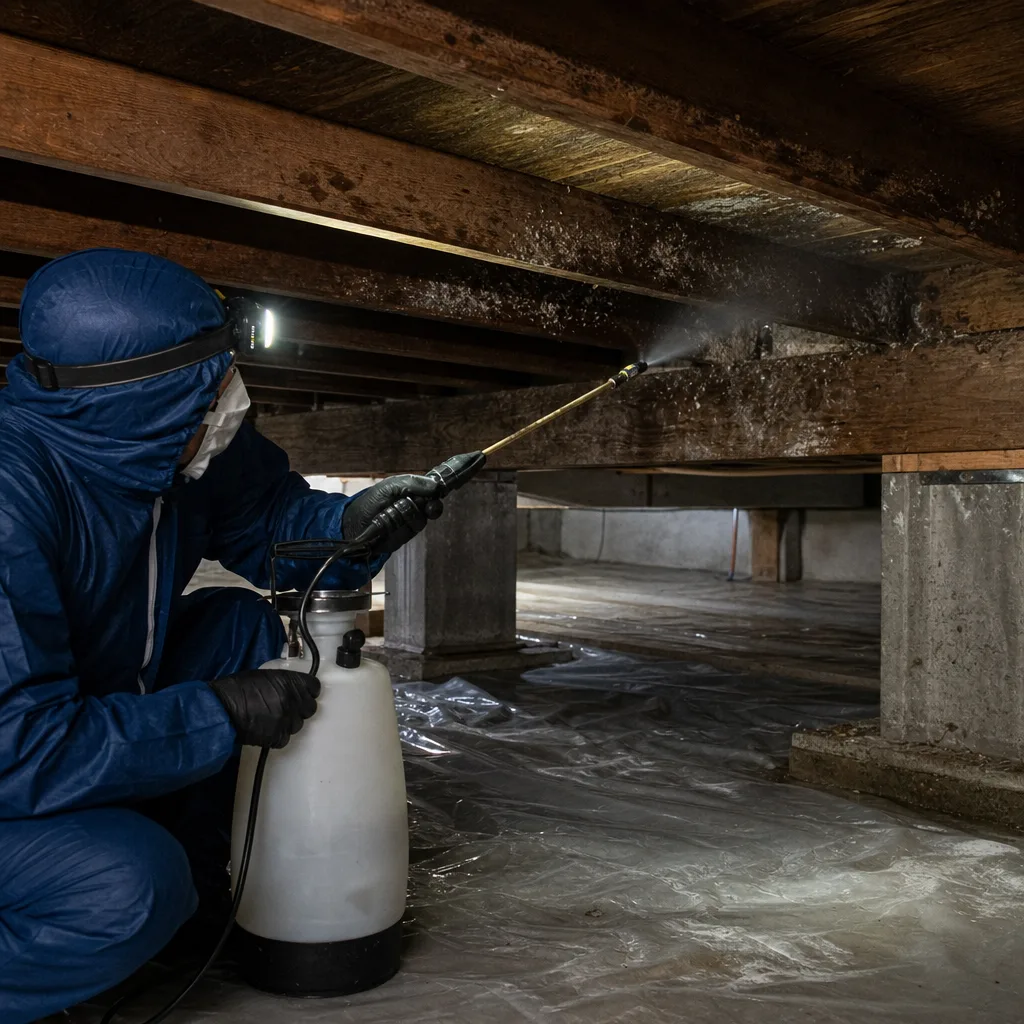
Homeowners consistently miscalculate DIY costs by omitting equipment rental, material disposal, and the value of their own time. Here is an honest comparison for a typical La Mesa scenario: a 150-square-foot bathroom with water damage from an overflowing tub, affecting vinyl flooring, baseboards, and the lower 12 inches of drywall on two walls.
| Cost Element | DIY Approach | Professional Restoration |
|---|---|---|
| Equipment rental (fans, dehumidifier, 5 days) | $280-$420 | Included |
| Moisture meter (adequate for cavity readings) | $150-$350 | Included (calibrated, certified) |
| Material removal and disposal | $120-$200 | Included |
| Replacement materials (drywall, baseboard, paint) | $180-$300 | Separate line item, scoped in writing |
| Personal labor (15-25 hours at conservative $25/hour) | $375-$625 | Not applicable |
| Permit (if required for electrical/plumbing) | $150-$400 | Included, pulled by contractor |
| Post-drying verification/clearance | Not available DIY | Included |
| Documentation for insurance claim | Not producible DIY | Included, Xactimate-formatted |
| Total Out-of-Pocket | $1,255-$2,295 | $1,800-$2,800 (typical insurance deductible or direct pay) |
The professional column assumes direct payment without insurance. With insurance involvement, the homeowner’s cost is typically their deductible alone - $1,000 to $2,500 for most La Mesa policies - and the professional invoice is submitted directly to the carrier. The DIY column assumes no complications: no mold discovery, no asbestos, no permit issues, no claim denial from insufficient documentation.
In our experience, complications occur in approximately 60% of DIY water damage cases in La Mesa’s older housing stock. The most common: hidden mold in wall cavities requiring $3,000-$8,000 remediation; asbestos in drywall compound requiring $5,000+ abatement; and claim denials from inadequate documentation averaging $4,200 in uncovered repairs.
The Insurance Reality Most La Mesa Homeowners Miss
Insurance coverage for water damage is not automatic. It is conditional on the policyholder’s actions after the loss, and those conditions are strictly enforced by California insurers facing climate-driven loss ratios.
Standard HO-3 and HO-5 policies in La Mesa contain versions of the following requirements: the policyholder must mitigate further damage; must document the loss; must permit the insurer reasonable access for inspection; and must not abandon the property to further damage. DIY restoration that fails any of these conditions becomes grounds for partial or total denial.
The specific failure mode we see: a homeowner performs DIY extraction, does not document moisture readings, and later discovers mold. The insurer’s position is that the mold resulted from the homeowner’s failure to properly dry the structure, not from the original water event. This is a “ensuing loss” denial, and it is upheld in approximately 70% of California Department of Insurance complaints where the homeowner lacked professional drying documentation.
Another common failure: the homeowner discards damaged materials before the adjuster inspects. The policy requires the insurer to verify the cause and scope of loss. Without materials to examine, the adjuster cannot confirm that the claimed damage resulted from a covered peril rather than long-term maintenance neglect. We’ve seen $15,000 claims reduced to $2,000 “goodwill” payments because the homeowner threw out the water-damaged drywall before documentation.
The correct sequence for insurance-involved damage: stop the source, document thoroughly, call for professional assessment, and do not alter or discard materials until the adjuster has inspected or waived inspection. Professional restoration companies understand this sequence and coordinate with adjusters as standard practice. DIY restoration almost always violates it.
For fire and smoke damage, the insurance dynamics are more severe. Smoke damage is almost always covered, but the scope of covered cleaning is disputed in 40% of claims. Professional documentation - pre-cleaning condition photos, line-item cleaning specifications, post-cleaning verification - is what converts a disputed claim into a paid claim. DIY smoke cleaning produces no such documentation and almost always results in partial denial.
Common Mistakes to Avoid
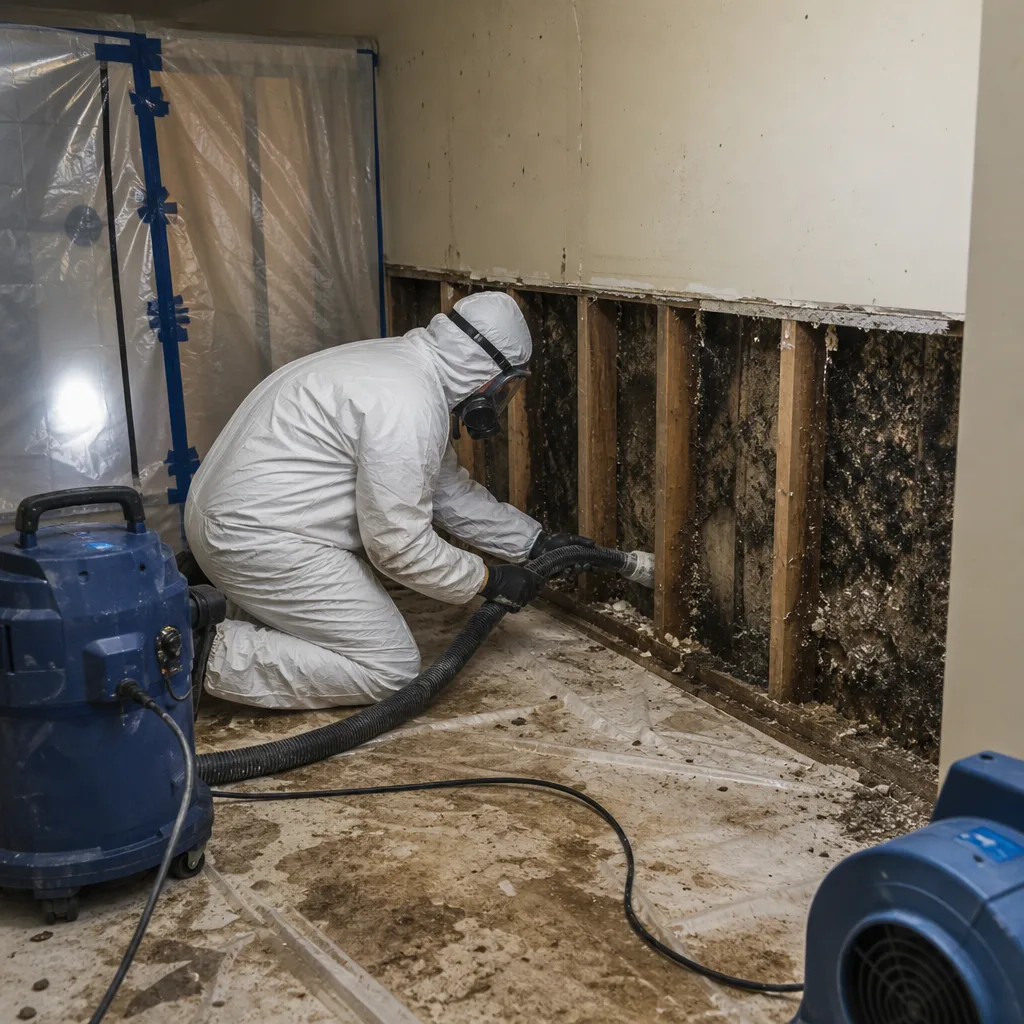
- Using a household dehumidifier for structural drying. A 50-pint residential unit processes approximately 200 CFM and achieves 55-60% relative humidity at best. Structural drying requires 40% or below. In La Mesa’s spring humidity, a household dehumidifier runs continuously without achieving drying standards.
- Discarding wet materials before documentation. The adjuster needs to see the damage to confirm cause and scope. Once materials are gone, the claim becomes a negotiation over your word versus their policy language. You will lose.
- Applying bleach to mold or contaminated water. Bleach does not kill mold in porous materials; it bleaches the color while leaving viable hyphae. On Category 2 or 3 water, bleach reacts with organic contaminants to produce chlorinated byproducts that are respiratory hazards.
- Ignoring La Mesa’s older housing stock hazards. Homes in the original La Mesa village area, built 1920-1960, frequently contain lead paint and asbestos. Disturbing these without testing violates federal and state law and voids insurance coverage for the resulting remediation.
- Assuming “dry to the touch” means dry. Drywall can feel dry at 15% moisture content - double the IICRC standard - and support active mold growth. Only calibrated meters with penetrating probes measure actual conditions.
- Delaying professional assessment to “see if DIY works.” The 48-hour microbial growth window is real. By day 3, salvage decisions change from “dry in place” to “remove and replace,” doubling or tripling cost. Early professional assessment preserves options.
- Neglecting to document the source of water. Insurance coverage depends on peril identification. A supply line burst is covered; long-term seepage from failed caulking is not. Photograph the source before repair, or coverage may be denied as maintenance-related.
When to Call a Professional
Call a professional when water touches drywall or enters wall cavities; when mold is suspected in hidden areas; when sewage, fire, or smoke is involved; when any insurance claim is contemplated; or when the home was built before 1980 and asbestos testing has not been performed. These are not preference calls. They are threshold conditions where DIY creates legal liability, voids coverage, or produces health hazards.
DryMark Restoration La Mesa offers free estimates in La Mesa - call (858) 264-2736. Every estimate includes a written price before work begins, Haven Standard, Clause 1. We also provide a Free Second Opinion on any competitor’s written estimate. Our live dispatch answers every call, 24 hours a day, 7 days a week, with no voicemail on emergency lines.
Frequently Asked Questions
Generally, no. Insurers reimburse reasonable and necessary costs to restore the property to pre-loss condition. DIY expenses - rented fans, cleaning supplies, personal labor - are routinely denied or depreciated because they lack documentation of professional necessity and cannot be verified through Xactimate pricing. Professional restoration invoices are paid at negotiated rates because they include the documentation insurers require. Call (858) 264-2736 for an exact quote - estimates are free.
For active water damage, DryMark Restoration La Mesa dispatches within 60-90 minutes during normal coverage hours, with live phone answering 24 hours a day, 7 days a week. Response time varies by current event volume and your location within La Mesa - Rolando and Lake Murray are typically fastest, with more remote canyon areas adding 15-20 minutes. Speed matters for mitigation; reconstruction is always scheduled, not emergency-dispatched. Call (858) 264-2736 for current availability - estimates are free.
Visible surface mold under ten square feet on non-porous materials can be homeowner-managed with EPA-registered products. Mold in wall cavities, HVAC systems, or on porous materials like drywall requires professional containment, negative air pressure, and post-remediation verification by an independent party. The critical question is not whether you can see it, but whether you can confirm it has not spread beyond the visible area. Without cavity inspection and moisture mapping, that confirmation is impossible. Call (858) 264-2736 for an assessment - estimates are free.
Professional restoration companies coordinate directly with adjusters as part of standard service. At DryMark Restoration La Mesa, we provide Xactimate-formatted invoices, photo-documented condition records, and daily moisture logs that adjusters accept without negotiation. We do not negotiate coverage - that is between you and your carrier - but we produce the documentation that makes coverage decisions straightforward. Our written scope before work begins prevents the surprise invoices that create adjuster disputes. Call (858) 264-2736 to discuss your specific claim - estimates are free.
It depends entirely on what you did and documented. Proper initial extraction and thorough photo documentation can reduce professional scope and cost. Improper fan placement, bleach application, or material disposal can complicate drying, destroy evidence, and increase total cost. The safest approach: call for professional guidance before taking action beyond stopping the source and extracting bulk water. We can advise by phone whether your situation warrants immediate dispatch or monitored DIY. Call (858) 264-2736 - live dispatch answers 24/7.
La Mesa’s Mediterranean climate - mild winters, warm dry summers, and occasional Santa Ana humidity spikes - creates variable drying conditions. Summer outdoor conditions often assist passive drying. Winter humidity and spring marine layer events can stall DIY efforts for days. Professional equipment is not climate-dependent; it creates controlled drying chambers regardless of outdoor conditions. The seasonal variation means a DIY approach that worked in August may fail completely in January. Professional assessment accounts for these variables in the drying plan, as detailed in our seasonal damage restoration care guide for La Mesa. Call (858) 264-2736 for seasonal-specific guidance - estimates are free.
The Bottom Line
The DIY-versus-professional question in La Mesa restoration is a documentation question. Four scenarios permit genuine DIY: minor surface condensation, isolated drips under one square foot with no drywall contact, surface mold under ten square feet on non-porous materials, and no insurance or near-term sale involvement. Everything else requires professional documentation - moisture logs, photo records, third-party clearances, and Xactimate-formatted invoices - to protect insurance coverage, property value, and legal compliance. The cost of professional restoration is typically the insurance deductible; the cost of inadequate DIY is the full remediation plus a denied claim. The Haven Standard exists because we’ve reviewed the files where that difference cost homeowners everything.
Written by Alicia Brennan, Owner at DryMark Restoration La Mesa, serving La Mesa since 2011.