
Last updated September 23, 2026
Free visual inspection and a written scope of work before any mitigation begins - photos, moisture readings, and drying logs go in your claim file
The scope we write is the scope we bill. Anything new gets shown to you, in writing, before we touch it.
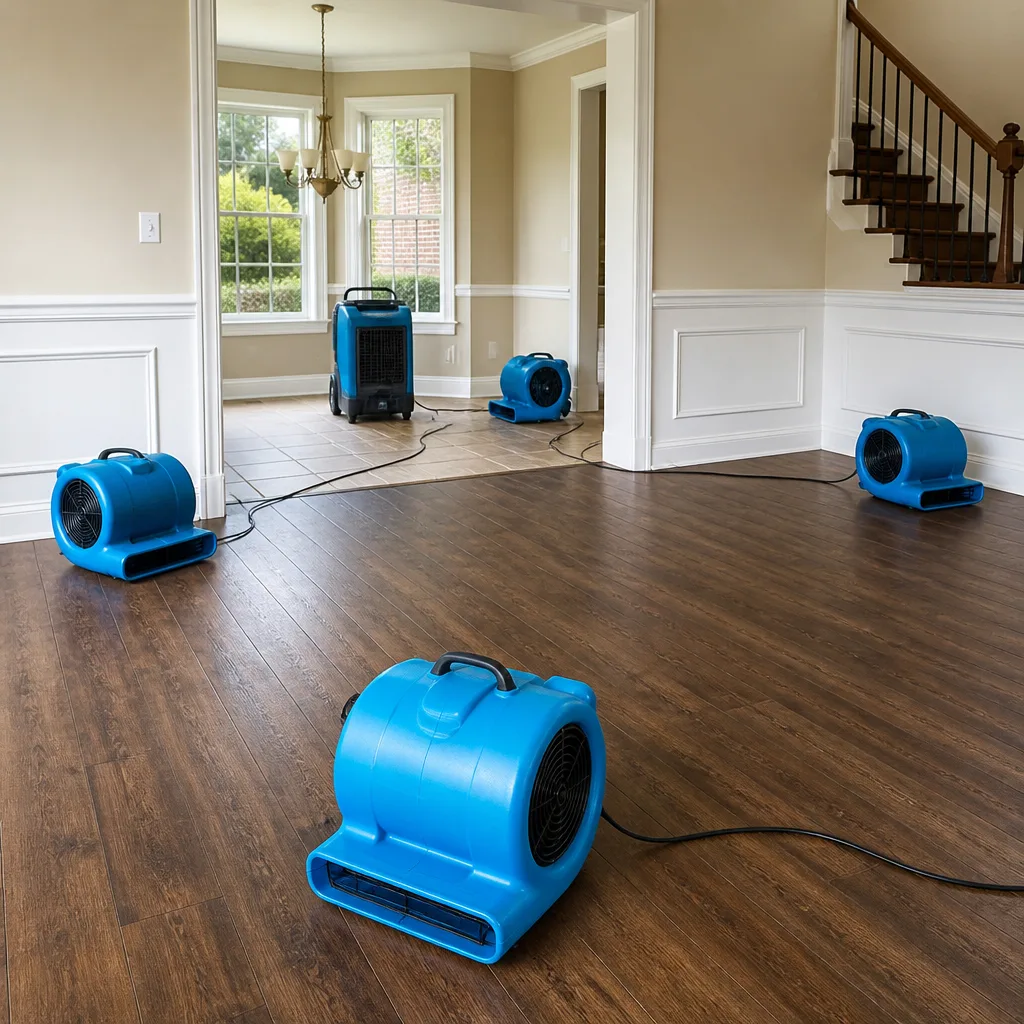

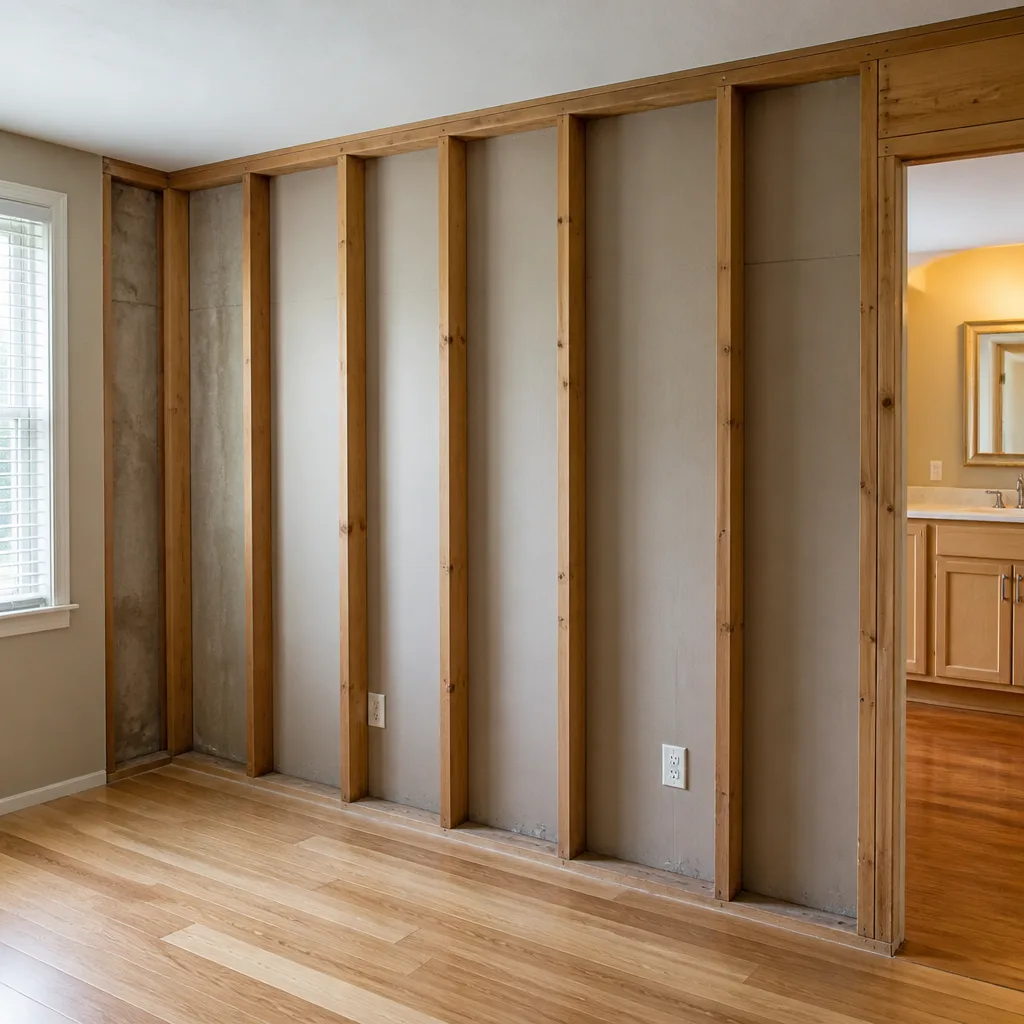
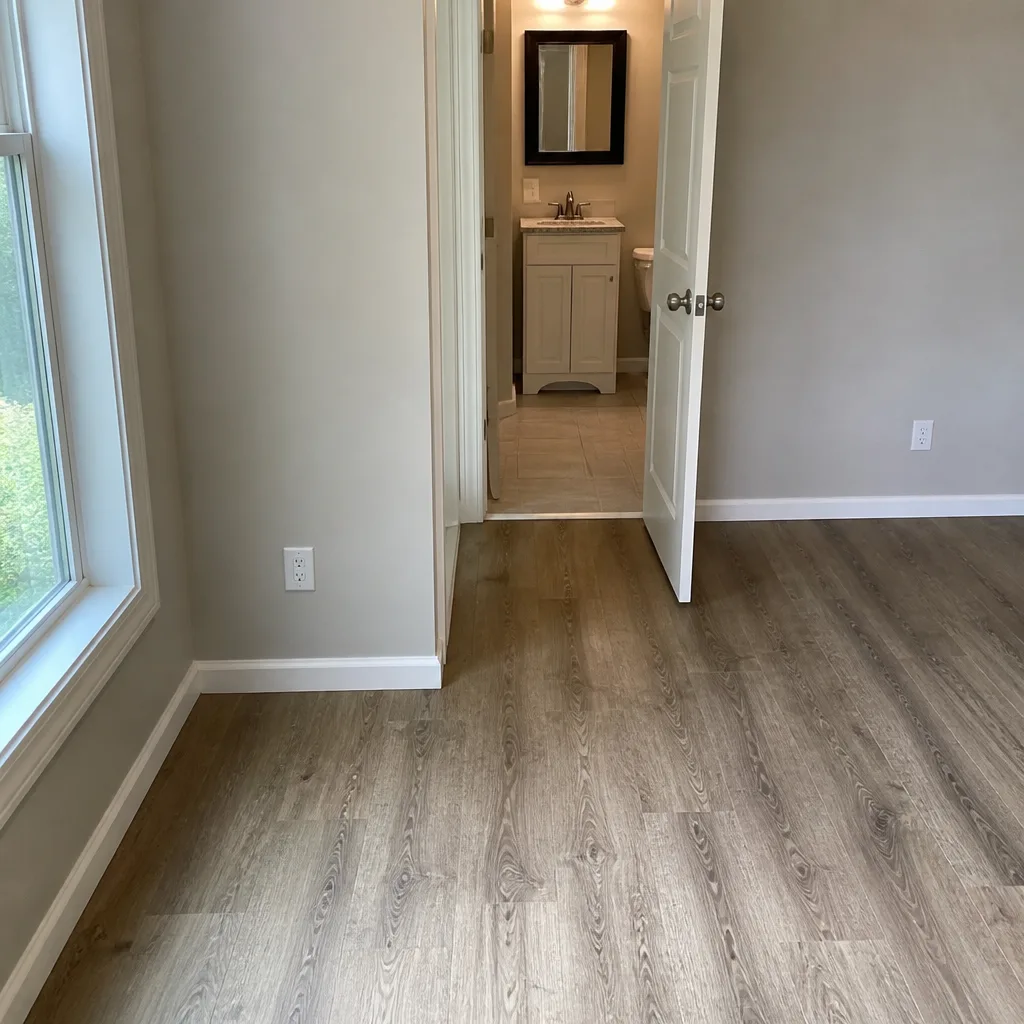

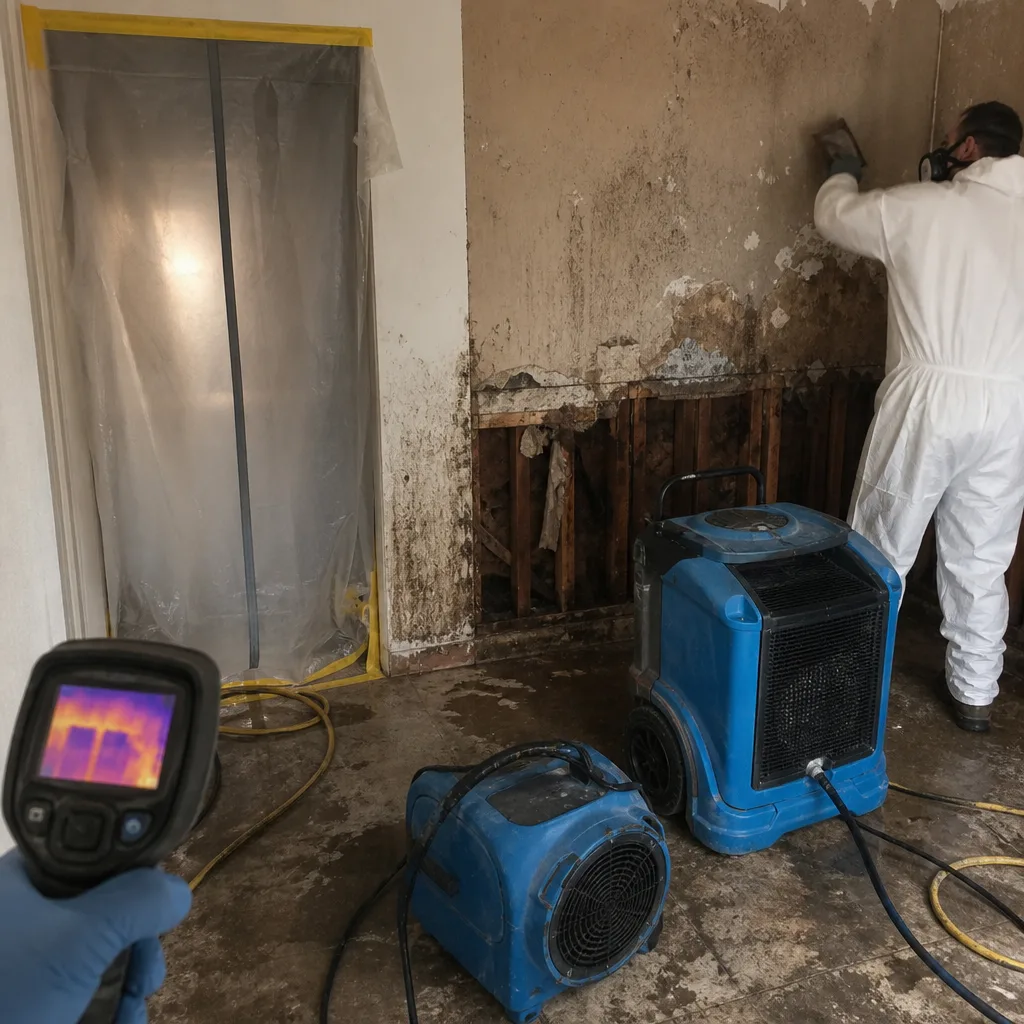 Before
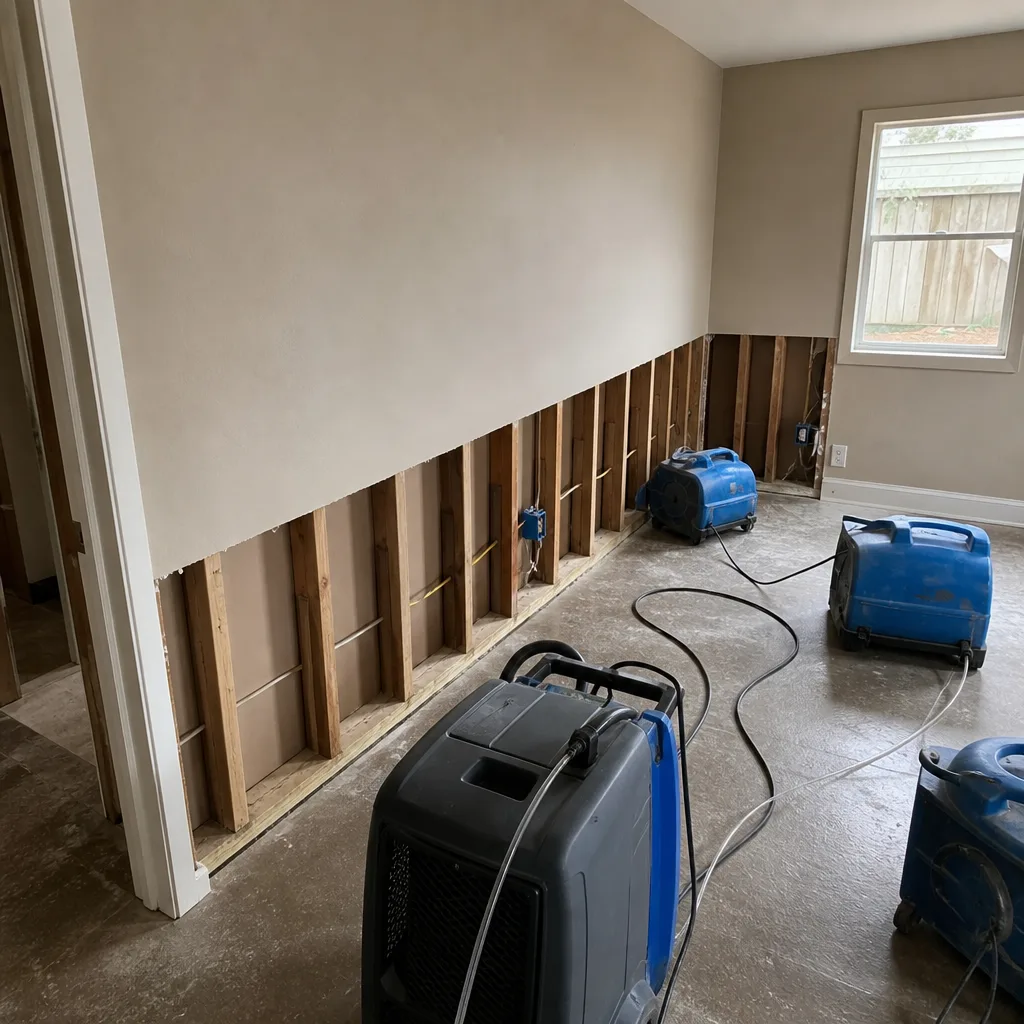 After
After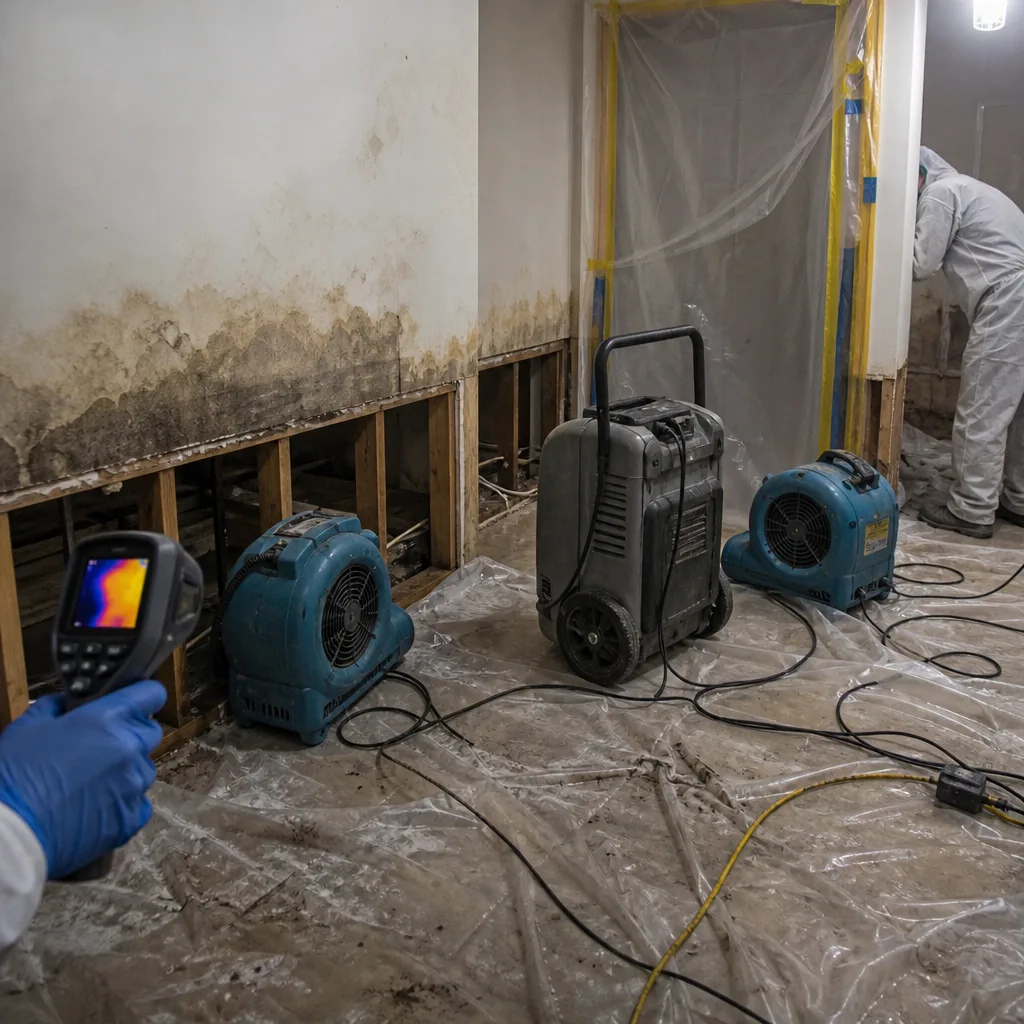 Before
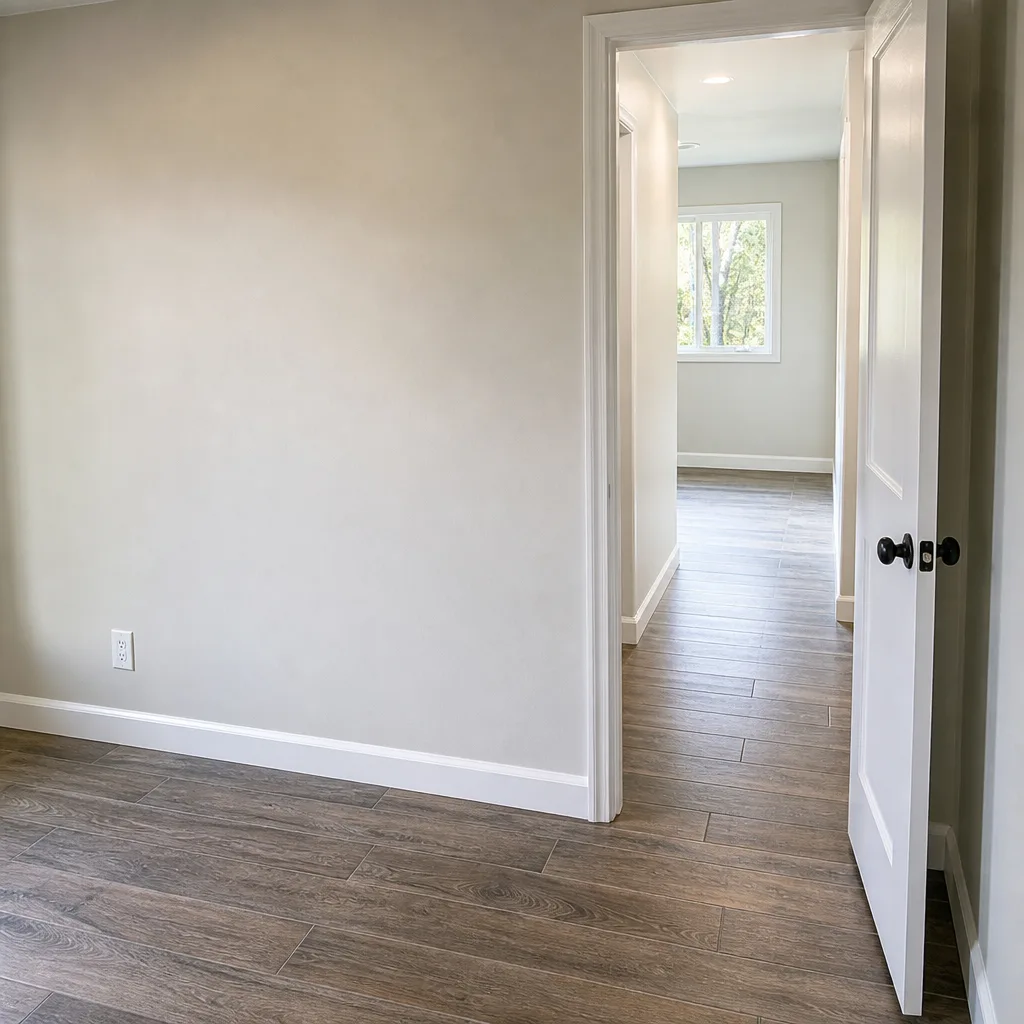 After
After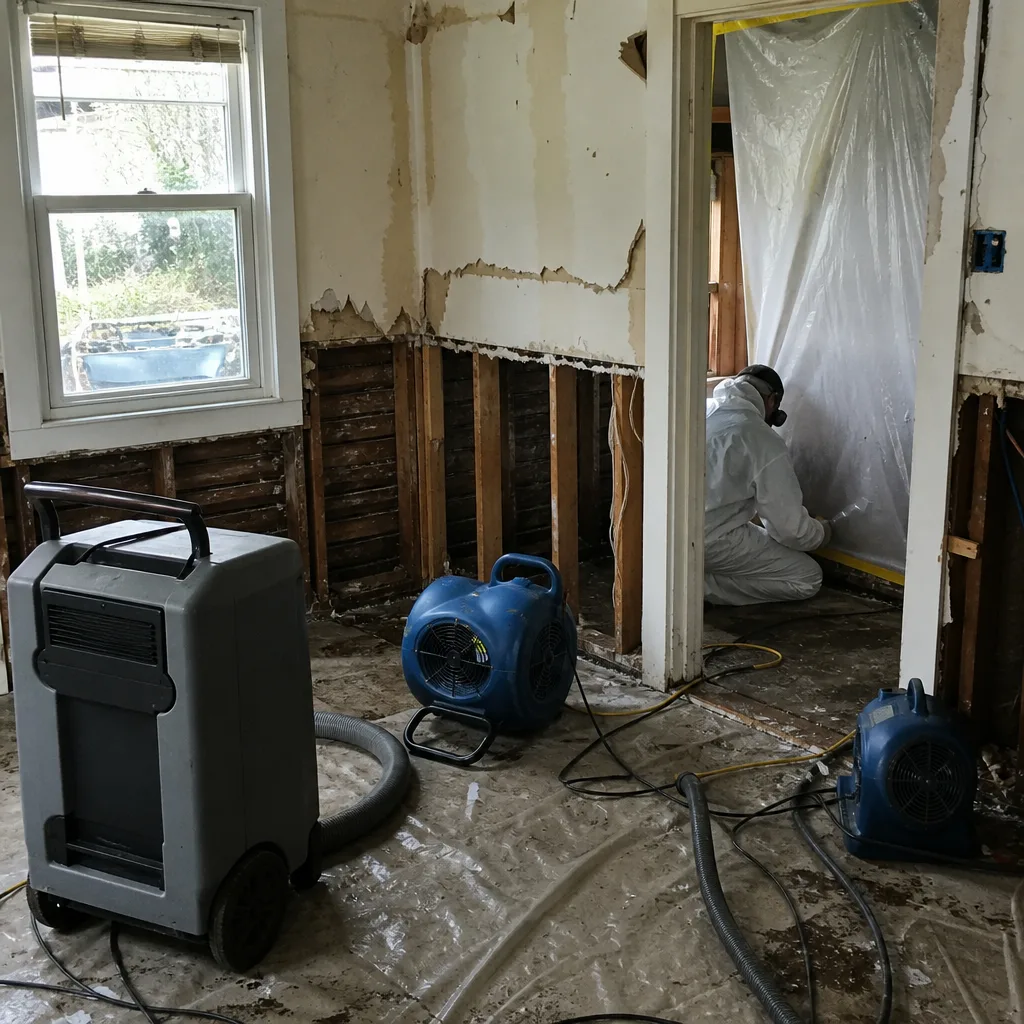 Before
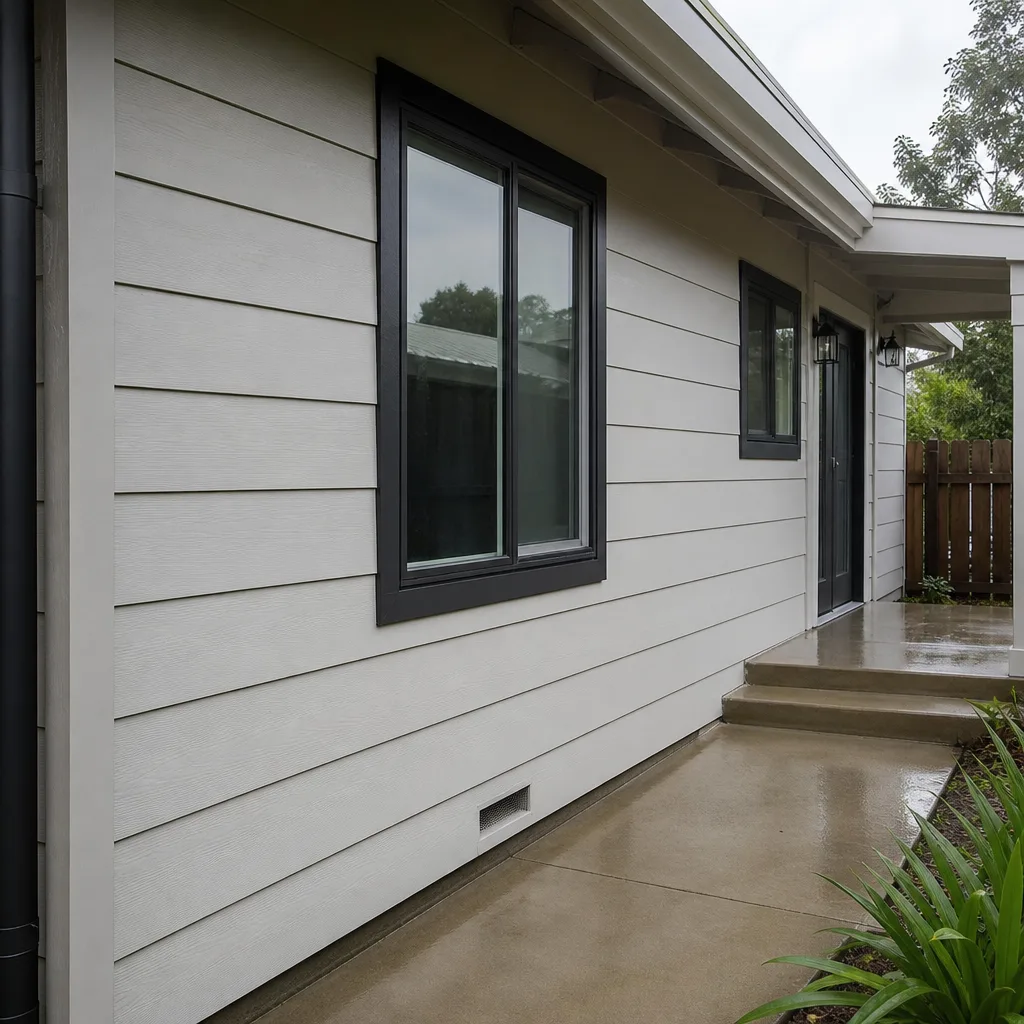 After
AfterWater Damage Restoration Maintenance Checklist for La Mesa Homeowners
Most water damage in La Mesa doesn’t announce itself with a burst pipe or a flooded street. It arrives as a moisture reading of 18% inside a wall cavity six weeks after a “repaired” washing machine supply line, or as calcium buildup on a T&P valve that a homeowner photographed once and never checked again. Since 2011, we’ve documented 12,000+ restoration jobs, and the pattern is consistent: the damage that costs $40,000 to remediate started as a $12 gasket that crossed a threshold nobody was watching. This checklist gives La Mesa homeowners the specific numbers to watch, the seasonal timing that matters in our climate, and the documentation habits that protect your coverage when you need it.
Quick Answer
A proper water damage prevention checklist for La Mesa homeowners includes monthly checks of supply-line pressure (40-60 PSI), quarterly moisture readings behind appliances and under sinks (call a professional at 16% wood moisture content or higher), pre-Santa Ana season roof and flashing inspections each October, and annual water heater T&P valve tests with dated photo documentation. These measurable thresholds, tracked consistently, prevent the slow leaks that cause 70% of the water damage claims we see in La Mesa homes.
Table of Contents
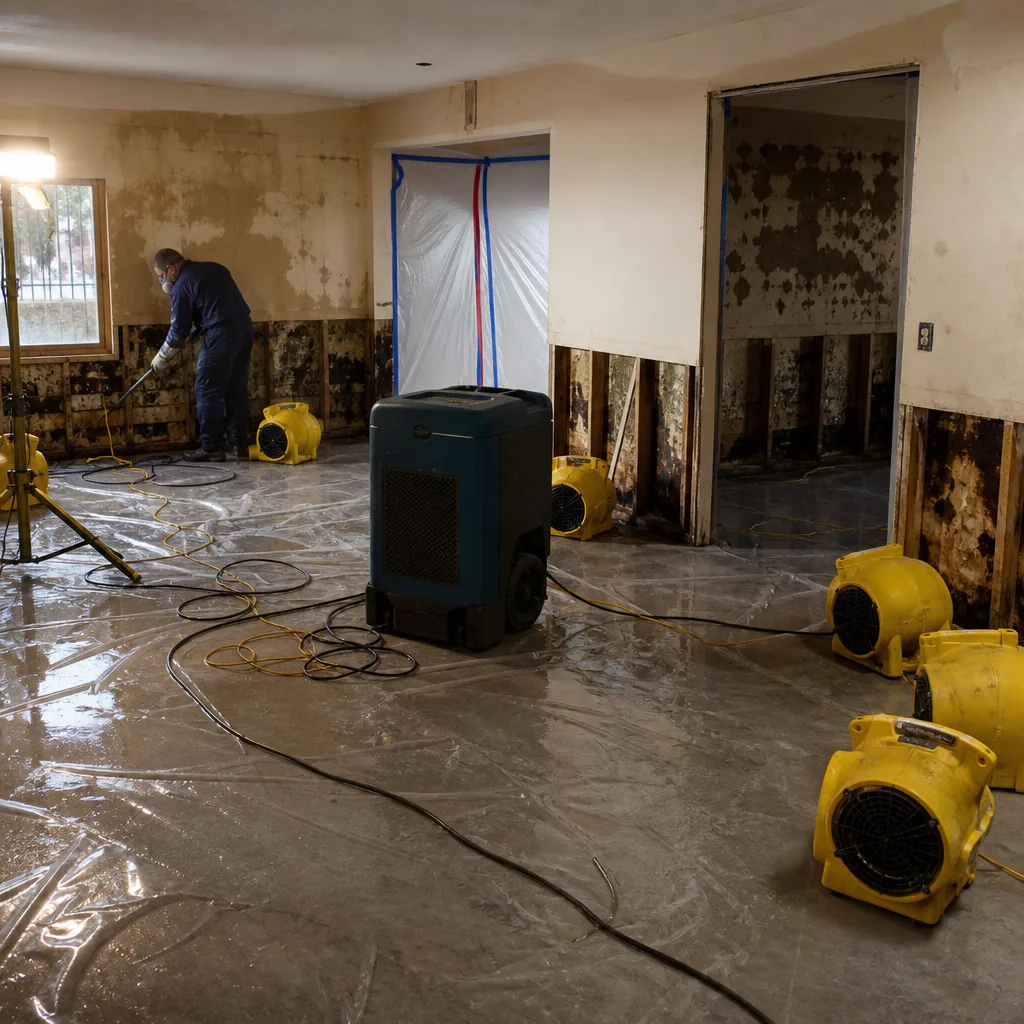
- Monthly Maintenance Checklist: Inside the Home
- La Mesa Seasonal Maintenance Calendar
- How to Use a Moisture Meter: Thresholds and Technique
- Room-by-Room Water Damage Prevention Guide
- Maintenance Failures That Void California Insurance Coverage
- The Documentation Habit: Building a Defensible Record
- Professional Drying Standards: What Happens When You Call
- Common Mistakes to Avoid
- When to Call a Professional
- Frequently Asked Questions
 Before
 After
AfterMonthly Maintenance Checklist: Inside the Home
Monthly checks catch the failures that accelerate fastest. In La Mesa’s mild climate, homeowners often assume water damage is a winter problem. Our drying logs tell a different story: the highest moisture readings we record in wall cavities peak in March and April, when Santa Ana wind-driven rain from October through January has finally saturated sheathing and stucco enough to breach interior barriers.
Check these items on the first Saturday of each month. Record readings in a dedicated notebook or phone note with the date.
Supply Line Pressure Test
Attach a hose-bib pressure gauge to an exterior faucet or washing machine cold-water valve. Ideal residential pressure in La Mesa is 40-60 PSI. Above 80 PSI strains flexible supply lines and compression fittings; below 30 PSI suggests a leak or obstruction upstream.
- 40-60 PSI: Normal range. Record the reading and move on.
- 61-79 PSI: Install a pressure-reducing valve at the main, or adjust existing PRV. Schedule within 30 days.
- 80+ PSI: Immediate action required. This pressure will fail braided stainless supply lines within 12-18 months.
- Below 30 PSI: Check for visible leaks, then call a plumber. If water damage is visible, call Water Damage Restoration in La Mesa before mold establishes.
Visible Inspection Points
- Under-sink cabinet floors: Look for warping, staining, or salt deposits (white crust) around the P-trap and shutoff valves.
- Toilet base: Rock the bowl gently. Any movement indicates wax ring failure. Check for discoloration at the floor junction.
- Washing machine supply hoses: Examine braided stainless lines for corrosion at the ferrules, bulging, or abrasion where they contact the wall.
- Water heater pan: Verify the pan drains freely to the exterior or floor drain. Standing water in the pan means the T&P valve or tank has leaked.
- Dishwasher: Run your hand along the front kick plate and adjacent cabinet base for moisture or warping.
Photograph each inspection point with the date visible in frame. Store in a dedicated album. This habit takes four minutes and creates the documentation that distinguishes “sudden and accidental” damage from “long-term neglect” in insurance disputes.
La Mesa Seasonal Maintenance Calendar
La Mesa’s water damage risk follows three distinct seasonal patterns that most generic checklists ignore. Our drying logs from 2011-2025 show clear clustering: Santa Ana wind-driven rain events (October-January), rare but intense winter Pacific storms (December-February), and the delayed manifestation period (March-May) when accumulated moisture finally breaches interior finishes.
October: Pre-Santa Ana Inspection
Santa Ana winds arrive with dry air but often carry intense, wind-driven rain against east and south-facing walls. In La Mesa neighborhoods like Mt. Helix and Del Cerro, homes on ridgelines see sustained 40+ MPH wind exposure that forces water through flashing gaps no calm-day inspection would reveal.
- Walk the roof perimeter with binoculars. Check for lifted shingles, cracked tile, or displaced ridge caps.
- Inspect all wall penetrations: vent hoods, electrical service masts, hose bibs, and light fixtures. Caulk should be continuous and pliable; cracked or hardened caulk fails within one Santa Ana season.
- Verify downspout extensions carry water at least 6 feet from foundation. In La Mesa’s clay-heavy soils, pooled perimeter water wicks through slab edges and into wall bottom plates.
- Check window weep holes for blockage. Stucco debris and insect nests are common obstructions.
December: Winter Storm Window Preparation
While La Mesa averages only 13 inches of annual rainfall, concentrated winter storms deliver 30-40% of that total in 48-72 hour windows. The December 2022 storms produced more water intrusion calls in our DryMark Restoration La Mesa home service queue than the entire preceding summer.
- Clear roof drains and gutters of oak and eucalyptus leaf accumulation.
- Test sump pump operation by pouring 5 gallons into the pit. Verify automatic activation and discharge flow.
- Inspect garage door bottom seals and threshold dams. Garage slab flooding is the most common entry point for slab-on-grade homes in La Mesa.
March-April: Delayed Manifestation Audit
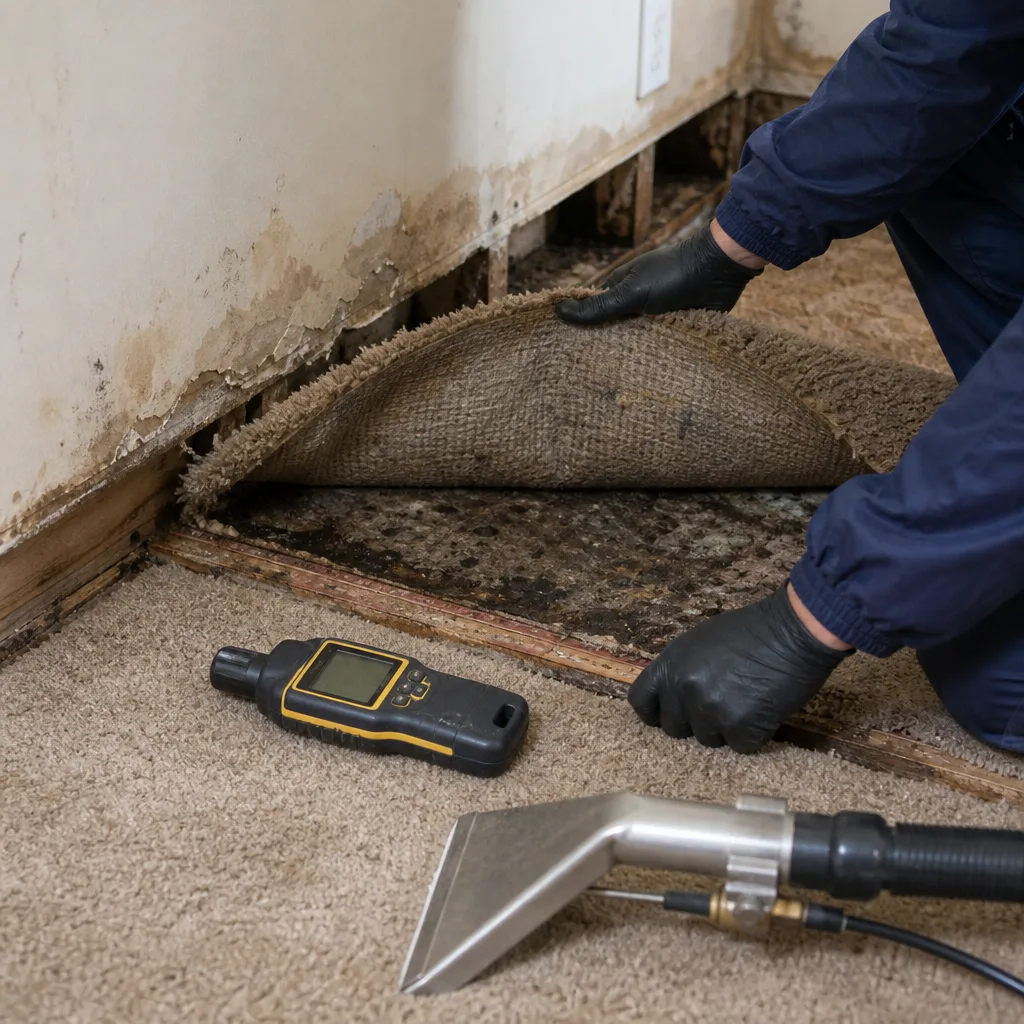
This is when we see the most severe hidden damage. Moisture that entered in October has now saturated sheathing, degraded paper-faced drywall backing, and initiated fungal growth. Run your moisture meter on all exterior-facing walls at 24″ height intervals. Any reading above 16% on wood framing or 1% on gypsum drywall warrants professional assessment.
July-August: Irrigation System Pressure Test
Peak outdoor water use season stresses aging polybutylene and PVC lateral lines. A single cracked emitter or separated joint can deliver 15+ gallons per hour against the foundation. Walk your irrigation zones during operation; look for bubbling soil, soggy spots, or water entering the garage or crawl space.
How to Use a Moisture Meter: Thresholds and Technique
A pin-type moisture meter costs $25-$40 at hardware stores in La Mesa and transforms guesswork into actionable data. We require our technicians to record moisture content (MC) percentages on every drying visit; homeowners who adopt the same standard catch problems before they require professional intervention.
Meter Selection and Calibration
Buy a pin-type meter with wood scale (5-50%) and reference scale (0-100%). The Protimeter Surveymaster and General Tools MMD4E are common models. Verify calibration using the built-in reference plate or by testing dry pine scrap known to be below 10% MC.
Where to Test
- Behind washing machine: Remove the supply hose escutcheon if possible. Test drywall at 6″ and 12″ from floor. Test wood stud at same heights.
- Under kitchen and bathroom sinks: Test cabinet base material, adjacent drywall toe-kick, and visible subfloor through any gaps.
- Water heater platform: Test surrounding drywall at 12″ intervals and any visible framing.
- Exterior walls after rain events: Test at 12″, 24″, and 36″ heights on walls facing the direction of recent wind-driven rain.
- Window and door surrounds: Test drywall adjacent to the rough opening, particularly at header height where flashing failures first manifest.
The Call-a-Professional Thresholds
| Material | Normal Range | Elevated / Monitor Weekly | Call Professional |
|---|---|---|---|
| Wood framing, studs, sheathing | 6-12% | 13-15% | 16%+ |
| Plywood subfloor | 6-11% | 12-15% | 16%+ |
| Gypsum drywall (paper-faced) | 0.5-1.0% | 1.1-1.5% | 1.6%+ |
| Engineered wood flooring | 6-10% | 11-14% | 15%+ |
| Concrete slab (reference scale) | Below 75 | 75-85 | 86+ with adjacent material elevation |
These thresholds align with IICRC S500 standards for water damage restoration. A reading at or above the “Call Professional” level means active drying is required, not passive evaporation. In our experience, La Mesa homeowners who wait until they see visible staining have typically already crossed 20% MC in the wall cavity, at which point mold colonization is likely and the restoration scope expands significantly.
Room-by-Room Water Damage Prevention Guide
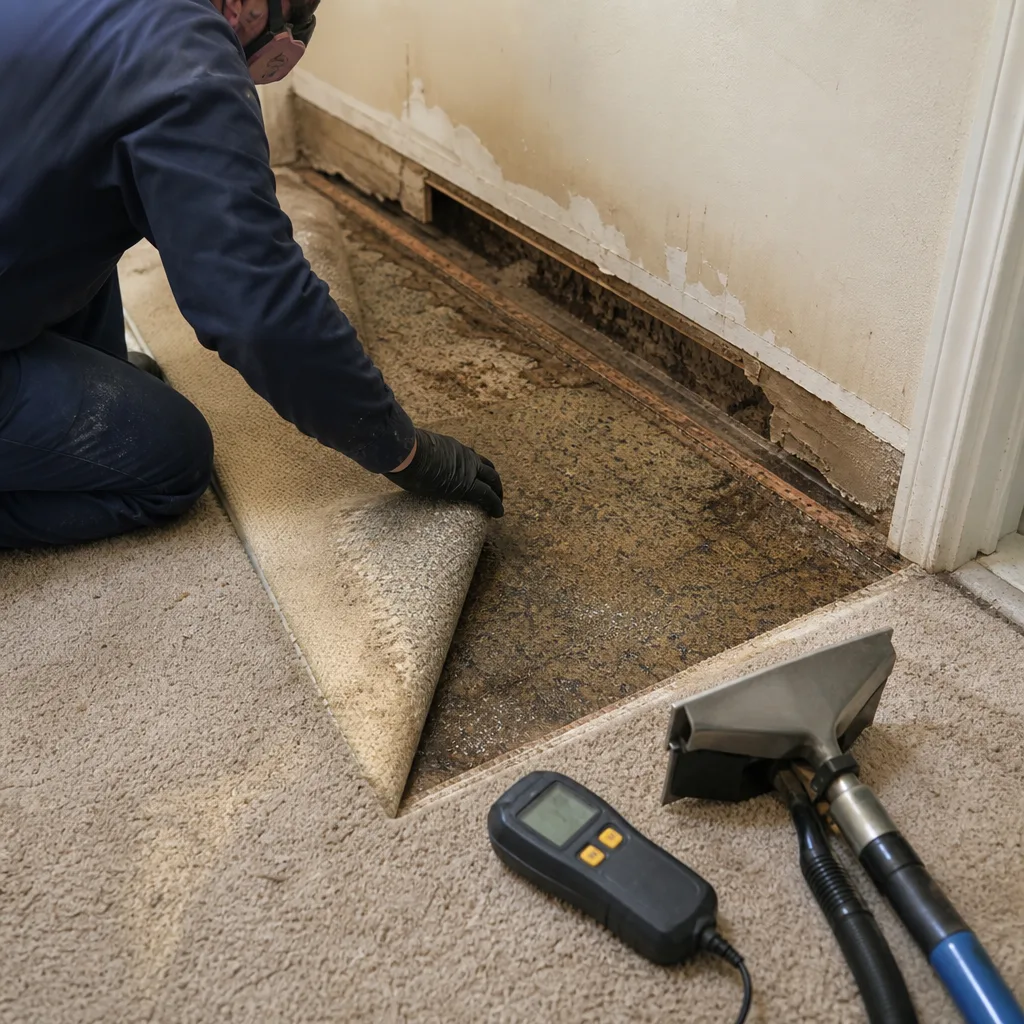
Kitchen
The kitchen contains the highest concentration of pressurized water connections in most La Mesa homes. Our Water Damage Restoration in La Mesa crews respond to more kitchen-origin losses than any other room except laundry areas.
- Dishwasher: Check the braided supply line where it connects to the dishwasher inlet valve; this is the most common failure point. Look for green copper oxidation on the valve body, indicating slow seepage. The drain hose loop must rise above the sink flood rim; improper installation causes backflow into the cabinet base.
- Refrigerator ice maker: Poly tubing supply lines become brittle after 5-7 years. Replace with braided stainless or copper. Test the shutoff valve annually; saddle valves fail without warning.
- Sink cabinet: Apply plumber’s grease to shutoff valve stems annually. Stiff valves are more likely to crack when finally operated during an emergency.
Laundry Room
Washing machine failures cause the highest-severity water damage we see in La Mesa. A ruptured supply line at 60 PSI delivers 6+ gallons per minute. At that rate, a homeowner who leaves for a 30-minute errand returns to 180 gallons in the structure.
- Replace rubber or PVC supply hoses every 5 years, regardless of appearance. Braided stainless steel is minimum; flood-safe auto-shutoff hoses are better.
- Verify the drain standpipe height: 30-48 inches above floor for top-loaders, 24-36 inches for front-loaders. Too low causes overflow; too high causes slow drain and backpressure.
- Test the overflow pan if present. Many La Mesa homes built 1985-2005 have pans without drains, making them decorative rather than functional.
- Moisture meter check: Test behind the machine monthly. The space between washer and wall is the most common hidden damage location we encounter.
Bathrooms
La Mesa’s hard water accelerates valve and fixture degradation. Calcium deposits on the T&P valve or faucet cartridges indicate internal erosion that precedes failure.
- Toilet: Dye-test the flapper annually. Add food coloring to the tank; color in the bowl within 15 minutes indicates seepage that wastes water and can mask a wax ring failure.
- Shower/tub surround: Caulk joints must be continuous and mold-free. Any gap at the tub-to-wall junction allows direct water access to the wall cavity. In our La Mesa work, we’ve found that caulk failure at this joint is the leading cause of bathroom-origin mold remediation.
- Ventilation: Run the exhaust fan during showers and 20 minutes after. In La Mesa’s coastal-influenced climate, humidity above 60% RH sustains mold on cool surfaces. A hygrometer costs $10 and removes the guesswork.
Water Heater
Standard tank water heaters in La Mesa last 8-12 years. The T&P valve must discharge freely; a blocked or corroded valve turns the tank into a pressurized vessel with no safety release.
- Test T&P valve annually: Lift the lever gently, verify water flows, verify it stops when released. If it dribbles continuously after testing, replace it.
- Check the anode rod every 3 years. Depleted rods accelerate tank corrosion.
- Document the installation date on the tank with permanent marker. Most homeowners cannot state their water heater age; insurers increasingly deny claims for “wear and tear” on units past rated lifespan.
Garage
La Mesa’s slab-on-grade construction makes garages particularly vulnerable. The garage door is typically the largest unsealed opening in the home, and the concrete slab often sits below exterior grade.
- Verify the garage door bottom seal contacts the floor continuously. Gaps as small as 1/4 inch admit wind-driven rain directly.
- Check the threshold dam at the driveway interface. In La Mesa’s hilly neighborhoods, driveway runoff channels directly toward garage entries.
- Inspect the water heater or laundry if located in garage: these installations require a pan with drain in California, but many older homes lack this.
Maintenance Failures That Void California Insurance Coverage
Standard California HO-3 policies cover “sudden and accidental” water damage but exclude losses caused by “continuous or repeated seepage or leakage of water… over a period of 14 or more days.” This exclusion is the most common basis for claim denial in our experience, and it is almost always triggered by maintenance documentation that the insurer obtains through discovery.
These specific maintenance failures have produced denials in cases we’ve reviewed:
- Failed caulking unaddressed for 60+ days: Insurers argue the homeowner had constructive notice through visible deterioration. Photograph caulk condition quarterly; dated photos establish you were monitoring.
- Water heater T&P valve corrosion visible in inspection photos: If the valve shows rust in a photo dated before the failure, the “sudden” characterization fails.
- Known supply line age exceeding manufacturer rating: Rubber washing machine hoses rated for 5 years that fail at year 7 are routinely denied as wear and tear.
- Prior moisture meter readings showing elevation without action: If you own a meter and record elevated readings but don’t act, the insurer may argue you had actual knowledge of the condition.
- Gutter/downspout maintenance records absent: Overflow-related foundation seepage is often attributed to homeowner neglect when no cleaning documentation exists.
- Repeated previous leaks at same location: Multiple claims or repairs at one site trigger “repeated seepage” exclusion regardless of individual incident timing.
The protection is documentation, not concealment. A homeowner who photographs quarterly inspections, records moisture readings, and calls professionals at threshold crossings demonstrates the diligence that supports “sudden and accidental” characterization.
The Documentation Habit: Building a Defensible Record
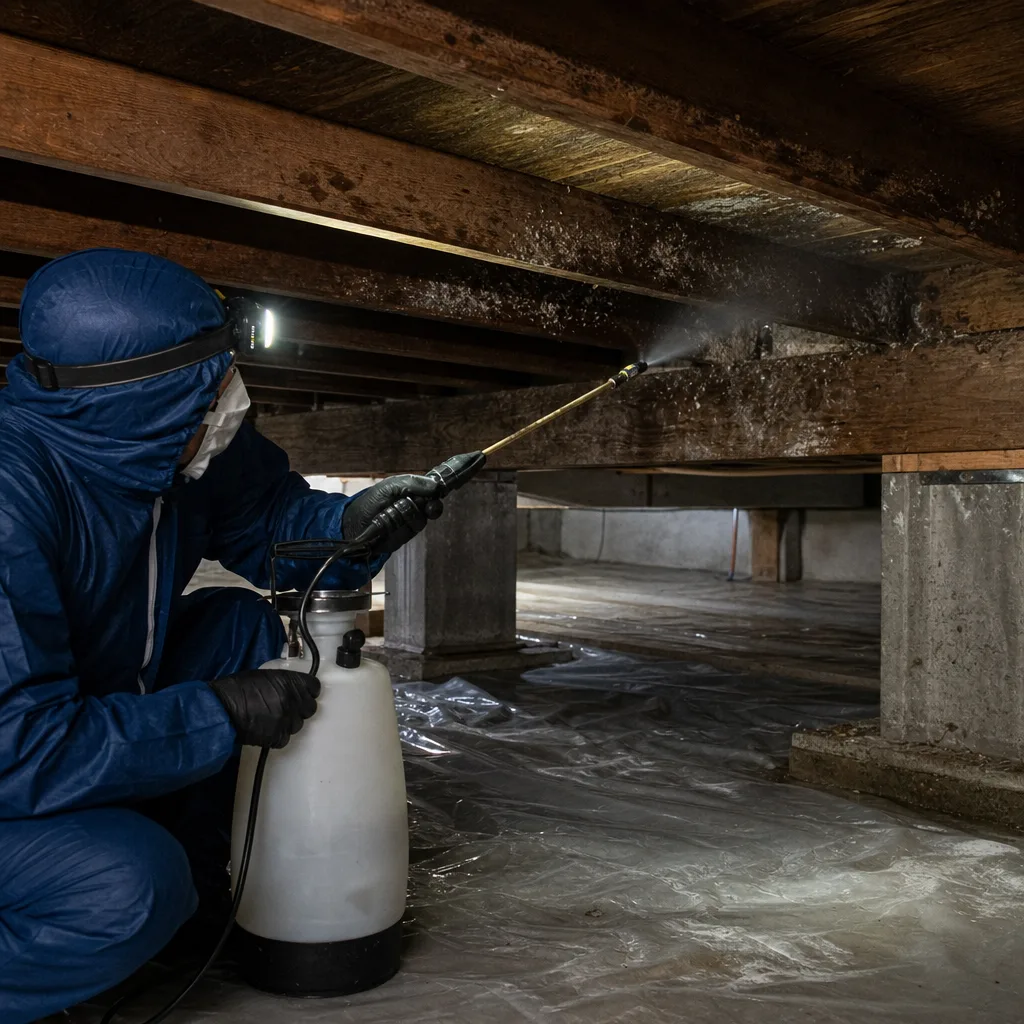
At Back to Dry Restoration, we built our company around the documentation gap that costs homeowners their claims. Alicia Brennan founded the company in 2011 after seeing adjuster files denied for lack of contemporaneous records. The same principle applies to homeowner maintenance: what you document before the loss determines whether your claim is paid.
The Minimum Viable Record
For each inspection, capture:
- Date and time stamp (phone camera metadata is sufficient)
- Location within the home
- What was checked and the result (pressure reading, moisture percentage, visual condition)
- Any action taken or scheduled
- Photo of the inspected component
Store these in cloud backup, not solely on a single device. Email them to yourself as a redundant timestamp.
The Professional Standard We Apply
Our technicians produce on every visit: a written scope with line-item pricing (Haven Standard, Clause 1: written price before work begins), room-by-room moisture readings with psychrometric data (temperature, relative humidity, vapor pressure differential), and a photo record with 20-40 images depending on loss size. This documentation package is what transforms a restoration invoice into a payable claim.
Homeowners who adopt even 10% of this discipline, applied to their maintenance checks, are in a fundamentally different position when a loss occurs. The insurer cannot manufacture a “neglect” narrative against a file of dated, photographed, measured maintenance activity.
Professional Drying Standards: What Happens When You Call
When moisture crosses the thresholds in this checklist, professional drying follows documented protocols established by IICRC, RIA, and IFA. Understanding this process helps homeowners evaluate the scope and pricing they receive.
Our crews deploy professional-grade drying systems from Dri-Eaz, Phoenix, XPOWER, B-Air, and Injectidry. The specific equipment selection depends on the material class and saturation level documented in our initial assessment.
The Four Classes of Water Damage
| Class | Description | Typical Drying Approach |
|---|---|---|
| Class 1 | Minimal absorption; low porosity materials affected | Air movement and dehumidification, 2-3 days |
| Class 2 | Significant absorption; medium porosity materials (carpet, cushion, subfloor) | Extraction, air movement, dehumidification, 3-5 days |
| Class 3 | Greatest absorption; water from above (ceiling, walls, insulation) | Injection drying with Injectidry systems, cavity venting, 5-7 days |
| Class 4 | Deeply held moisture; hardwood, plaster, concrete, brick | Specialty drying, low grain dehumidification, extended timeline |
Psychrometric data, the measurement of air properties that control moisture movement, drives equipment placement and daily adjustments. Vapor pressure differential, the difference in moisture concentration between wet materials and the surrounding air, determines how aggressively we can dry without damaging the material. These terms define the difference between documented restoration and guesswork.
Every job we complete includes daily drying logs, a photo record on every visit, and the 365-Day Done Right Promise under The Haven Standard. If the moisture readings don’t reach dry standard, we don’t invoice for completion; we extend the drying period and adjust equipment until they do.
Common Mistakes to Avoid
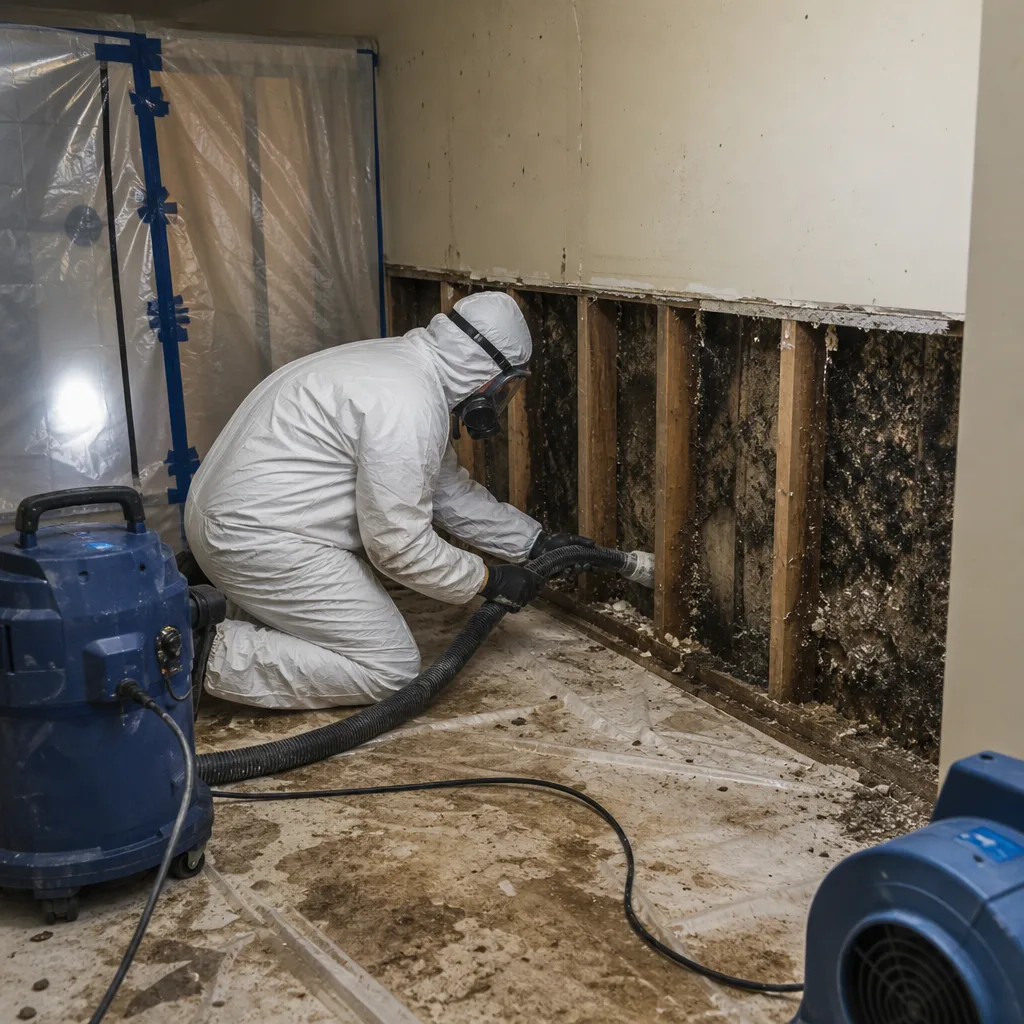
- Assuming “it dried on its own” after a visible leak. In La Mesa’s moderate humidity, surface materials dry while cavity moisture remains elevated. We’ve opened walls six months after a “minor” leak and found 35% MC in studs with active mold growth.
- Using the “smell test” for mold. Musty odor indicates established colonization, not early warning. By the time you smell it, the remediation scope has typically tripled from what drying alone would have cost.
- Ignoring the garage as “not really part of the house.” Garage slab flooding is the single most common source of crawl space moisture migration in La Mesa’s older homes. The garage is structurally connected; the moisture doesn’t respect your categorical distinction.
- Pressure-washing stucco annually without inspecting weep screeds. Forced water at 2,000+ PSI drives moisture through hairline cracks and overwhelms drainage planes. Inspect weep screeds for blockage first; if they’re compromised, pressure washing accelerates damage.
- Replacing a failed water heater with the same capacity without checking thermal expansion. La Mesa’s water pressure fluctuations stress tanks without expansion tanks. A failed T&P valve often indicates thermal expansion pressure, not tank failure. Replacing the tank without addressing expansion produces repeat failure.
- Waiting for “the rainy season” to inspect roof and flashing. By October, competent roofers in San Diego County are booked 4-6 weeks. Inspect in September, schedule repairs before Santa Ana season, or prepare to tarp and hope.
- Throwing away maintenance records after a repair. Insurers request 2-5 years of maintenance history for significant water claims. The repair invoice from 2019 proves you addressed the condition; without it, the same location becomes “repeated seepage.”
When to Call a Professional
Call a water damage restoration professional when: moisture meter readings exceed 16% on wood or 1.5% on drywall; you discover active dripping or flowing water you cannot isolate; any water has contacted electrical panels, outlets, or wiring; sewage or gray water is involved; or visible mold covers more than 10 square feet. In La Mesa’s climate, mold colonization begins on wet cellulose materials within 48-72 hours; waiting for “it to dry out” converts a drying job into a remediation and reconstruction project.
DryMark Restoration La Mesa offers free estimates in La Mesa. Our technicians arrive with moisture meters, thermal imaging, and the documentation protocols that protect your claim. Call (858) 264-2736 for assessment. For fire-related water damage from suppression systems, see our Fire & Smoke Damage Restoration in La Mesa page. If mold is already visible, our Mold Remediation in La Mesa team can evaluate containment requirements.
Frequently Asked Questions
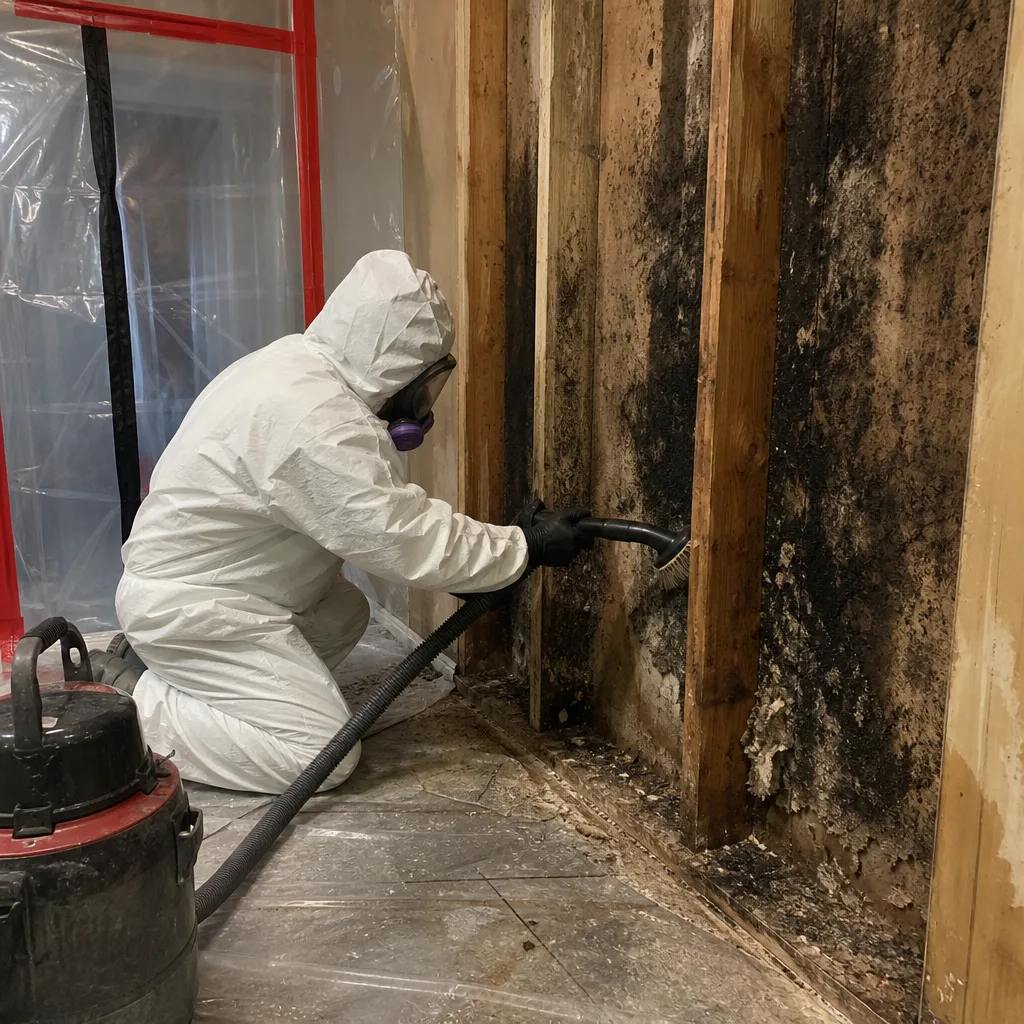
Most drying projects in La Mesa range from $1,200 for Class 1 limited-area drying to $8,500+ for Class 3 whole-room cavity drying with Injectidry systems. Reconstruction is priced separately after drying completion. DryMark Restoration La Mesa provides a written price before any work begins on every job, with no additions once the crew is inside, Haven Standard, Clause 1. Call (858) 264-2736 for a free estimate specific to your situation.
Standard California HO-3 policies exclude damage from “continuous or repeated seepage or leakage over a period of 14 or more days.” Coverage depends on proving the damage was sudden and accidental, or that you discovered and reported it promptly upon reasonable discovery. Your maintenance documentation, moisture meter records, and dated photos are the evidence that supports coverage. Without them, insurers routinely invoke the gradual damage exclusion.
DryMark Restoration La Mesa answers emergency calls live, 24 hours a day, 7 days a week, with no voicemail trees. Our typical response time in La Mesa is under 90 minutes for active water losses. Speed matters for mitigation, but not for reconstruction; drying and emergency extraction are time-critical, while rebuild work is scheduled and scoped in writing like any remodeling project.
Consumer fans move surface air but cannot establish the vapor pressure differential required to pull moisture from wall cavities, subfloors, or insulation. We’ve documented hundreds of La Mesa homes where homeowners ran fans for weeks, surface materials felt dry, but moisture meters revealed 20%+ MC in hidden assemblies. Professional drying with dehumidification and controlled air movement reaches equilibrium moisture content, documented to IICRC standards, with daily logs to prove it.
Water damage restoration removes water and dries materials to prevent mold growth. Mold remediation addresses established fungal colonization, requiring containment, negative air pressure, and specialized removal. If you call within 48 hours of water intrusion, drying alone usually suffices. After 72 hours, or if you smell mustiness, mold assessment is likely needed. Our Mold Remediation in La Mesa page details containment protocols.
Santa Ana winds drive rain horizontally against east and south-facing walls with sustained 30-50 MPH velocities, forcing water through flashing gaps, weep hole blockages, and caulk failures that would not leak in calm conditions. The dry air between events masks the moisture accumulation, which manifests months later as elevated readings in wall cavities. Pre-season inspection in October is the specific defense.
At minimum: a written scope with line-item pricing before work begins, daily moisture readings with psychrometric data, a photo record on every visit, and a completion certificate with final dry-standard verification. DryMark Restoration La Mesa delivers all of these as standard, plus the 365-Day Done Right Promise under The Haven Standard. If a competitor offers less documentation, your claim is at risk.
The Bottom Line
Water damage prevention in La Mesa is not a matter of vigilance without measurement. It’s a system of specific thresholds, seasonal timing, and documented habits that transform a homeowner from a claim denial statistic into a policyholder with defensible evidence. The $35 moisture meter and the four-minute monthly check are the difference between a $200 supply line replacement and a $40,000 mold remediation with disputed insurance coverage. Start with pressure and moisture readings this month, photograph everything with dates, and call at the thresholds we’ve specified, not when you finally see the damage.
Written by Alicia Brennan, Owner at DryMark Restoration La Mesa, serving La Mesa since 2011.